
From letter openers to handbags and cases, objects that have lost their place in our daily routines continue to tell stories about how we work, travel, present ourselves, and choose to live.
Por Letícia Lima Laurino
A letter opener rests on a desk. It may remain there for weeks before an envelope arrives. Tearing the paper open by hand would be enough, yet the small blade continues to find buyers, even at a time when much of our correspondence no longer arrives on paper.
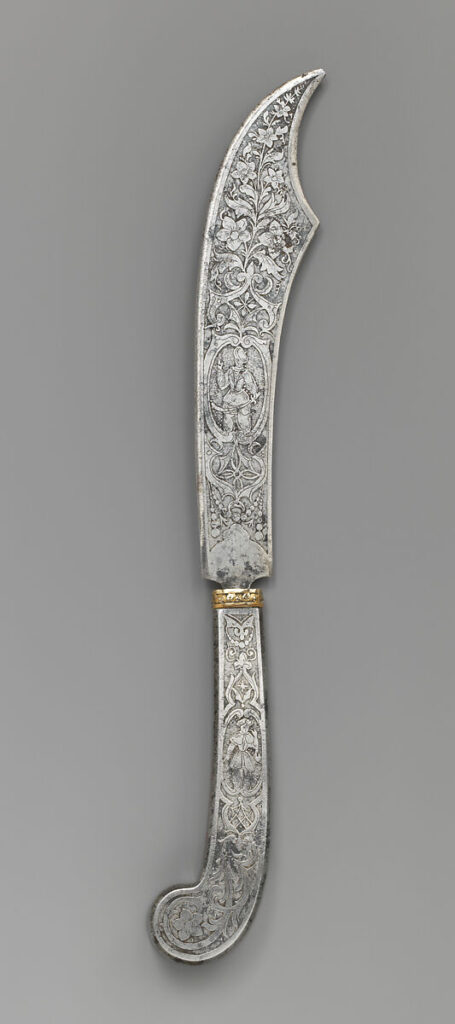
Montblanc, for example, still offers a letter opener crafted from ruthenium-coated steel and leather. Christofle’s Iconik collection includes a letter opener, a correspondence tray, a pen holder, and a box for writing instruments.
In the nineteenth century, among Washington’s elite circles, calling cards played an important role in organizing social and political relationships. Leaving a card at someone’s home did more than provide a name or a means of contact. It announced a visit and recorded connections, background, and social standing. Even the way a name was written followed established conventions. Young daughters could appear on their mother’s card, while married women were identified by their husband’s full name. Sizes varied as well. Women’s cards tended to be larger, while men’s were smaller, designed to fit inside a jacket pocket.
There was also the case that accompanied this ritual. One example, made by Tiffany & Co. around 1881 and now held by The Metropolitan Museum of Art in New York, is crafted from silver and silver-gilt, with two dragonflies that seem to move across its surface. The asymmetrical composition and metalwork reflect the interest of Edward C. Moore, then director of Tiffany’s silver division, in Japanese art. Moore assembled a collection of Japanese objects that served as a source of inspiration for the house’s artisans. The monogram “SBR” has not been identified, but the piece’s dimensions suggest that it belonged to a woman.
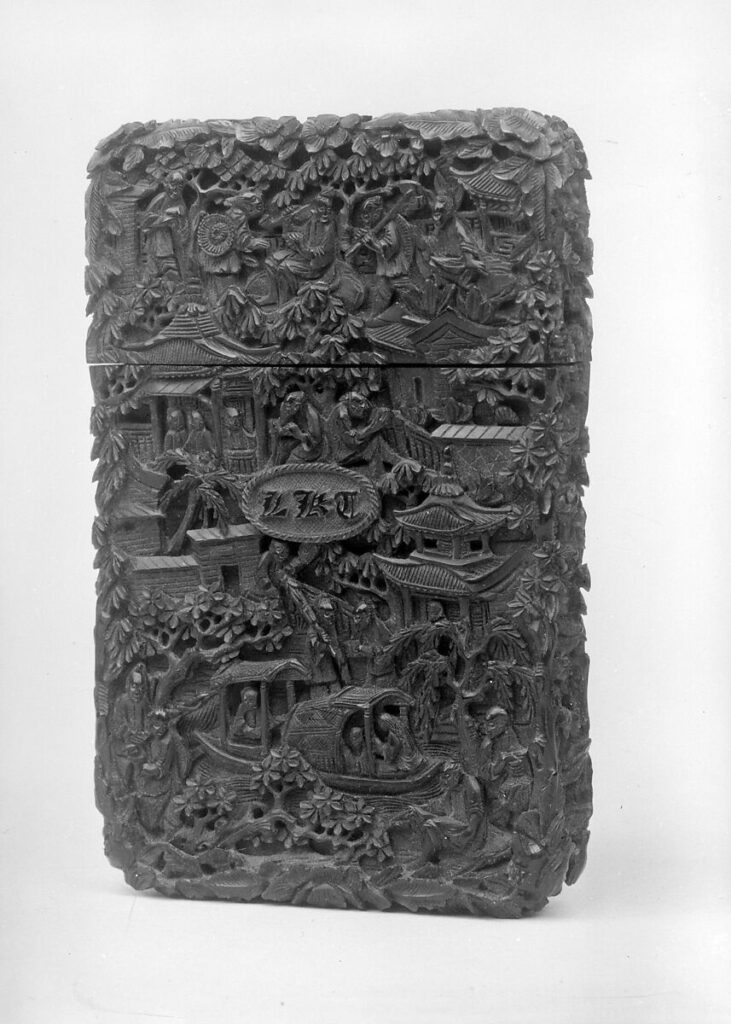
Another case preserved by the Met tells a different story. Made in China around 1835, the object is crafted from tortoiseshell and belonged to Lucy Keating Tuckerman. It bears its owner’s monogram and, according to the museum, was probably a gift from her husband, who made several voyages to China during the 1830s aboard the merchant ship Cowper.
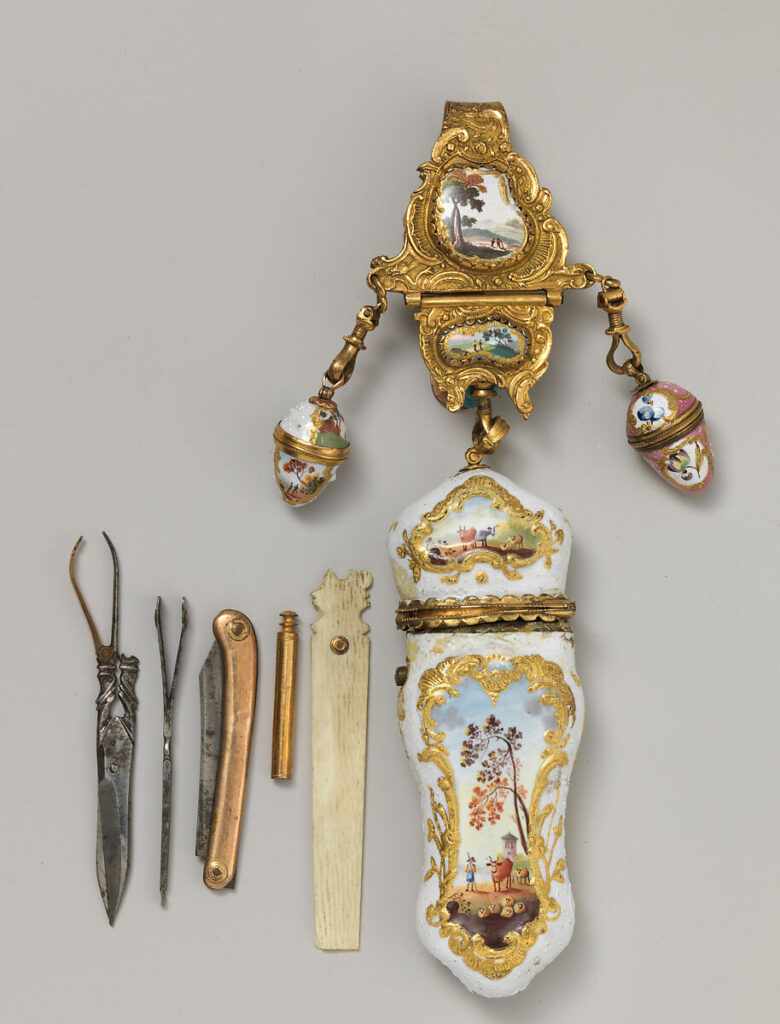
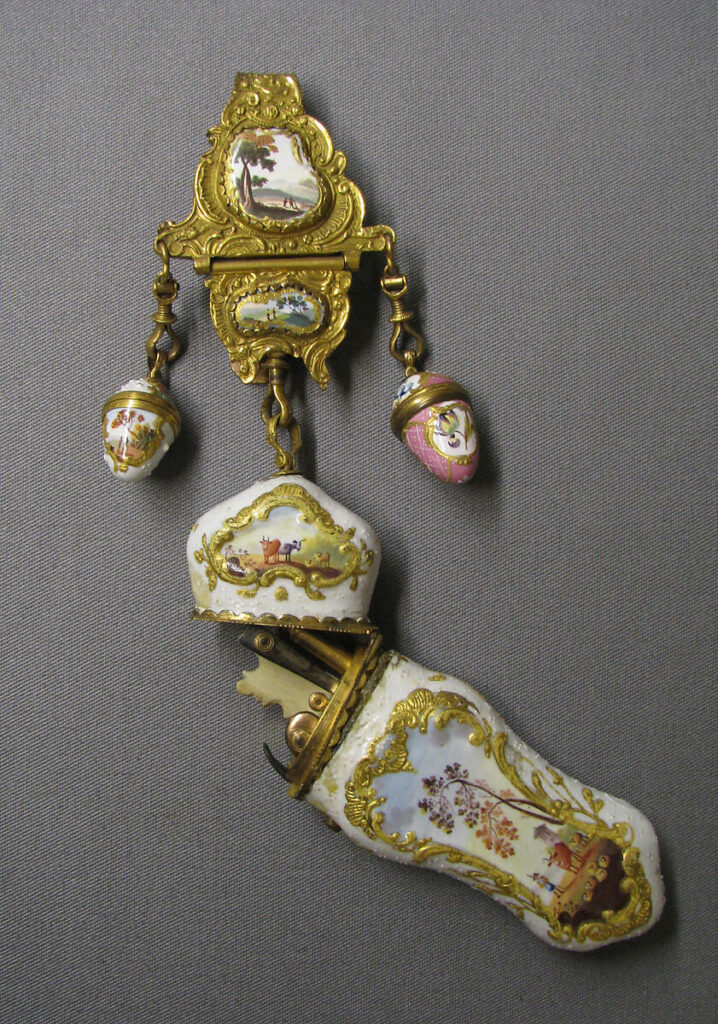
Today, when we think about convenience, it is difficult not to think of the smartphone. A single device combines a watch, camera, calendar, maps, and access to virtually any information. Yet the idea of carrying multiple functions within a single object is much older. Châtelaines, for example, brought together small instruments used throughout the day. A British piece made between 1765 and 1770, now held by the Met, included a pocketknife, scissors, tweezers, a file, ivory tablets for taking notes, a pencil holder, and two small scent containers. The principle was similar: keeping different tools close at hand. The difference was that each function had its own shape, weight, mechanism, and even sound. On a smartphone, everything fits onto the same screen.
Attached to clothing, châtelaines became part of the wearer’s appearance. New manufacturing techniques allowed ornamental versions of these accessories to be produced at more accessible prices. They were sold in the so-called toyshops of London and English seaside towns, reaching an expanding middle class as well.
In 2014, the Design Museum in London presented the exhibition John Lewis: How We Live Today, bringing together 112 objects to explore how everyday habits have been transformed by design.
The exhibition placed objects radically altered by technology alongside others whose forms had changed very little, precisely because they continued to work so well.
There were also 21 different ways to make coffee.
The number may seem excessive, until we remember that people still choose among moka pots, French presses, V60 drippers, espresso machines, filter methods, and automatic coffee makers. For some, making coffee involves grinding the beans, selecting the filter, heating the water, and waiting a few minutes.
Handbags remain necessary, but their purpose has never been limited to carrying things. Their shape, material, and use can also communicate social position, profession, or identity.
Leia mais: O Jogo de Longo Prazo
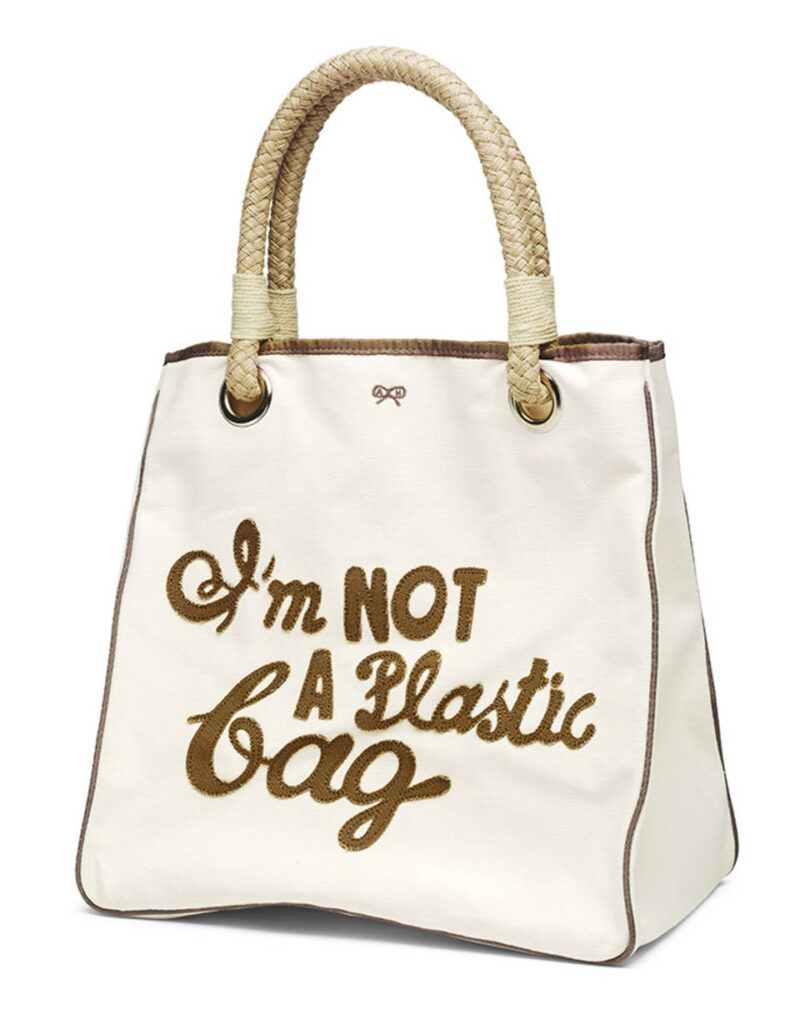
This overlap was explored in Bags: Inside Out, an exhibition at the Victoria and Albert Museum that brought together around 300 objects examining function, status, identity, and craftsmanship. The embroidered pouch created to protect Elizabeth I’s Great Seal and Winston Churchill’s red dispatch box appeared alongside accessories associated with celebrity culture and bags used as vehicles for messages. Among them was I’m NOT a Plastic Bag, created by Anya Hindmarch in 2007.
The letter opener resting on the desk can no longer be justified solely by the need to open envelopes. In contemporary designs by Montblanc and Christofle, its function remains clear, but it now shares attention with the steel, the leather, the weight in the hand, and the deliberate gesture of slicing through paper.
Technology has reduced the need for the letter opener without eliminating it. Today, choosing one also means choosing the weight of the metal, the gesture of cutting through paper, and a few extra seconds spent with an envelope.