
How an industrial dynasty transformed economic power into a language of style, culture, and influence.
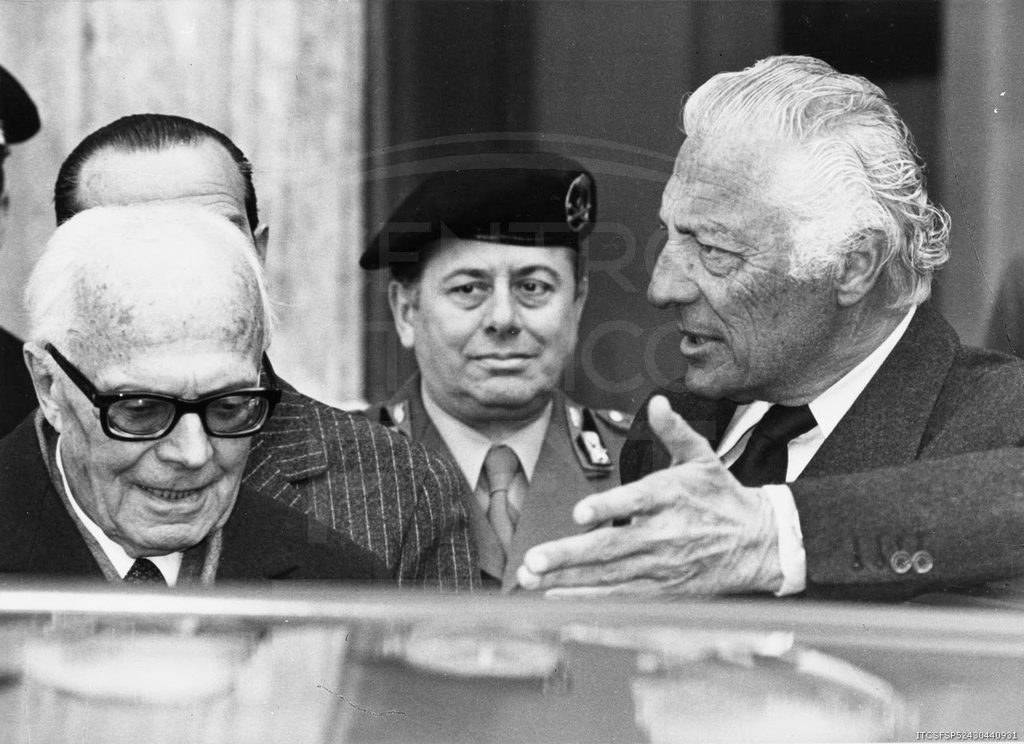
In 1991, journalist Sally Bedell Smith met Gianni Agnelli at Villa Frescot, in the hills of Turin. He wore a charcoal-gray Caraceni suit, a white shirt with the collar open, a gold Cartier watch over his shirt cuff, and brown suede shoes.
At first glance, there was nothing extraordinary about the outfit. A well-cut suit, an expensive watch, and classic shoes. The difference lay in the way Agnelli removed the rigidity from each piece. The Cartier appeared over his shirt cuff, his tie sat slightly askew, and his unbuttoned cuffs disrupted the precision of the tailoring, while the suede shoes brought a less formal element to the look. Repeated over the years and preserved in photographs, these gestures formed an instantly recognizable visual signature.
That appearance of improvisation, however, rested on a precise foundation. His suits were made to measure, and every choice revealed a command of the codes that allowed him to shift them without sacrificing elegance. Informality emerged as freedom, never carelessness.
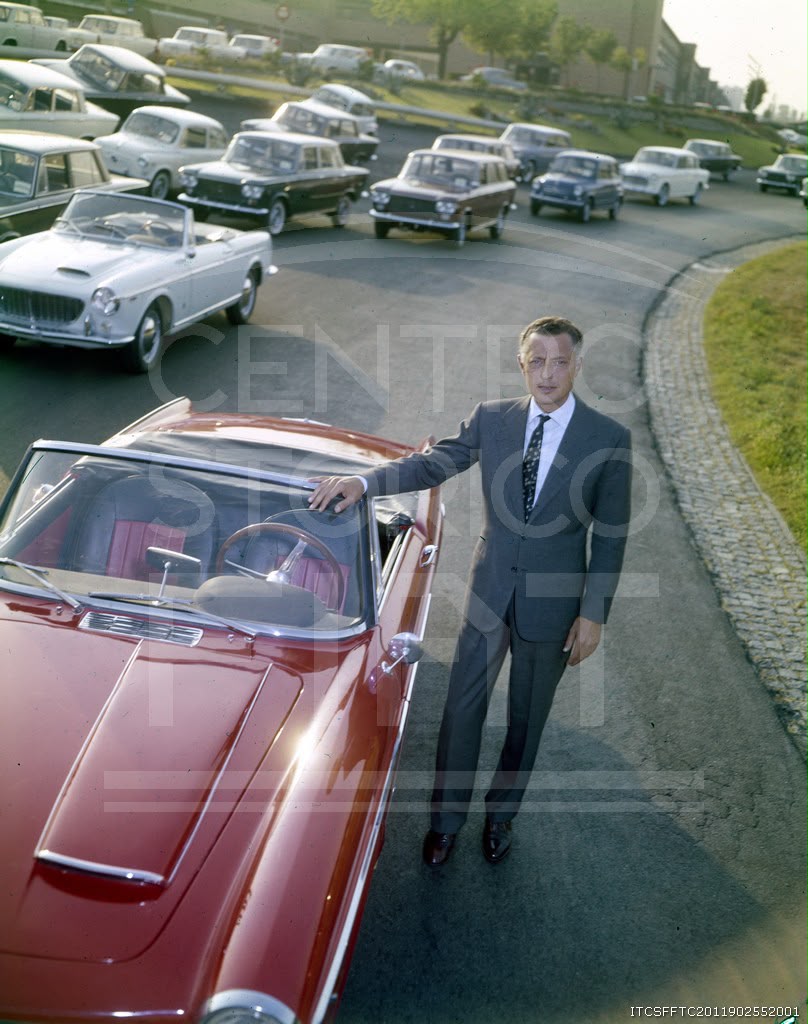
In 1899, Giovanni Agnelli, Gianni’s grandfather, helped establish the Fabbrica Italiana Automobili Torino, Fiat. The company expanded alongside Italian industrialization and found one of its most emblematic architectural expressions in the Lingotto factory, which began operating in 1923. Designed by Giacomo Mattè Trucco, the production line moved vertically through the building until it reached the rooftop test track. Decades later, models such as the Fiat 600 and the Nuova 500 would carry this vision of modernity into the streets and daily life of the country.
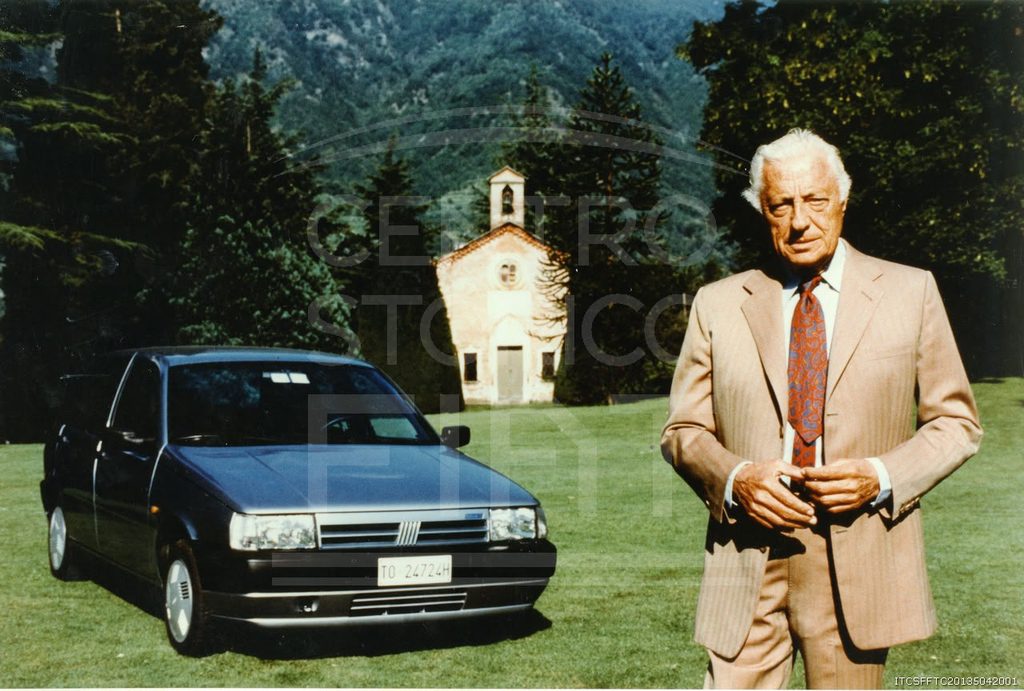
While Fiat placed the family at the center of Italy’s industrial transformation, beyond the factories the Agnellis cultivated a world shaped by homes, travel, art, and international relationships.
The Agnelli fortune came from industry, but by Gianni’s generation, the family name already moved across distinct social circles. His mother, Virginia Bourbon del Monte, belonged to a noble family. In 1953, he married Marella Caracciolo di Castagneto, the daughter of a diplomat and a member of the Italian aristocracy. Before their marriage, Marella had lived in New York and worked with photographer Erwin Blumenfeld. Her eye for art, interiors, and gardens would make her one of the defining figures behind the aesthetic language associated with the Agnellis.
Leia mais: Onde a arte encontra a mesa
After the Second World War, Vittorio Valletta remained in charge of the company’s daily management, and Gianni did not assume the presidency until 1966. By then, however, his public persona was already fully formed. Travel, sports, friendships, and appearances in the press had turned Fiat’s future president into an international figure before he formally took control of the company.
That world is best understood through its scenes rather than its titles. In 1962, Gianni and Marella joined the Kennedys at the America’s Cup in Newport, brought together by John and Gianni’s shared passion for sailing. During their seasons in New York, the couple visited downtown galleries and artists’ studios, moving in circles that included figures such as art dealer Leo Castelli.
In the Mediterranean, Marella welcomed friends aboard, among them Truman Capote, whom she had met in New York and who joined the couple on cruises along the coasts of Greece and Turkey. In St. Moritz, the same circle reunited during the winter season. Turin, however, remained their point of return: the city of Fiat, the family residences, and an art collection that had already begun to reshape the way the couple inhabited their homes.
By the early 1960s, Gianni and Marella had assembled enough contemporary works to reconsider the way they lived. Villa Bona, in the hills of Turin, offered a freer setting for the collection. In 1969, Gae Aulenti designed a Milan apartment to accommodate works by artists including Jasper Johns, Robert Rauschenberg, and Frank Stella. In New York, where the couple visited galleries and studios, Andy Warhol portrayed them in 1972. The collection began to influence directly how they conceived and occupied their homes.
Marella played a decisive role in shaping this world. At Villa Frescot, the couple’s principal residence in Turin, she worked with Renzo Mongiardino and later carried that visual vocabulary into her own line of fabrics. At their Park Avenue apartment in New York, she collaborated with Mongiardino and Peter Marino. At Villar Perosa, while Stéphane Boudin worked on one wing of the house, she joined Russell Page in renewing the gardens, preserving trees and memories connected to different generations.
The meeting of industry, architecture, and collecting found a particularly clear expression in 2002, with the opening of the Pinacoteca Giovanni e Marella Agnelli. Twenty-five works from the couple’s collection, including pieces by Canaletto, Matisse, Picasso, Modigliani, and Canova, went on display inside the Scrigno, a structure designed by Renzo Piano above the Lingotto test track. In the same building that had once symbolized Fiat’s industrial strength, the family transformed part of its private collection into one accessible to the public.
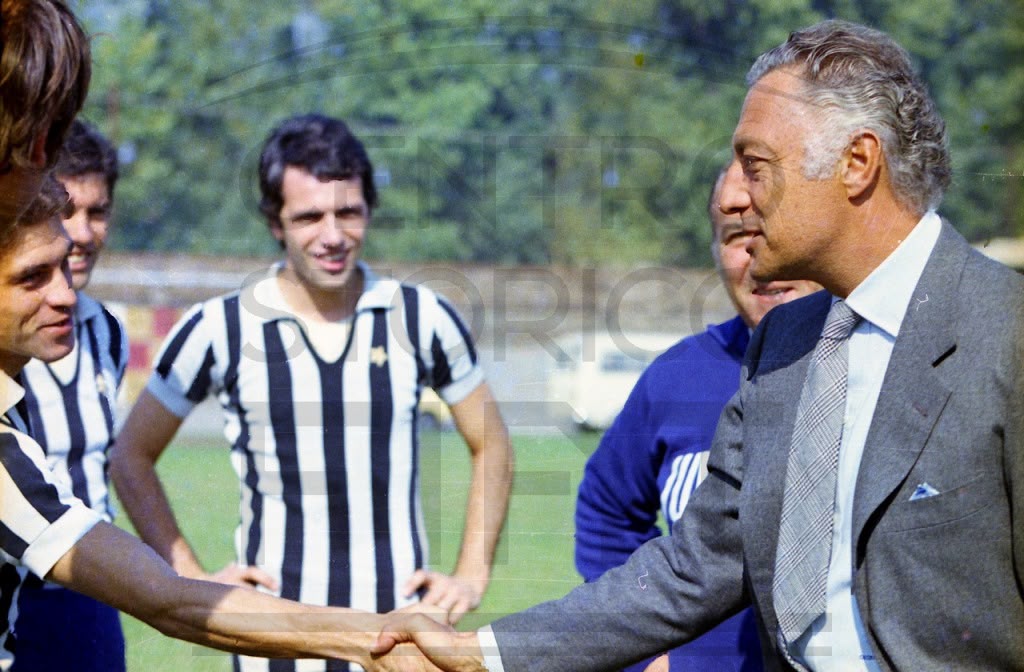
The Agnelli family’s relationship with Juventus began in 1923, when Gianni’s father, Edoardo, became president of the club. Gianni also held the position from 1947 to 1954 and remained closely connected to the team throughout his life, bringing the Agnellis closer to an audience far broader than the one reached through industry alone.
The fascination of the so-called “Agnelli myth” grew from the combination the family built over generations. Industry established its public scale. Gianni made that presence instantly recognizable. Marella expanded its vocabulary through art, interiors, gardens, and collecting. Around them, business, sport, art, and private life ceased to appear as separate worlds.
Decades later, a photograph of Gianni, an interior conceived by Marella, the curve of the Lingotto, or a garden at Villar Perosa still belongs, in its own way, to the same Agnelli imaginary.
Photos: Centro Storico Fiat Archive