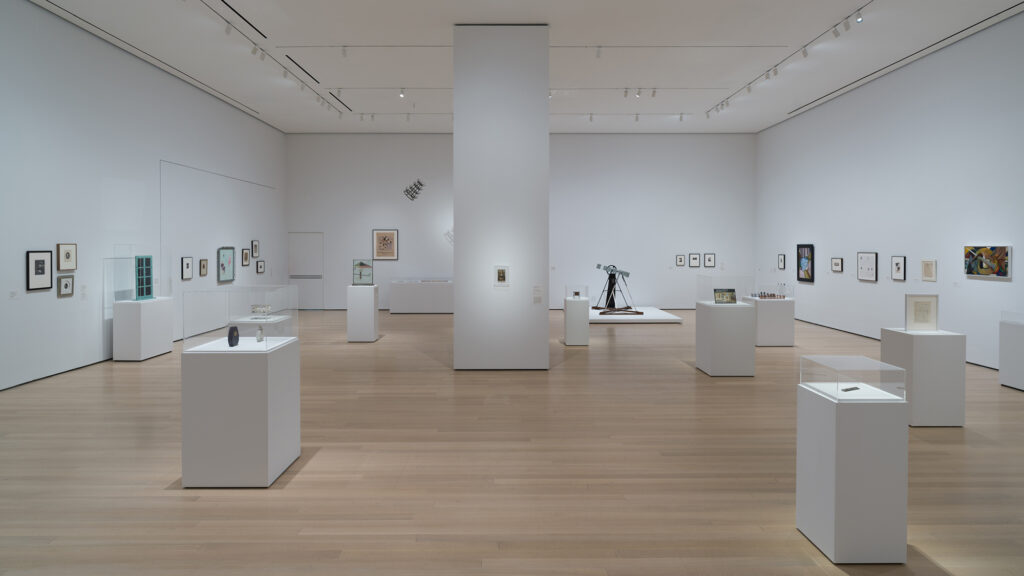
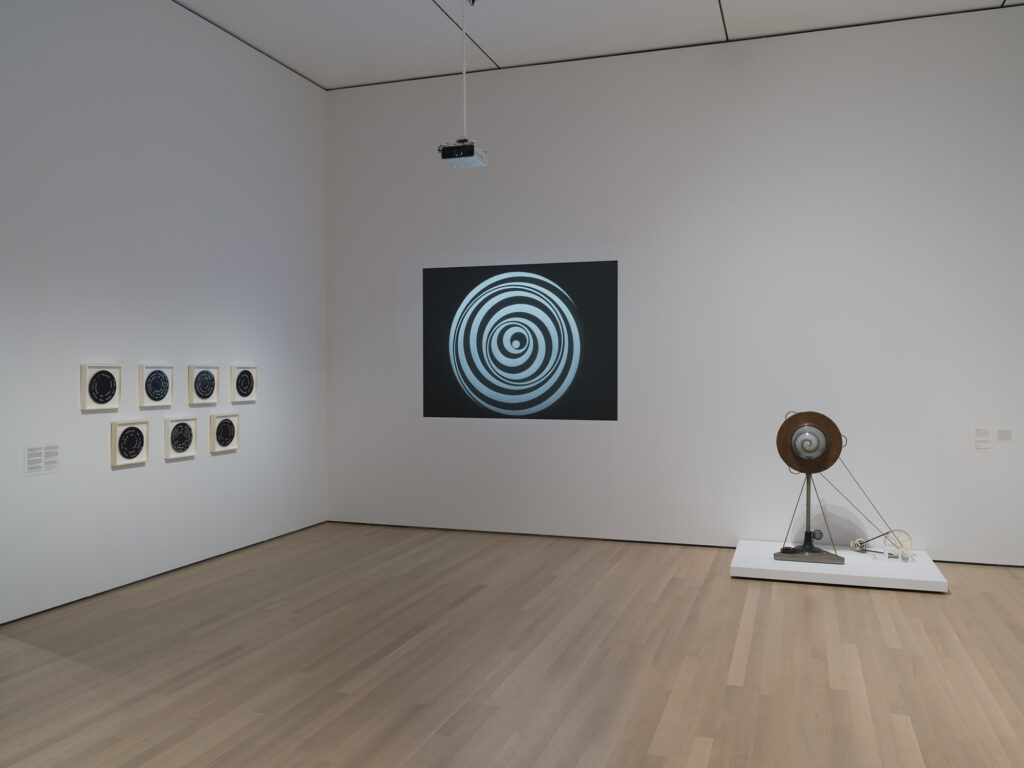
Marcel Duchamp returns to MoMA with nearly 300 works and the question that still unsettles art: where does the object end and the idea begin?
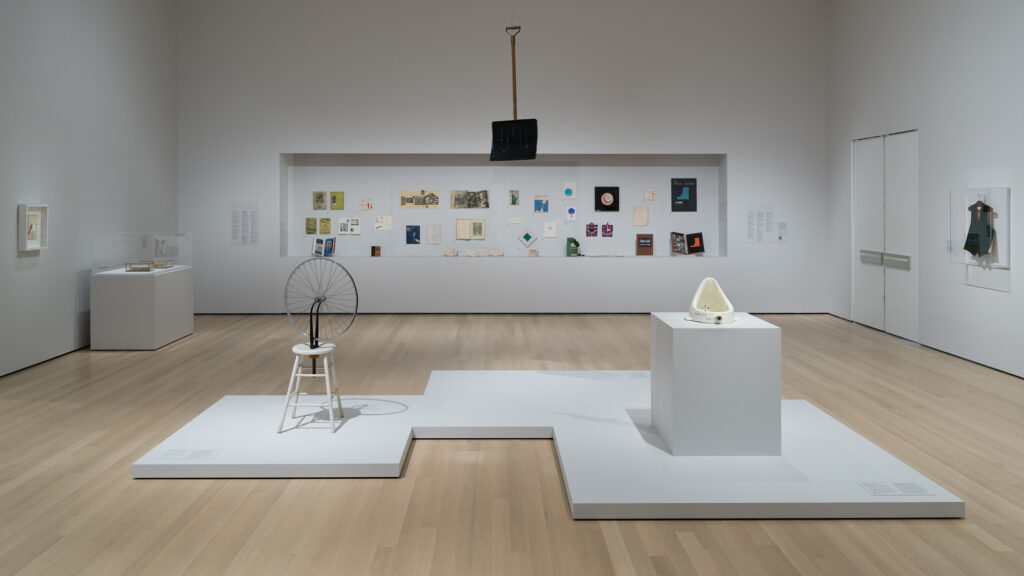
Fountain, by Marcel Duchamp, 1917.
In 1917, Marcel Duchamp submitted a standard Bedfordshire-model porcelain urinal to the exhibition of the Society of Independent Artists in New York. He rotated it ninety degrees from its functional position, signed it “R. Mutt,” titled it Fountain, and presented it as sculpture. The jury, despite its stated policy of accepting all submissions, refused to display it. The original was lost. The idea it released has never stopped working. Every conceptual artist, every installation, every institutional critique, every moment a viewer stands before an object in a museum and asks “why is this here?” carries the consequence of what Duchamp set in motion from a plumbing supply shop on Fifth Avenue.
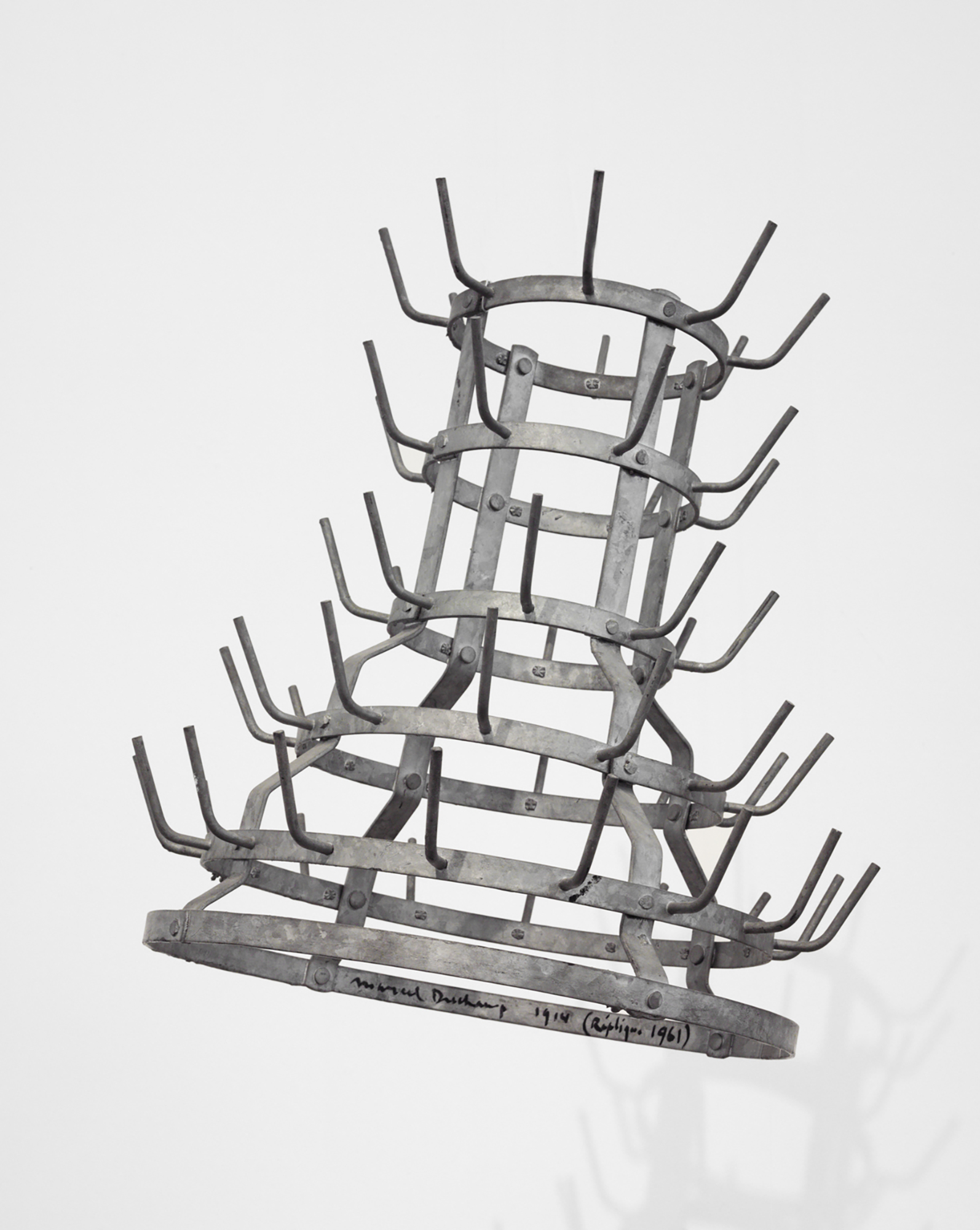
Bottlerack, by Marcel Duchamp, 1914.
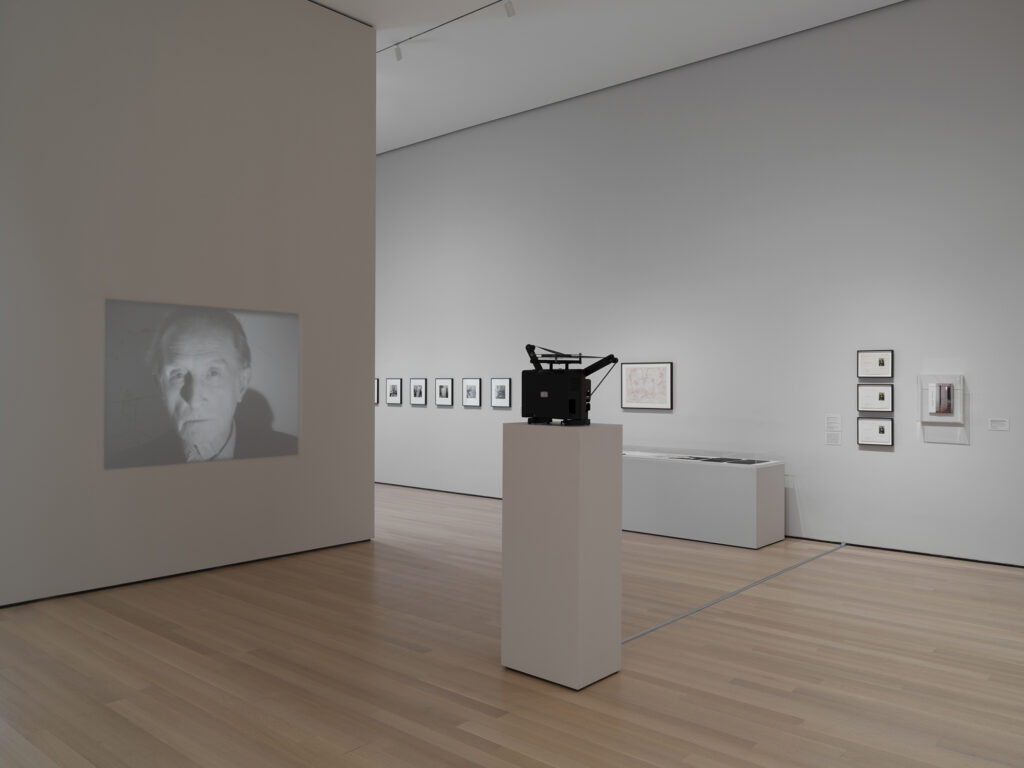
The last time The Museum of Modern Art organized a full retrospective of Duchamp was in 1973, co-produced with the Philadelphia Museum of Art, just five years after the artist’s death. Richard Nixon was in the White House. The Vietnam War was grinding toward its end. The art world was still metabolizing the implications of a man who had spent half a century dismantling the assumptions on which it operated. Now, fifty-three years later, Duchamp returns to MoMA. The exhibition, on view from April 12 through August 22, 2026, in the Steven and Alexandra Cohen Center for Special Exhibitions, assembles nearly three hundred works across painting, sculpture, film, photography, drawing, and printed matter, spanning six decades of a practice that refused every category it was offered.
Bicycle Wheel, by Marcel Duchamp, 1913.
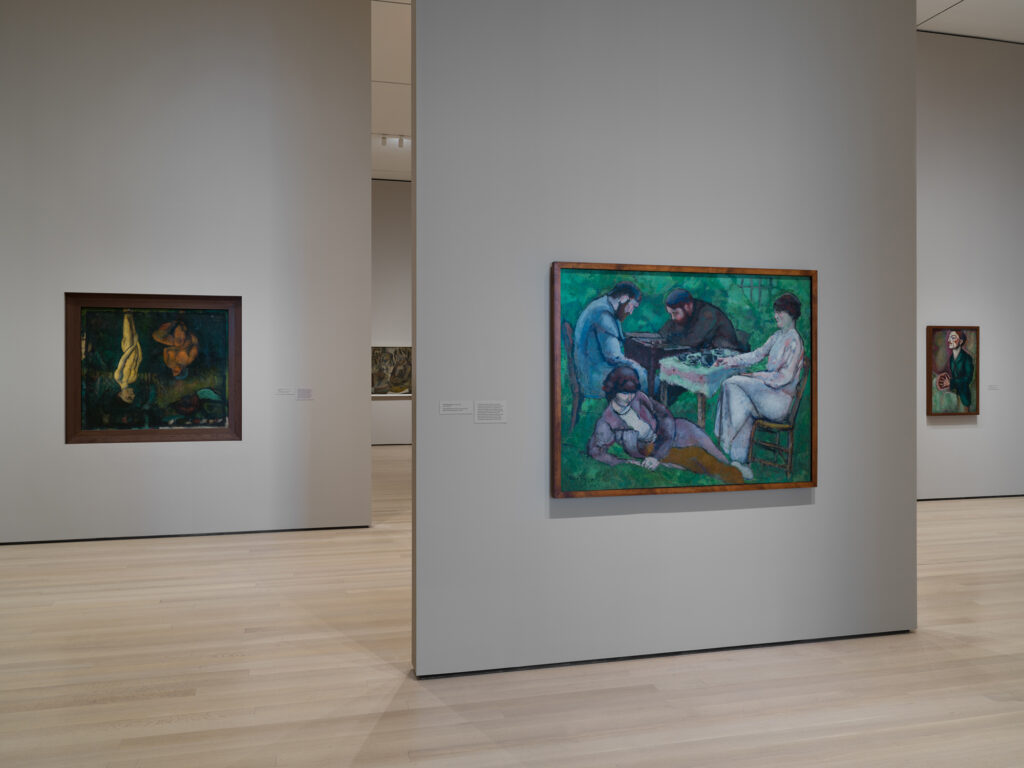
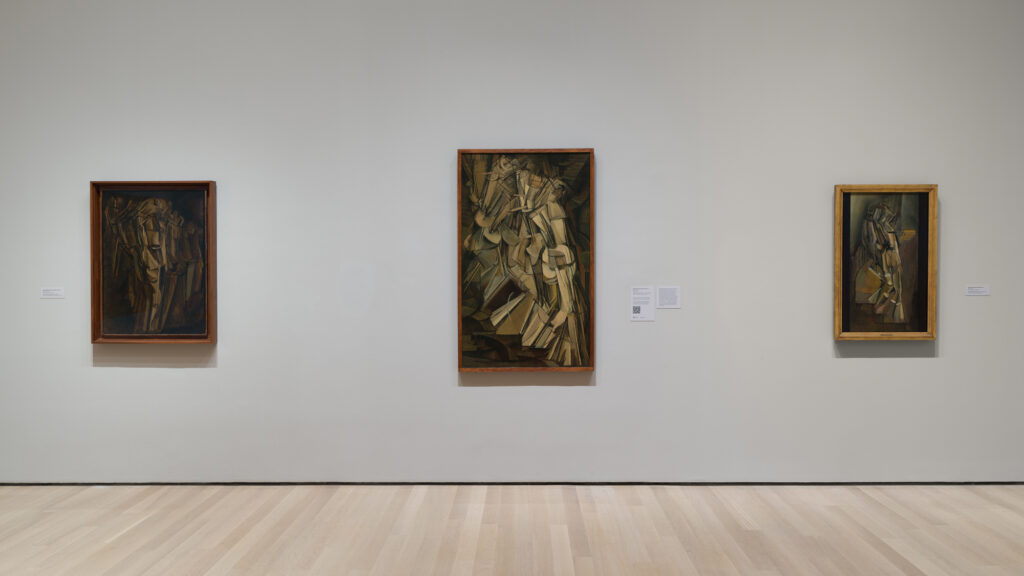
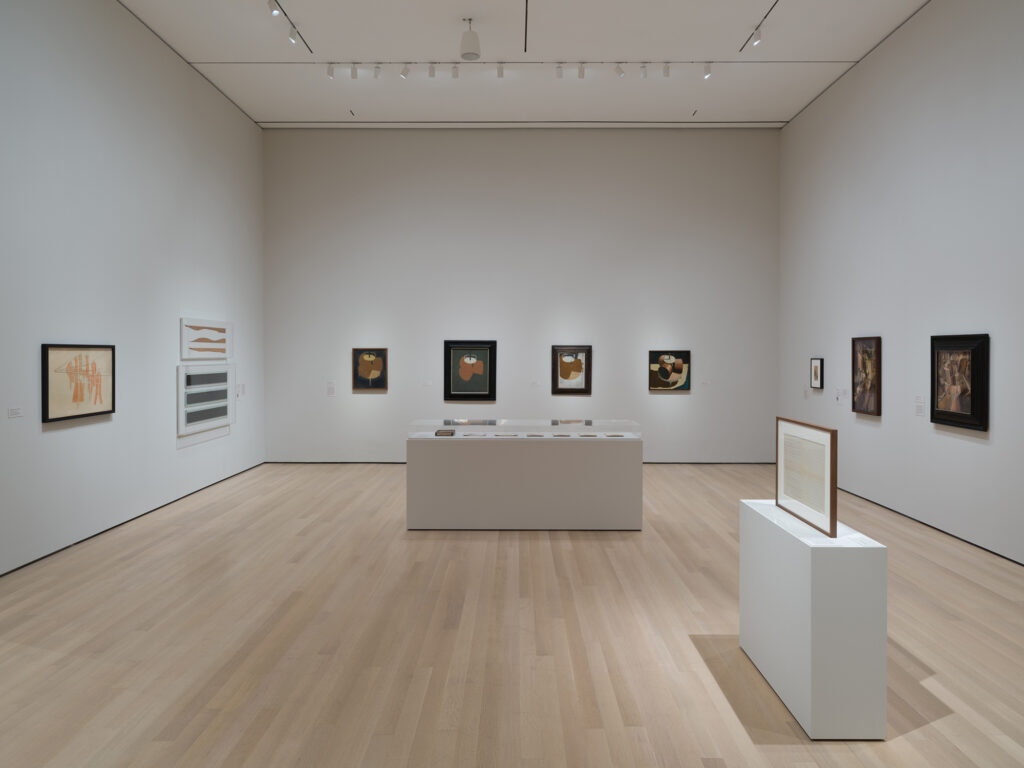
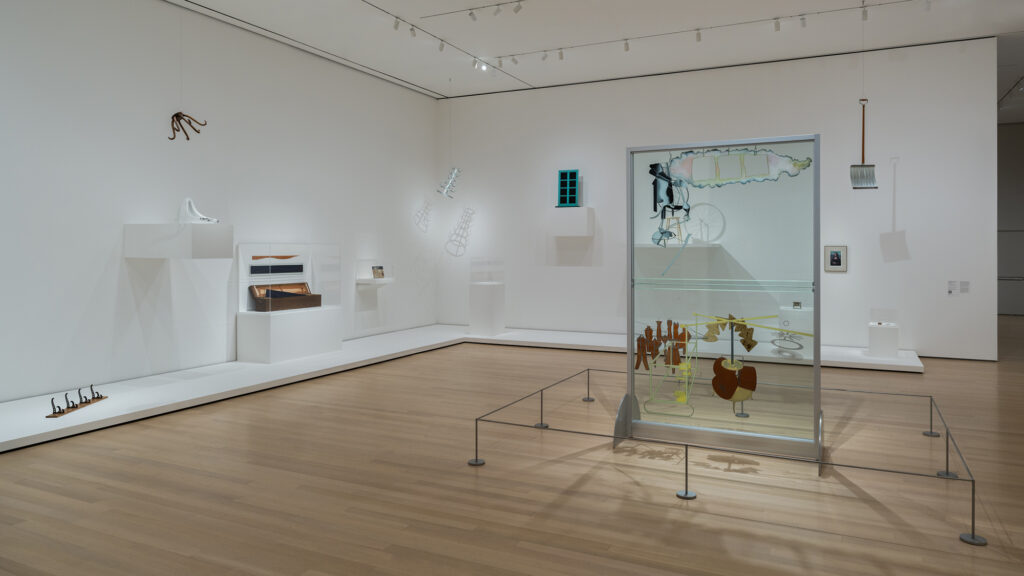
Duchamp at MoMA exhibit, 2026.
The readymades remain startling because they are so ordinary. They force the viewer to ask what, exactly, a museum is asking them to see.
The show is organized chronologically, and its early galleries may surprise visitors who know Duchamp only as the provocateur of the readymade. The young artist was technically accomplished, even conventional: salon paintings submitted to official French exhibitions, drawings and cartoons that demonstrate a fluency he would later appear determined to abandon. The turning point is Nude Descending a Staircase (No. 2), the 1912 painting that caused a sensation at the 1913 Armory Show in New York and made Duchamp, at twenty-five, among the most controversial figures in modern art. The canvas, on loan from the Philadelphia Museum of Art, has not appeared at MoMA in decades.From the Nude, the exhibition traces the invention that would define Duchamp’s legacy: the readymade. He described the concept in 1961 as “the most important single idea to come out of my work.” The principle was deceptively simple: designating an ordinary manufactured object as art through the act of choosing it rather than making it. A bicycle wheel mounted on a kitchen stool (1913). A bottle rack purchased from a Paris department store (1914). A snow shovel titled In Advance of the Broken Arm (1915). And Fountain, the work that made the act of selection itself the creative gesture. The surviving readymades are gathered here, and in their plain, undemonstrative presence they remain genuinely startling, objects so ordinary they force the viewer to confront what, exactly, a museum is asking them to look at.Parallel to the readymades, Duchamp spent eight years on The Bride Stripped Bare by Her Bachelors, Even (1915 to 1923), the work known as The Large Glass, a construction on two panes of glass that freed painting from both canvas and wall. The exhibition presents the preparatory studies, notes, and mechanical drawings that reveal the obsessive precision beneath what appears, on first encounter, to be an exercise in elaborate absurdity.The Dada section includes L.H.O.O.Q. (1919), the postcard reproduction of the Mona Lisa on which Duchamp penciled a mustache and goatee, perhaps the most widely recognized act of artistic defacement in history, alongside the experimental film Anémic Cinéma (1926) and the persona of Rrose Sélavy, the feminine alter ego whose punning name (say it aloud in French: Eros, c’est la vie) became a conceptual work in itself. MoMA holds a particular connection to this period: it was the first museum anywhere to acquire a Duchamp work, adding Anémic Cinéma to the Film Library collection in 1938.
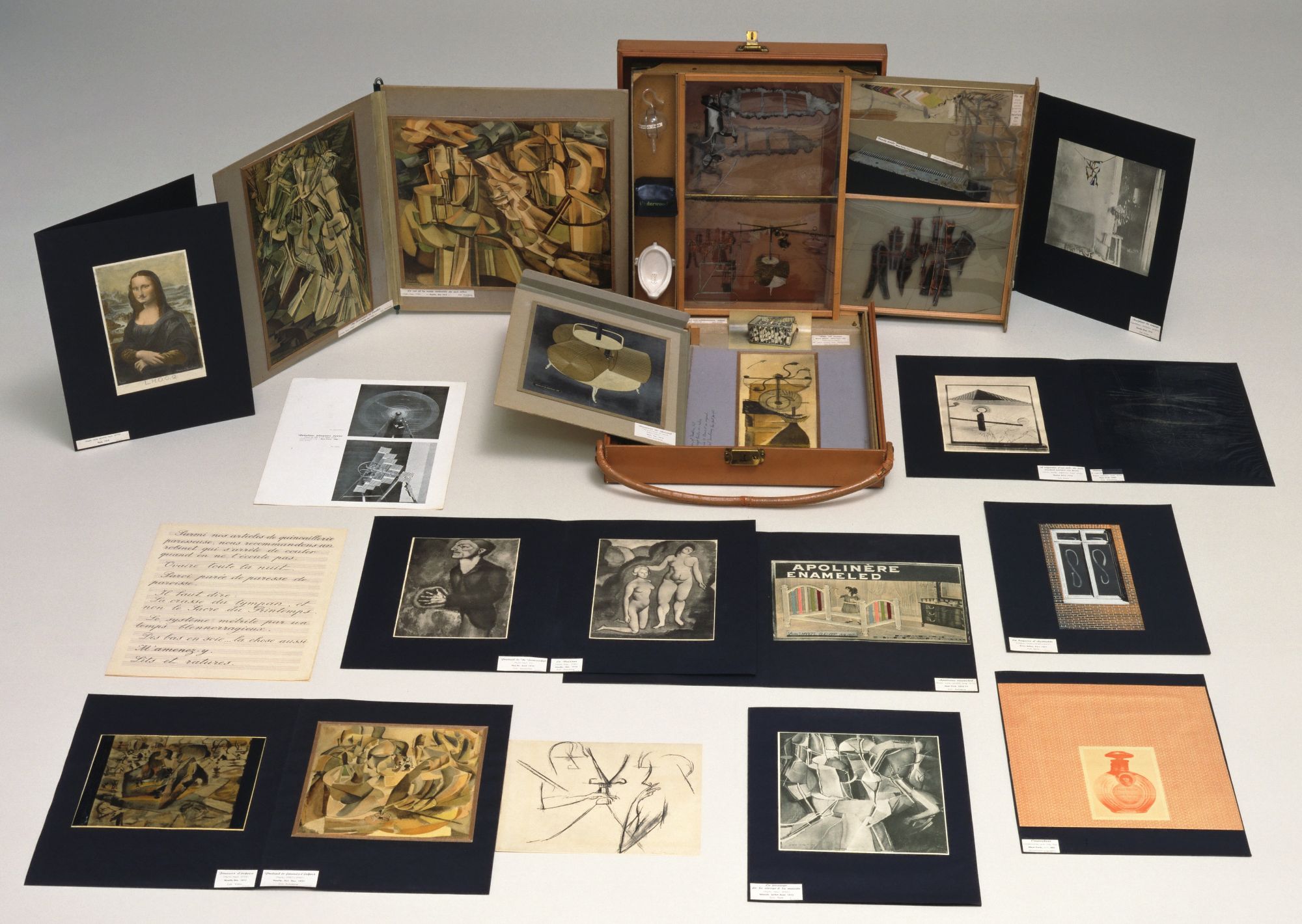
The central gallery stages one of the most substantial presentations of Boîte-en-valise (1935 to 1941), Duchamp’s “portable museum,” a leather valise containing sixty-nine miniature reproductions of his most important works, each fabricated by hand. It is the ultimate Duchamp gesture: an artist creating a museum of his own output, distributing it in numbered editions, collapsing the distinction between original and copy decades before the question entered mainstream discourse.The exhibition is organized by Ann Temkin, Michelle Kuo, and Matthew Affron, with loans from the Centre Pompidou, the Philadelphia Museum of Art, and private collections worldwide. It is sponsored by Bank of America. The accompanying catalog runs to three hundred and forty pages with nearly one thousand illustrations, a volume that, like the work it documents, will reward years of return.Duchamp was born in Blainville-Crevon, Normandy, in 1887. He died in Neuilly-sur-Seine in 1968, having spent most of his later decades in New York, playing chess, giving interviews, and insisting, with increasing conviction, that he had stopped making art. The retrospective suggests otherwise. It suggests that for Duchamp, the work never stopped. It simply moved from the studio to the idea, from the hand to the mind, from the object to the question the object provokes.