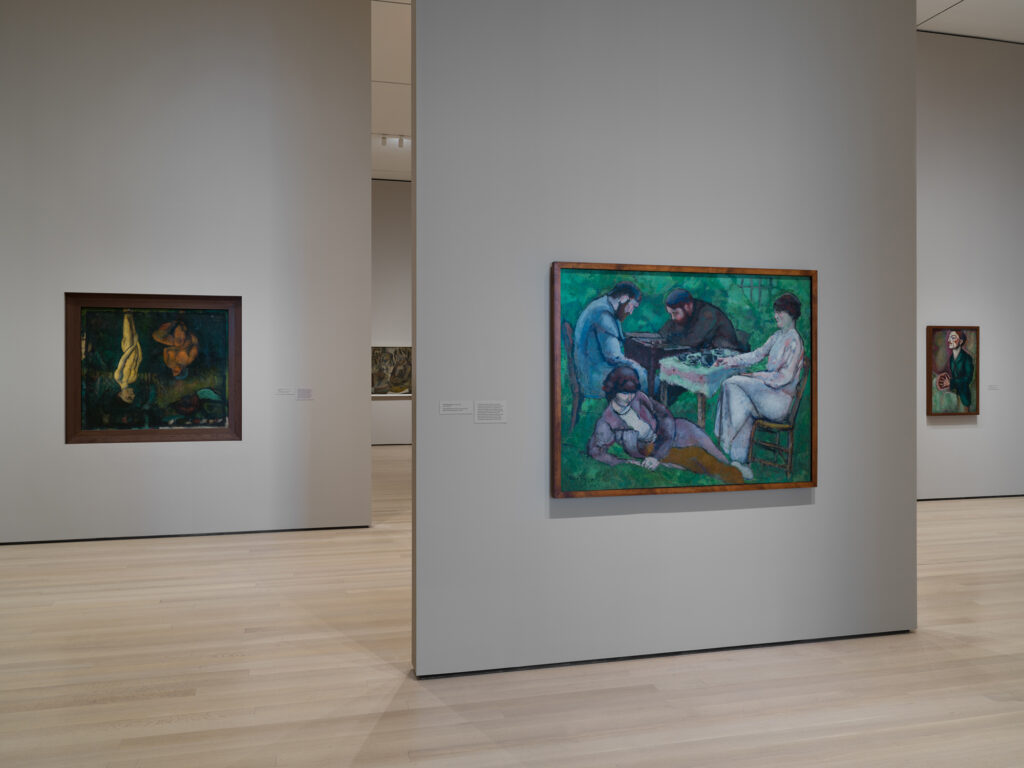
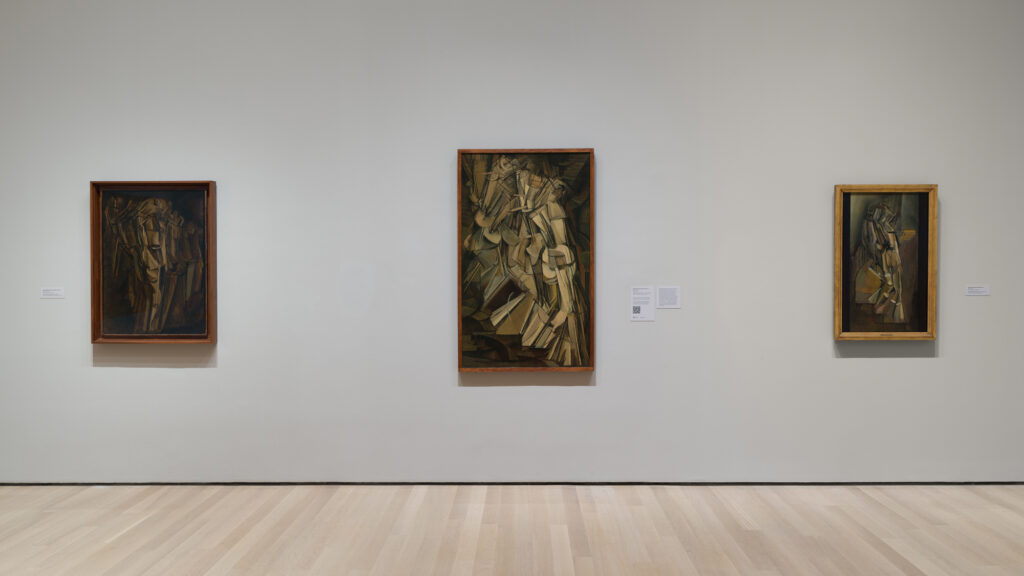
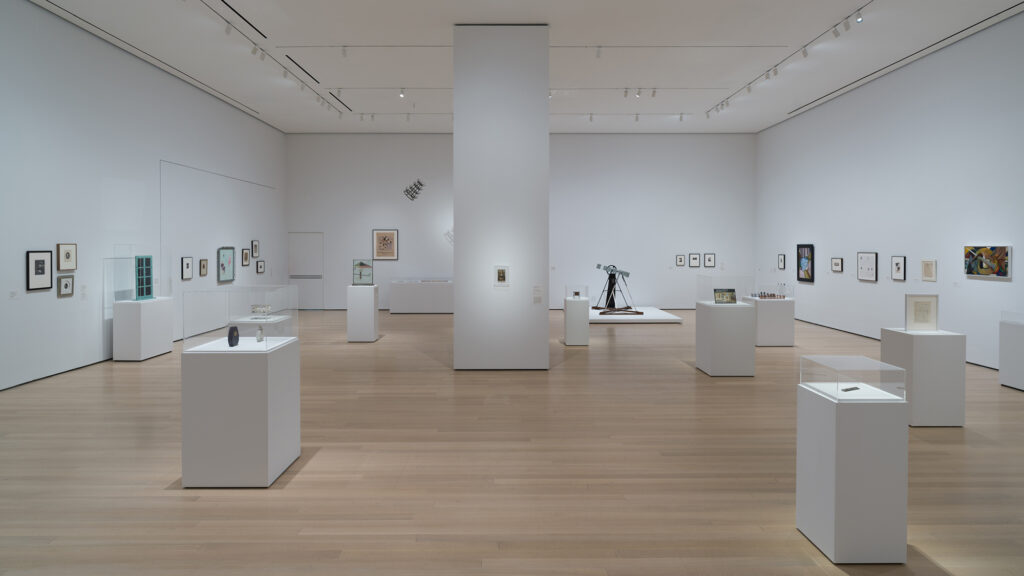
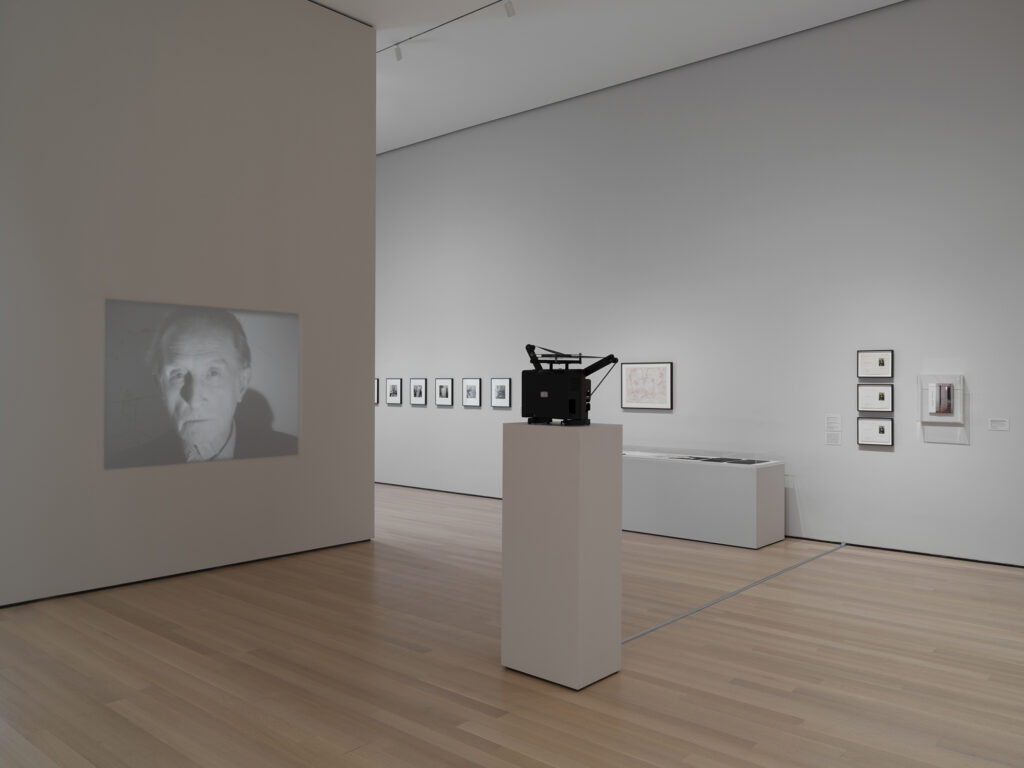
The show is organized chronologically, and its early galleries may surprise visitors who know Duchamp only as the provocateur of the readymade. The young artist was technically accomplished, even conventional: salon paintings submitted to official French exhibitions, drawings and cartoons that demonstrate a fluency he would later appear determined to abandon. The turning point is Nude Descending a Staircase (No. 2), the 1912 painting that caused a sensation at the 1913 Armory Show in New York and made Duchamp, at twenty-five, among the most controversial figures in modern art. The canvas, on loan from the Philadelphia Museum of Art, has not appeared at MoMA in decades.
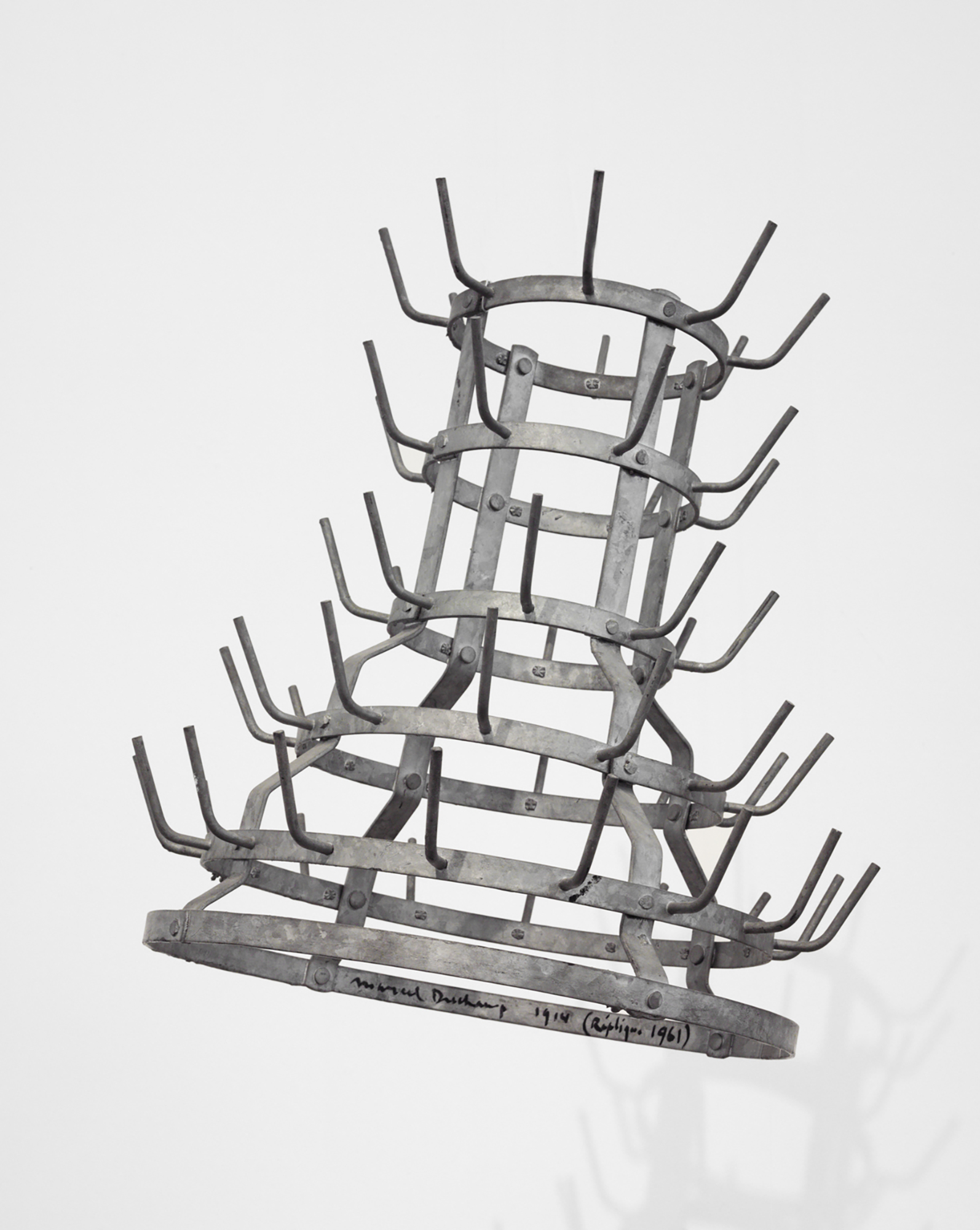
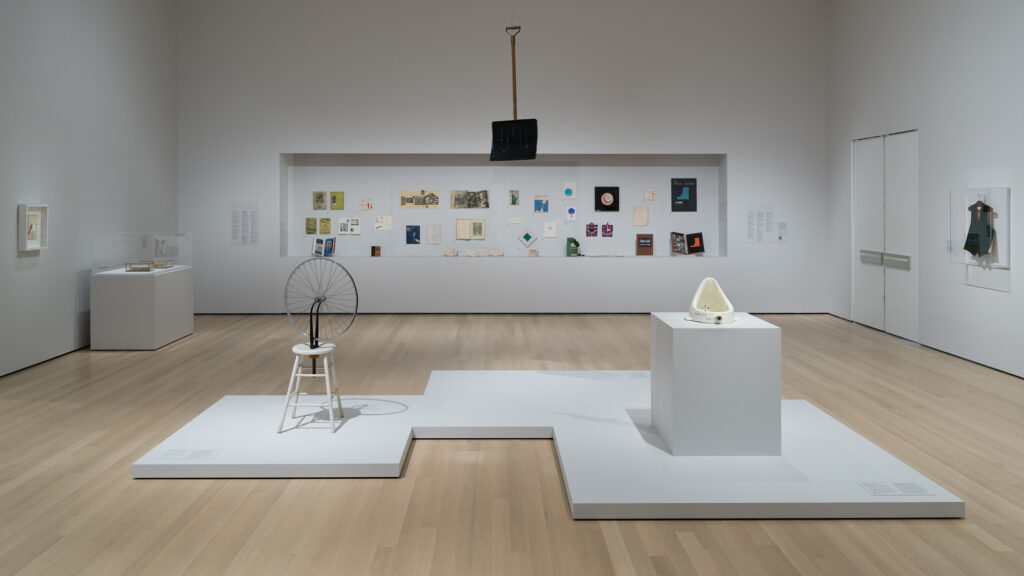
From the Nude, the exhibition traces the invention that would define Duchamp’s legacy: the readymade. He described the concept in 1961 as “the most important single idea to come out of my work.” The principle was deceptively simple: designating an ordinary manufactured object as art through the act of choosing it rather than making it. A bicycle wheel mounted on a kitchen stool (1913). A bottle rack purchased from a Paris department store (1914). A snow shovel titled In Advance of the Broken Arm (1915). And Fountain, the work that made the act of selection itself the creative gesture. The surviving readymades are gathered here, and in their plain, undemonstrative presence they remain genuinely startling, objects so ordinary they force the viewer to confront what, exactly, a museum is asking them to look at.
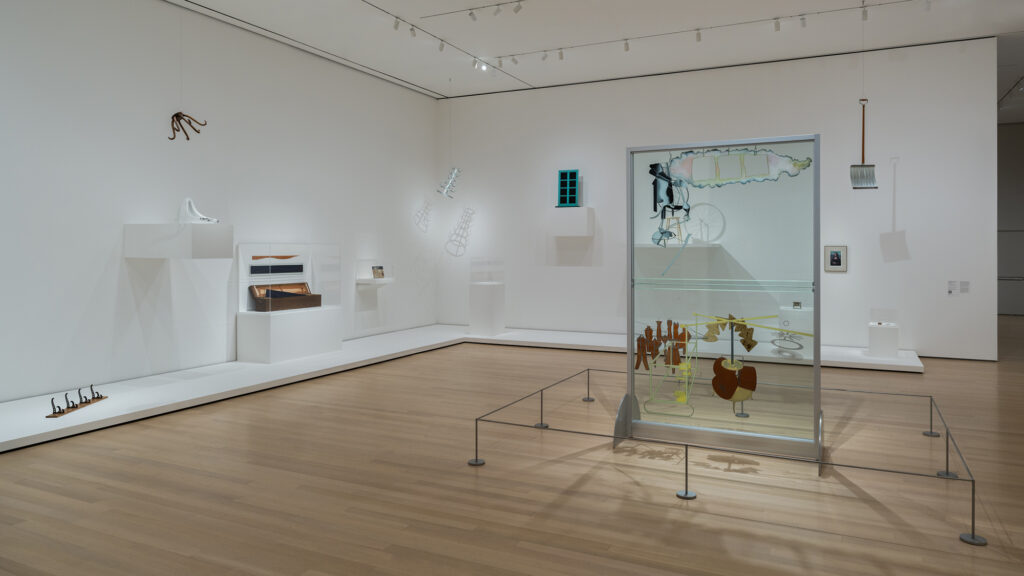
Parallel to the readymades, Duchamp spent eight years on The Bride Stripped Bare by Her Bachelors, Even (1915 to 1923), the work known as The Large Glass, a construction on two panes of glass that freed painting from both canvas and wall. The exhibition presents the preparatory studies, notes, and mechanical drawings that reveal the obsessive precision beneath what appears, on first encounter, to be an exercise in elaborate absurdity.
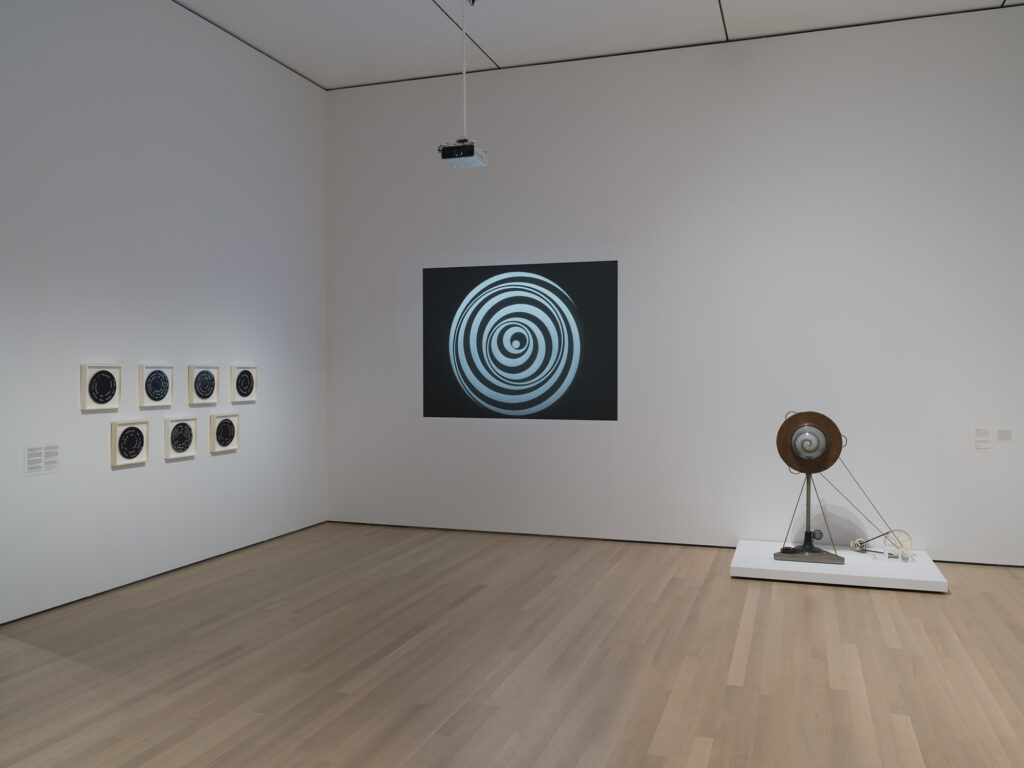
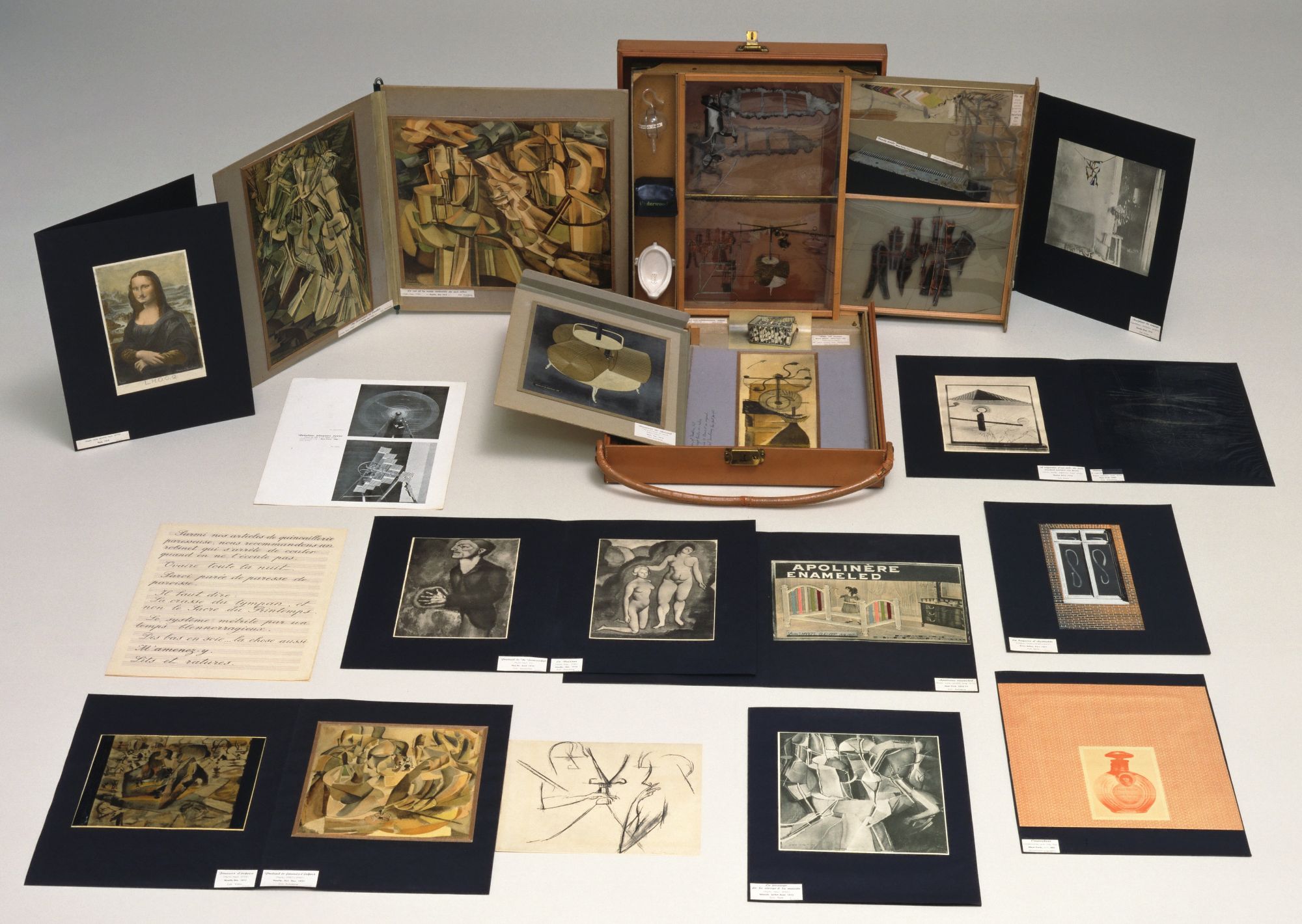
The Dada section includes L.H.O.O.Q. (1919), the postcard reproduction of the Mona Lisa on which Duchamp penciled a mustache and goatee, perhaps the most widely recognized act of artistic defacement in history, alongside the experimental film Anémic Cinéma (1926) and the persona of Rrose Sélavy, the feminine alter ego whose punning name (say it aloud in French: Eros, c’est la vie) became a conceptual work in itself. MoMA holds a particular connection to this period: it was the first museum anywhere to acquire a Duchamp work, adding Anémic Cinéma to the Film Library collection in 1938.