
By Catherine Jacobi
How Diana Vreeland turned fantasy into an editorial method, and the discipline that held it in place.
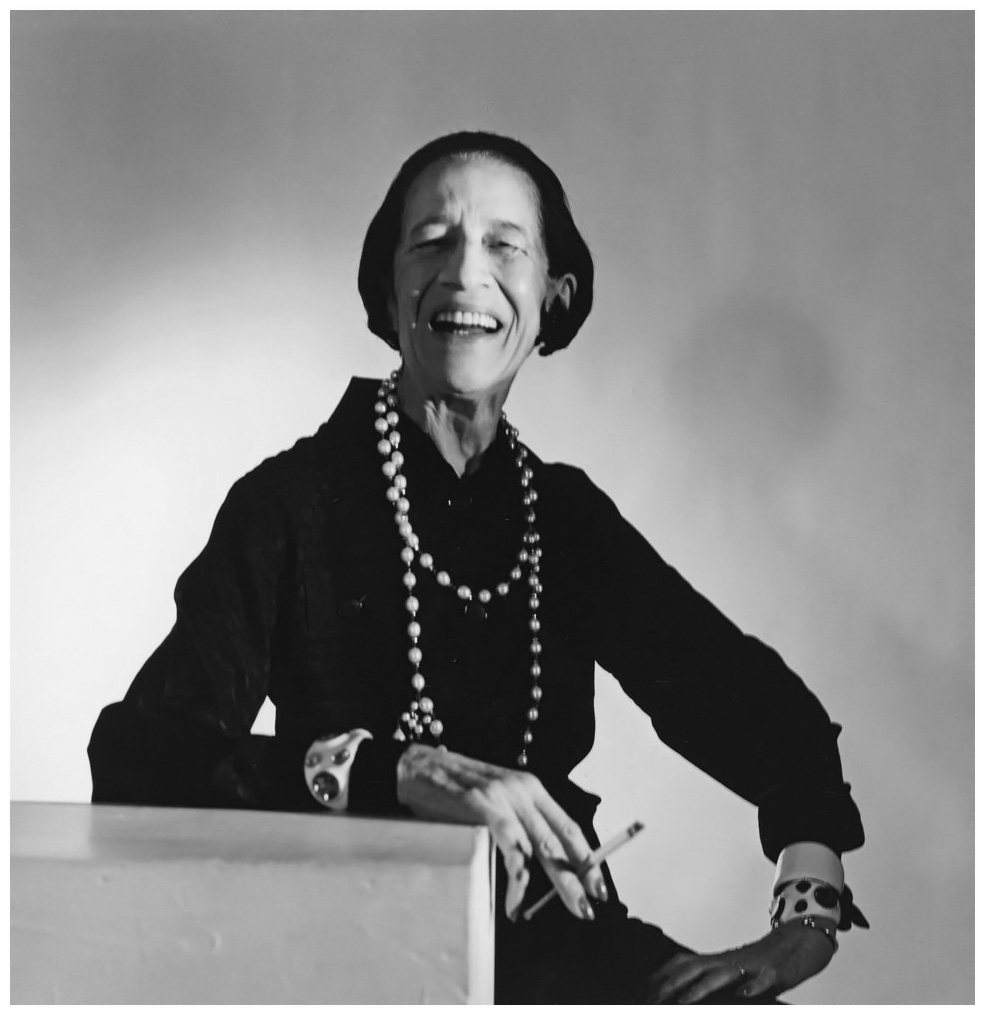
Portrait of Vreeland by Horst P. Horst, 1979.
One of Diana Vreeland’s most famous suggestions involved champagne. It appeared in “Why Don’t You…?”, the column she began writing for Harper’s Bazaar in 1936, and by her own account, it drew more attention than anything else she wrote there: why don’t you wash your blond child’s hair in dead champagne, as they do in France? Another entry proposed turning the same child into an Infanta for a costume party. S. J. Perelman parodied the column in The New Yorker, a move that outraged her editor, Carmel Snow.
Vreeland later explained what she thought a magazine was for. In her 1984 memoir D.V., she wrote that fashion magazines gave readers a point of view, something most people did not have and expected an editor to provide. Her example was a slogan she ran at Vogue in the mid-1960s, announcing the year of doing it yourself, after which stores across the country telephoned to tell her it had missed the mark.
At Bazaar, she had already seen what a single photograph could do. In 1943, the editor Nicolas de Gunzburg met an eighteen-year-old model at a New York club and sent her to the magazine, where Vreeland arranged for Louise Dahl-Wolfe to photograph her in Kodachrome for the March cover. The model was Lauren Bacall, pictured in a suit, gloves, and a cloche, standing against the door of a Red Cross blood donor room, with long waves of hair falling from beneath it. Letters arrived asking who she was. Slim Keith saw the cover and showed it to her husband, Howard Hawks, and by 1944, Bacall was starring opposite Humphrey Bogart in To Have and Have Not.
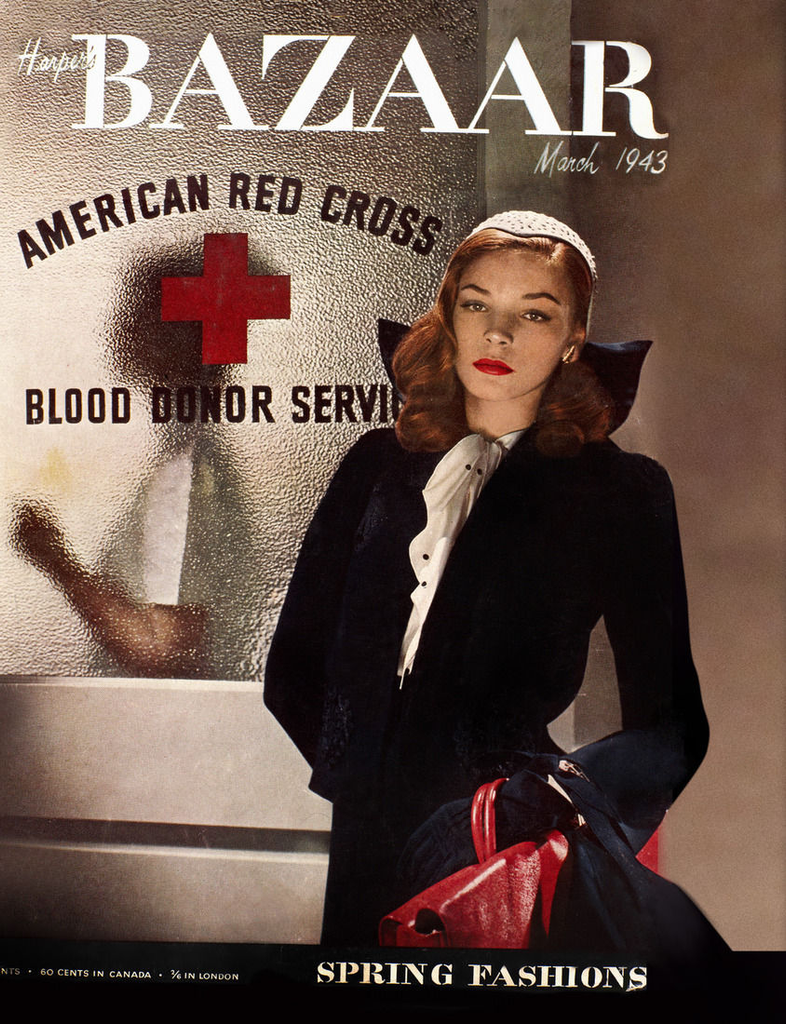
Harper’s Bazaar cover, March 1943, Lauren Bacall, photograph by Louise Dahl-Wolfe, Hearst.
By the time she moved to Vogue in 1962, becoming editor-in-chief the following year, she had a working theory about the power of an image, which she once put to the designer Rudi Gernreich. He had conceived a topless swimsuit as a statement he never meant to produce, and had Peggy Moffitt model it for her. Vreeland’s answer was: “If there’s a picture of it, it’s an actuality. You must make it.” He did and called it the monokini.
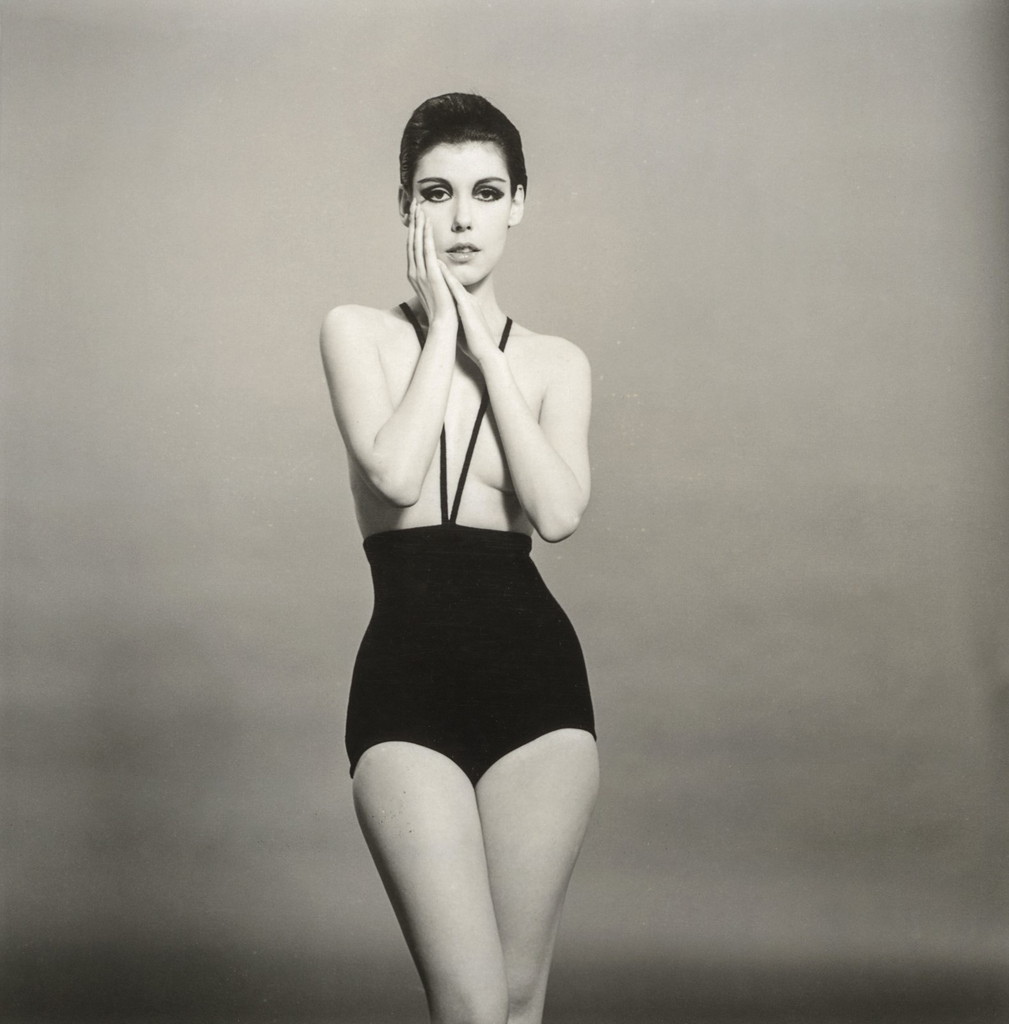
Peggy Moffitt in Rudi Gernreich’s monokini, 1964, photograph by William Claxton.
The Vogue she edited from 1963 to 1971 was built on that conviction. In 1965, she coined youthquake, a word for the moment when fashion began taking its cues from the young. The same imagination ran through the memos she sent her staff, one of which asked them to think in pig white, the color of a baby pig, not quite white and not quite pink. Her lavish spending was among the factors cited when she was dismissed in 1971.
Her own working wardrobe was far more restrained than her public image might suggest. At Vogue, she wore a black sweater, a beige skirt, and low sandals with an ankle strap. Richard Avedon, who worked with her for close to forty years, wrote after her death that what she presented was not who she was, and that she lived for imagination ruled by discipline.
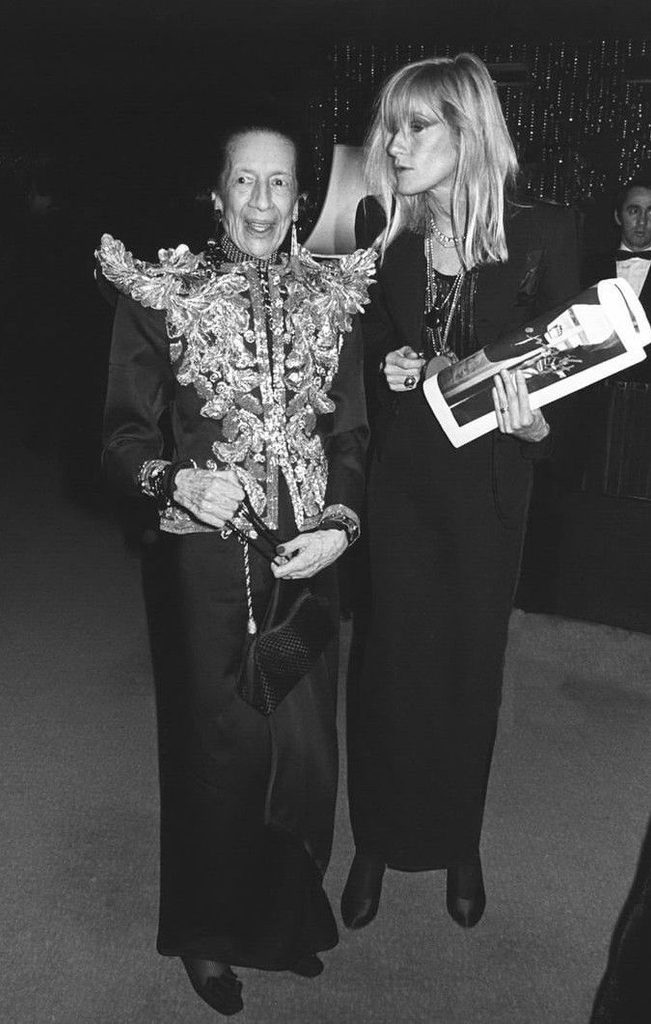
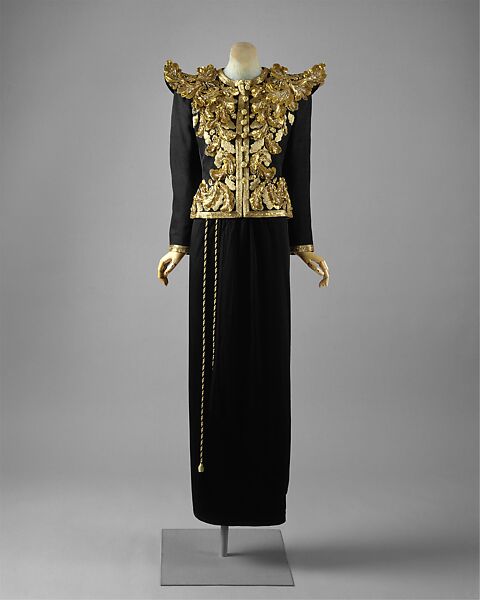
Yves Saint Laurent evening ensemble, spring/summer 1980, silk, metallic thread, beads and sequins, The Metropolitan Museum of Art, Gift of Diana Vreeland, 1984 (1984.607.28a–c).
In 1972, the Metropolitan Museum of Art appointed her special consultant to its Costume Institute, a department whose displays, by its own later account, had drawn almost no one beyond specialists. Her first exhibition, The World of Balenciaga, opened in 1973. She lit the galleries the way a photographer lights a studio, using shadow to guide visitors along a route, and posed a mannequin in a flamenco dress so that it appeared to be dancing.
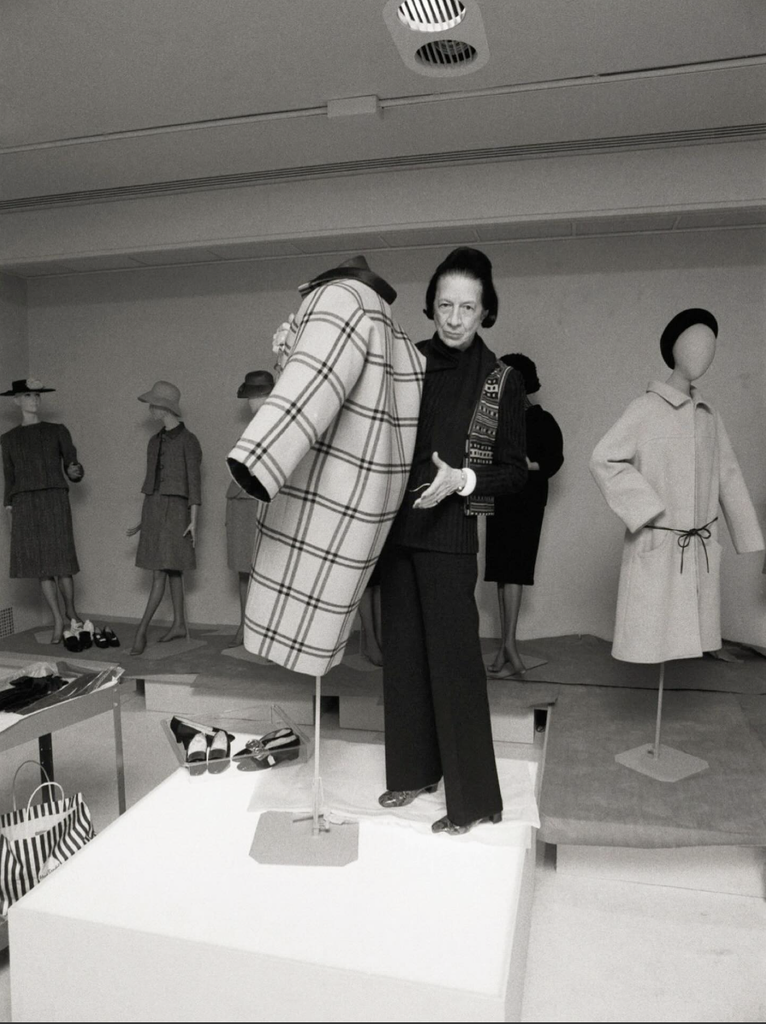
Vreeland with a Balenciaga single seam coat at the Costume Institute, 1973, Bettmann via Getty Images.
She worked on those shows the way she had worked on issues, borrowing far more than she intended to display and then editing the selection down until the effect was right. The Met’s 1993 catalog recalls that the staff granted her glossy magenta walls and headless mannequins because they had learned her instincts were rarely wrong. Her methods also drew criticism. For Romantic and Glamorous Hollywood Design, in 1974, she commissioned replicas of film costumes, a choice that drew criticism from museum colleagues concerned with historical accuracy, and one former museum official complained, “She knows fashion and who wore it, but she doesn’t know history.” The criticism exposed the tension between Vreeland’s editorial instincts and the conventions of museum curatorship.
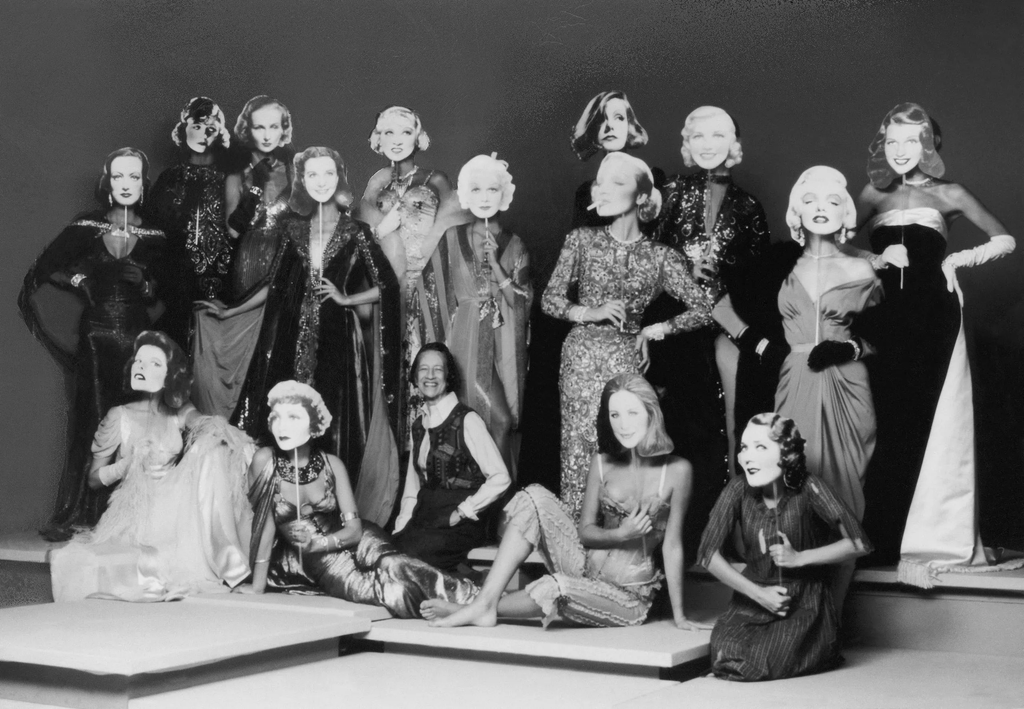
Models and actresses in costumes and masks for Romantic and Glamorous Hollywood Design, 1974, with Vreeland seated at the center.
When the Met mounted its tribute to her in 1993, four years after her death, the curators displayed a memo from her scarlet office. It listed what her red oilcloth table must always have: green or brown pencils in holders, Thuro Black editorial pencils (which, the memo noted, were hard to get), and a carton of Lucky Strikes. A diagram set out her 1:30 p.m. lunch, with assigned places for the yellow raisins, the cigarettes and lighter, the scotch, and the black coffee.
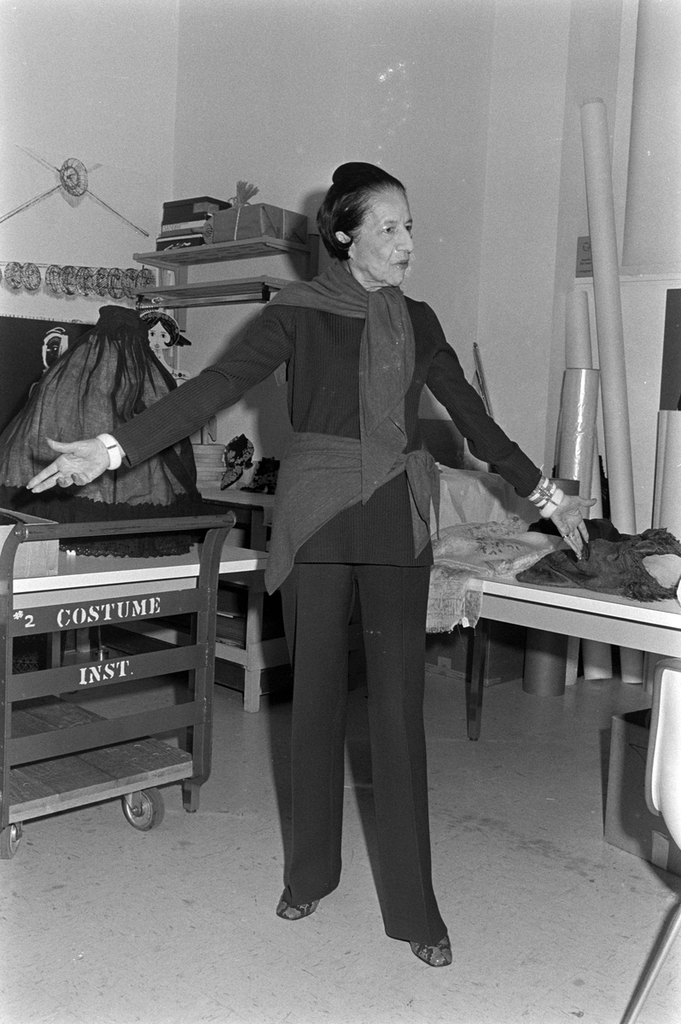
Vreeland interviewed in her New York office, 1972, WWD.
The woman who made fantasy look spontaneous had left instructions for where the raisins went.
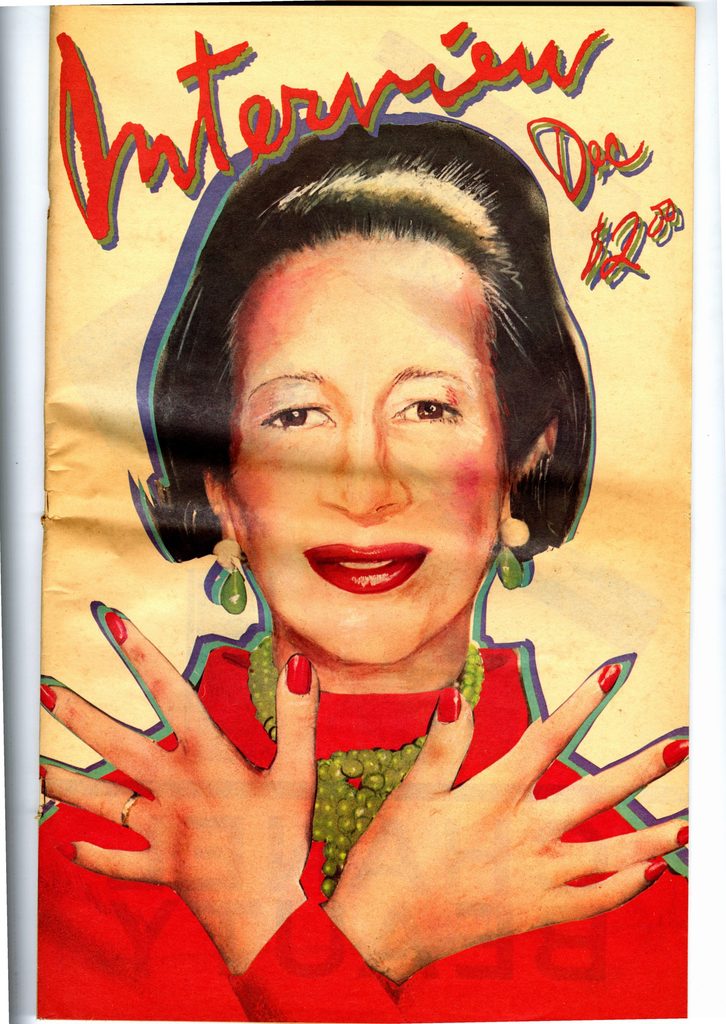
Diana Vreeland, December 1980 issue of Interview Magazine.