
Spain shipped it by the ton, and for two hundred years, Europe could not agree whether it was a berry, a seed, or a bug.
By Catherine Jacobi
Look at a prickly pear pad in Oaxaca, and the first thing you notice is a white fuzz, as if someone had flicked flour at it. Under the fuzz lives a scale insect, a few millimeters long, that spends its entire adult life fixed to the cactus, drinking its sap. Press one between your fingers, and they come away stained carmine. That stain, made by the females to keep predators off, is one of the most concentrated reds in nature, and it is how an insect this small ended up in the tribute rolls of an empire, the holds of Spanish galleons, and the paint boxes of Rembrandt and Renoir.
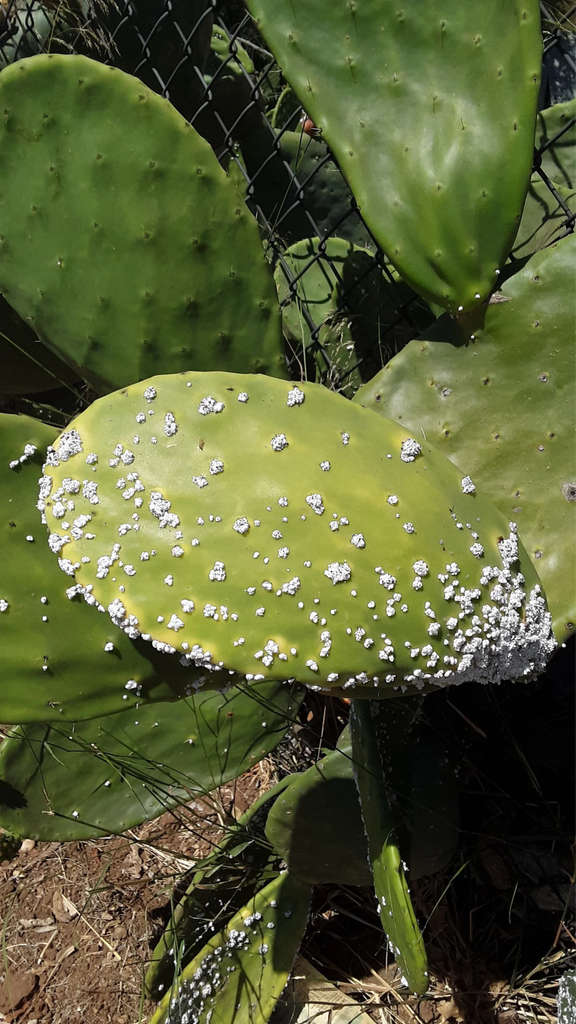
Cochineal on nopal pad. Photo: Patricia Pauchnick, 2018
It was never an easy red to make. A dyer needed something like seventy thousand dried insects for a single pound of dye, and the mordants and the water in the bath decided whether the cloth came out pink, crimson, plum, or nearly black. What made it worth the trouble was the result: a red that held its brightness on wool and silk.
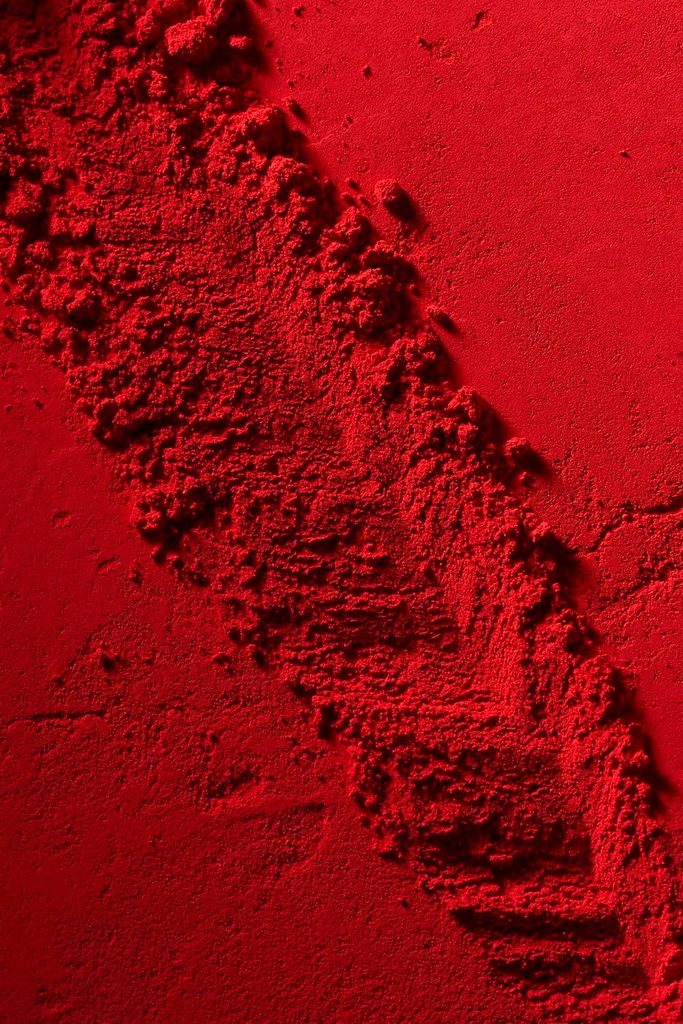
Ground carmine pigment. Photo: Stock Image
The people who worked that out lived in the highlands of what is now Oaxaca, centuries before anyone in Seville had heard of them. Mixtec and Zapotec farmers raised the insect on planted nopal, brushing the young ones onto fresh pads and choosing, generation after generation, the largest and reddest, until the farmed insect was plainly bigger and richer in dye than its wild cousins. In Nahuatl, it was nocheztli, cactus blood, and the Aztec state collected it by the sack. One of the towns that paid, Nochixtlán, still carries the name: place of cactus blood.
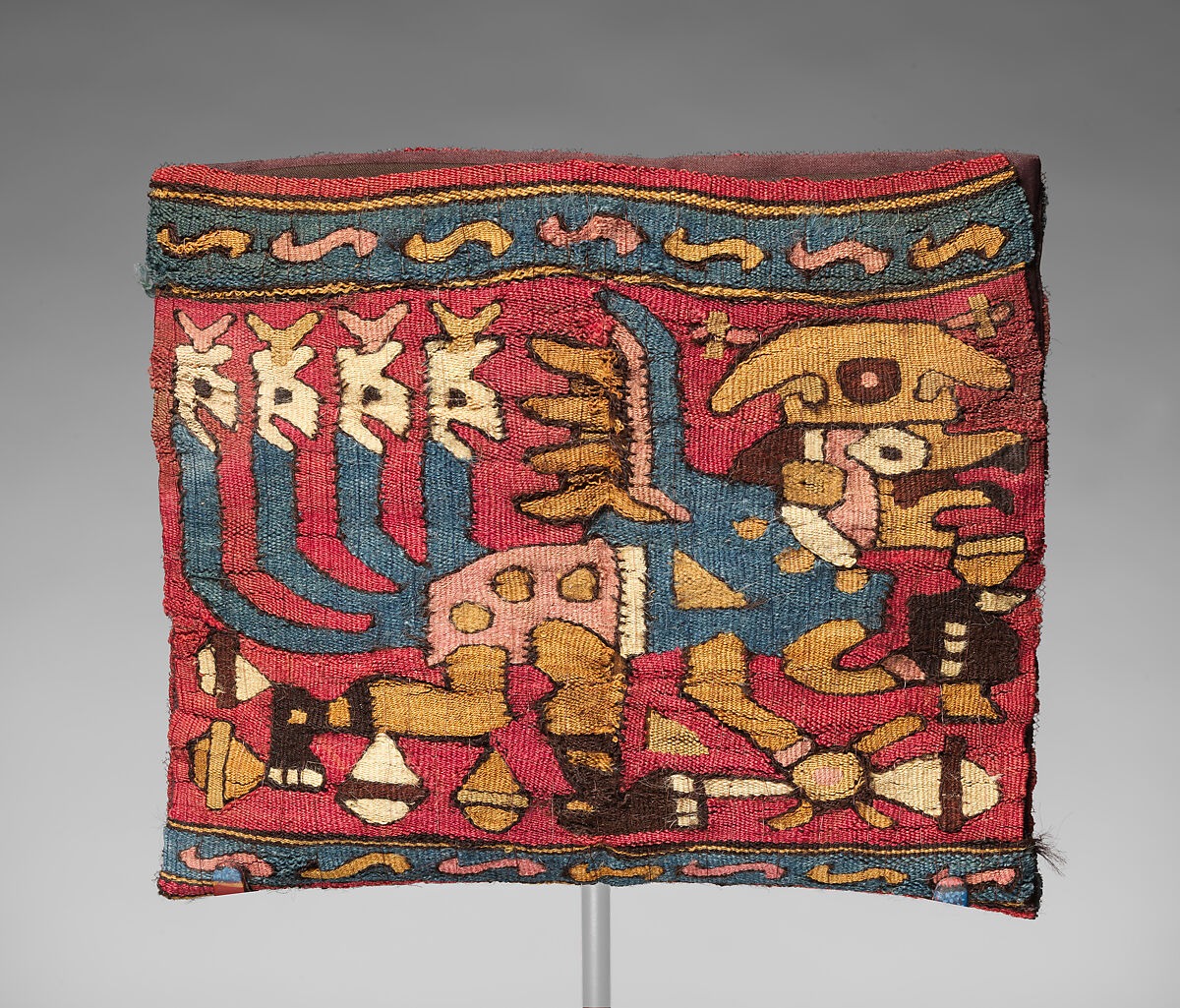
Moche coca bag (chuspa), Peru, 650 to 850 CE. The Metropolitan Museum of Art, New York
Europe had its own insect reds, and they were modest things. Kermes, picked off Mediterranean oaks, gave Venice its scarlet and the cardinals their robes. Central Europe had Polish cochineal, a tiny creature that lived on the roots of a low weed and was dug up around Saint John’s Day in late June, which is why the dye was known as Saint John’s blood. Poland sold it as far as Italy and the Ottoman court. Then the Mexican insect arrived, carrying many times more color in each body, and within a few decades, the weaving centers had switched over. The Polish trade simply faded out.
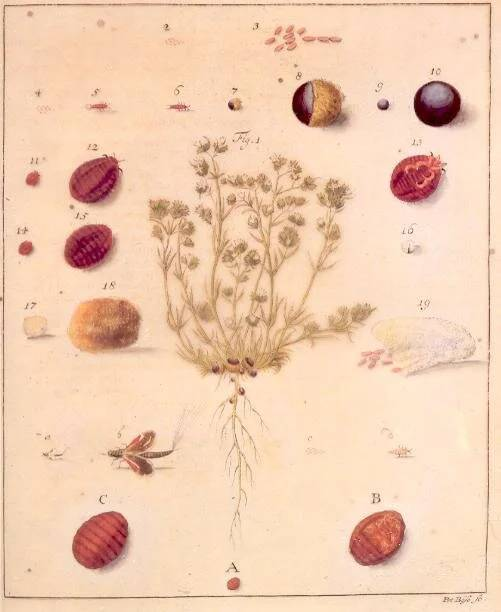
Life cycle of Polish cochineal, from J. P. Breyne, Historia naturalis Cocci Radicum Tinctorii, Danzig, 1731
The Spanish found an industry already running and made it theirs. Cortés was collecting cochineal on the Aztec model within a few years of the conquest, and the crown soon asked for as much as he could send. The growing stayed with Indigenous families in Oaxaca; the profit sailed. Shipped from Veracruz to Seville, the dried insects became, by value, the second most important export of New Spain after silver, and Spain guarded the trade and kept foreigners well away from the growing regions. In Europe, the red went into court dress, church vestments, and the scarlet coats of British officers, while cheaper madder was used for the lower ranks.
What Europe bought, it could not name. The dried grains looked like seeds, and for two centuries the learned disagreed over whether cochineal was vegetable or animal. The question was finally closed in 1729 by a Dutchman, Melchior de Ruusscher, who had bet a friend it was an insect and, to collect, gathered sworn testimony from a hearing in Mexico at which the growers themselves described the creature under oath.
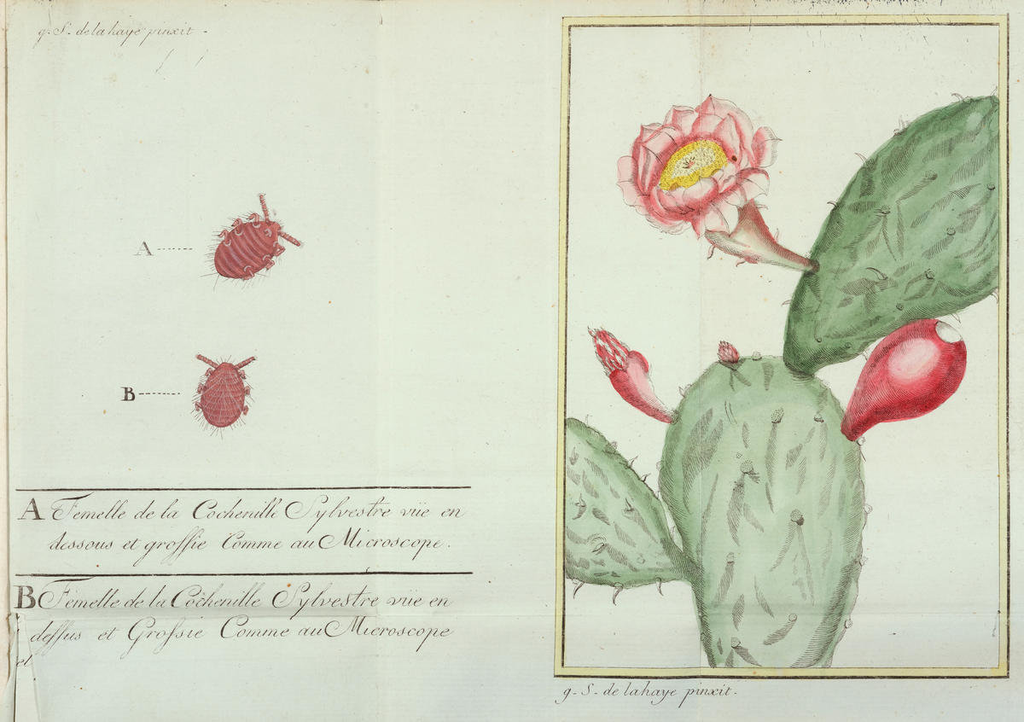
The female cochineal magnified, from Thiéry de Menonville, Traité de la culture du nopal, 1787
Knowing was one thing; having was another. In 1777, a French botanist, Nicolas-Joseph Thiéry de Menonville, slipped into Oaxaca disguised as a Catalan physician, bought living cochineal on the cactus from local growers, and carried the insects and their nopal out of the country to the French colony of Saint-Domingue, where the crown set him up to start a rival plantation. It never took. He died three years later, and French cochineal died not long after him. His one lasting contribution was the treatise he left behind, a manual, in large part, of everything the Oaxacan growers had taught him.
Long before that, the red was traveling farther than Spain could follow. A tapestry in the Victoria and Albert Museum shows how far. Andean weavers made it in Peru sometime between 1650 and 1720, for Spanish patrons, on Chinese silk that had crossed the Pacific on the Manila galleon. Its central bird is a Chinese phoenix given the wingspan of an Andean condor, mermaids play lutes among flowers that look like chrysanthemums, and the whole field is dyed cochineal red. The Andes, China, and Europe met in a single hanging.
Painters wanted it too. Ground and bound to a mineral base, cochineal became a translucent pigment called a lake, and from the seventeenth century, it spread through European studios. Rembrandt laid a cochineal glaze over vermilion on the dress in The Jewish Bride, which is why that red seems lit from within. The catch is light. When conservators in Chicago examined Renoir’s Madame Léon Clapisson of 1883, they found a strip of vivid reddish purple along the edges, where the frame had shielded the paint; everywhere else, the background had faded to a quiet gray-green. In 2014, the museum published a digital reconstruction of the portrait as it left the studio. Renoir’s sitter has been posing for a century in front of a color no one alive has seen.
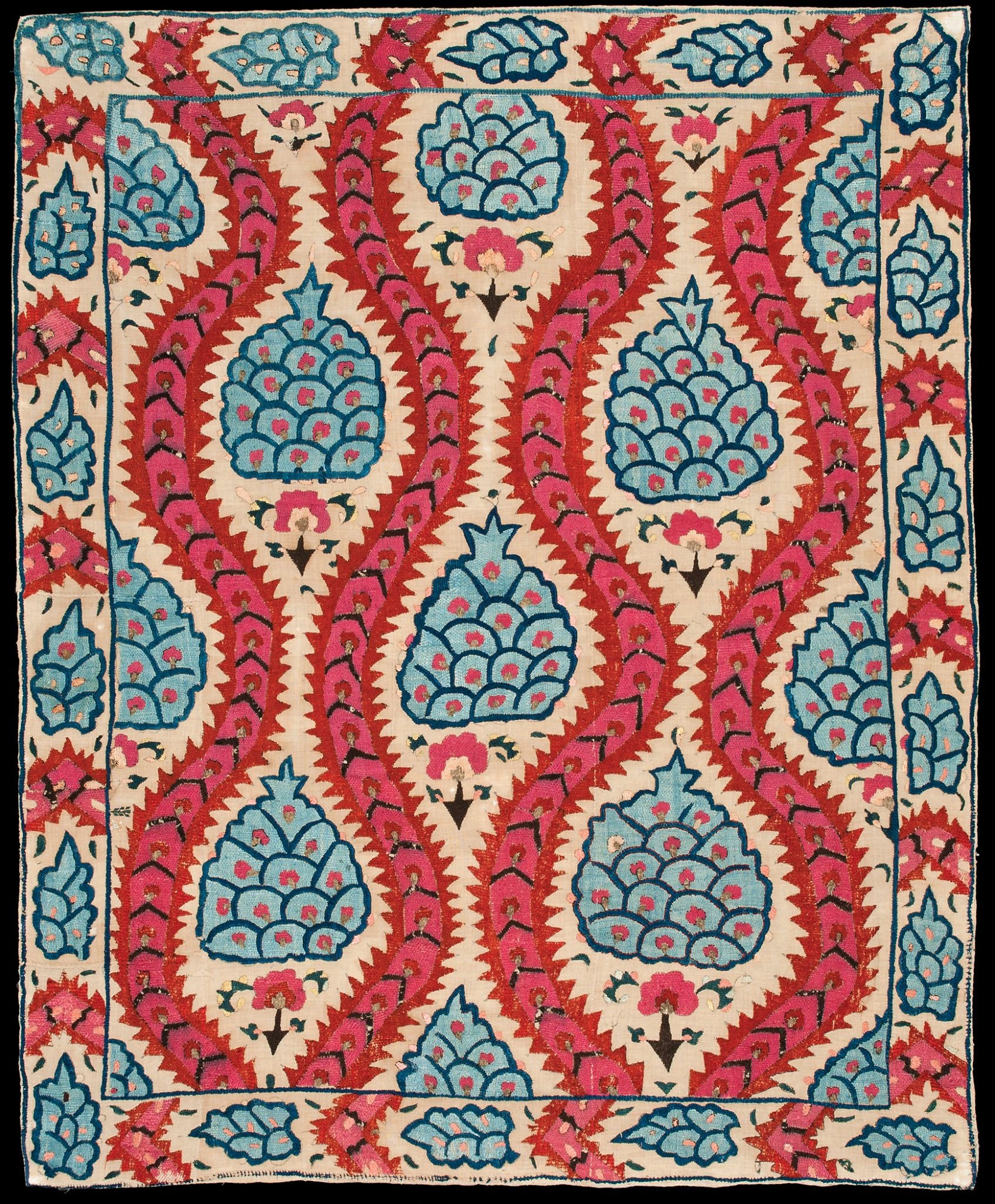
Silk embroidered cushion cover, Ottoman Anatolia, circa 1700. Museum of International Folk Art
Synthetic reds arrived in the late nineteenth century, cheaper and steadier, and the trade collapsed. The insect did not. Peru still raises most of the world’s supply, brushes off the pads by hand, and the extract turns up in lipstick, in yogurt, in the occasional aperitivo. The red that Europe could not identify for two hundred years now arrives spelled out on a label, as E120.