
An improbable exchange turned a Gilded Age mansion into Cartier’s New York home, where architecture, memory, and jewelry still share one address.
Some invitations vanish once the party is over; others enter the private archive of a life. I still have the one Cartier sent me in 2016, its embossed illustration of the Fifth Avenue Mansion recalling an evening that marked my early years in New York. After a tour of the restored house, the unmistakable Cartier grooms, dressed in red uniforms, pillbox hats, and white gloves, stopped traffic and escorted us across the avenue, where Ellie Goulding gave a surprise performance. Already fascinated by Manhattan’s surviving mansions, I felt that the crossing had carried us into another chapter of the city.
The Gilded Age has always had that hold on me. Some people walk down Fifth Avenue and look first at the windows of Saks or Bergdorf Goodman; my eyes travel upward, toward the façades, wondering who lived behind them and how a handful of houses outlived the world that built them. HBO’s The Gilded Age and the stories of the Astor family, including Madeleine Astor, who survived the sinking of the Titanic, feed the same curiosity, yet few properties embody that era as vividly as the Cartier Mansion at Fifth Avenue and 52nd Street.
The neo-Renaissance house was completed in 1905 by Robert W. Gibson for Morton F. Plant, son of railroad magnate Henry B. Plant. As commerce advanced up the avenue, Morton decided to move north. His second wife, Maisie Plant, had meanwhile fallen for a double strand of 128 natural pearls presented by Pierre Cartier. In 1917, the necklace, valued at approximately $1 million, and a token payment of $100 were exchanged for the mansion. William Welles Bosworth adapted the interiors, and Cartier moved in that same year.
What followed gives the story its perfect New York irony. As cultured pearls became widely available, the value of natural pearls collapsed, and Maisie’s strands were sold in 1957 for $181,000. The mansion followed the opposite trajectory, becoming one of the last great houses on Fifth Avenue below 59th Street. Was designated a New York landmark in 1970 and was listed on the National Register of Historic Places in 1983.
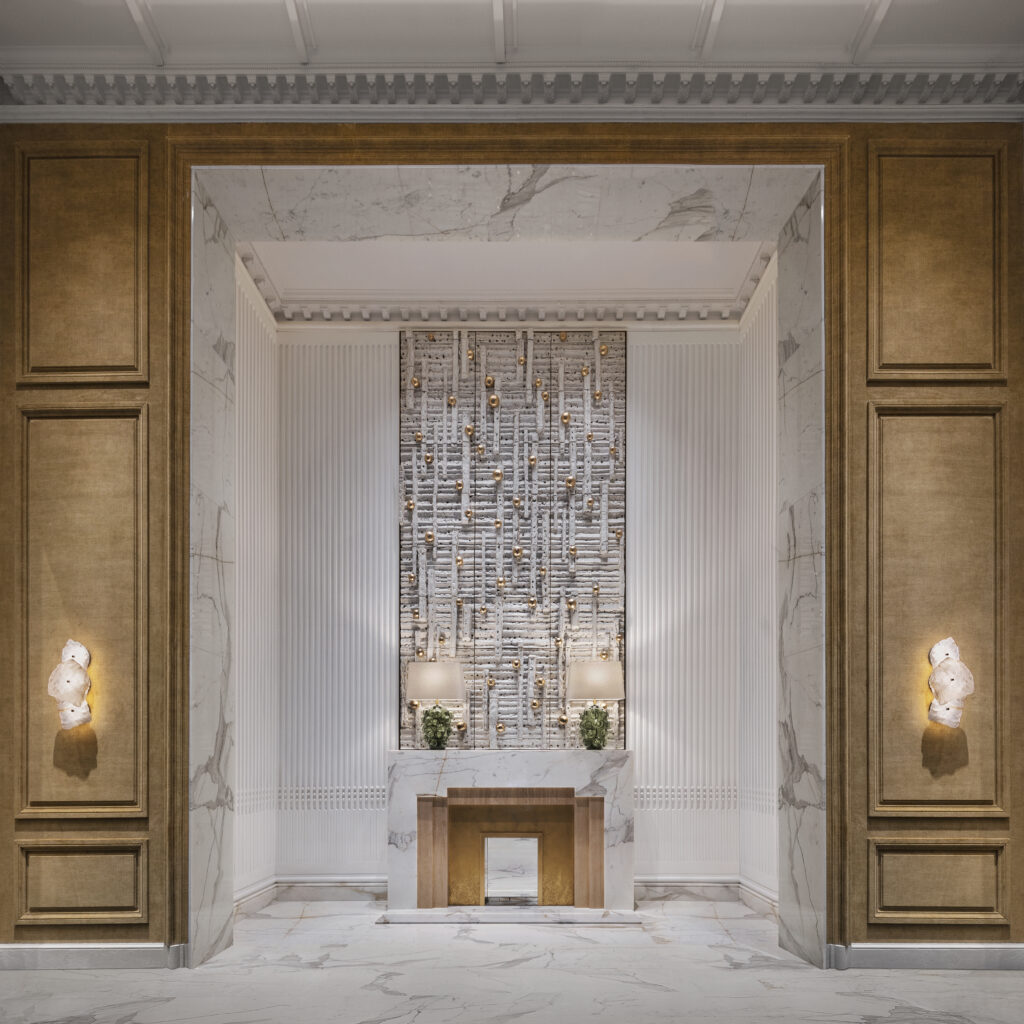
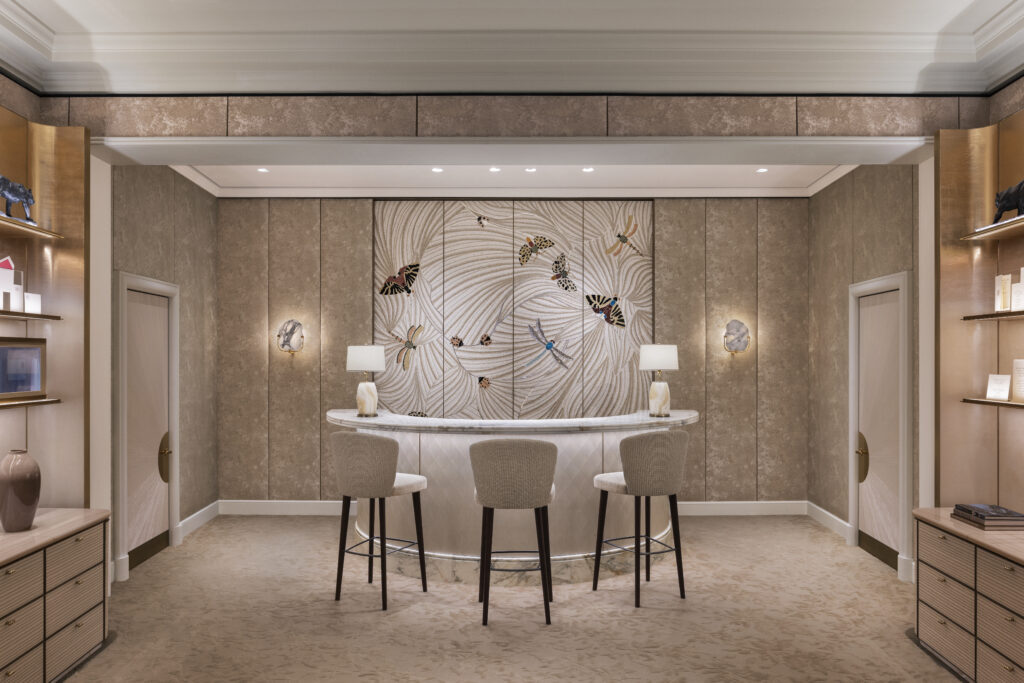
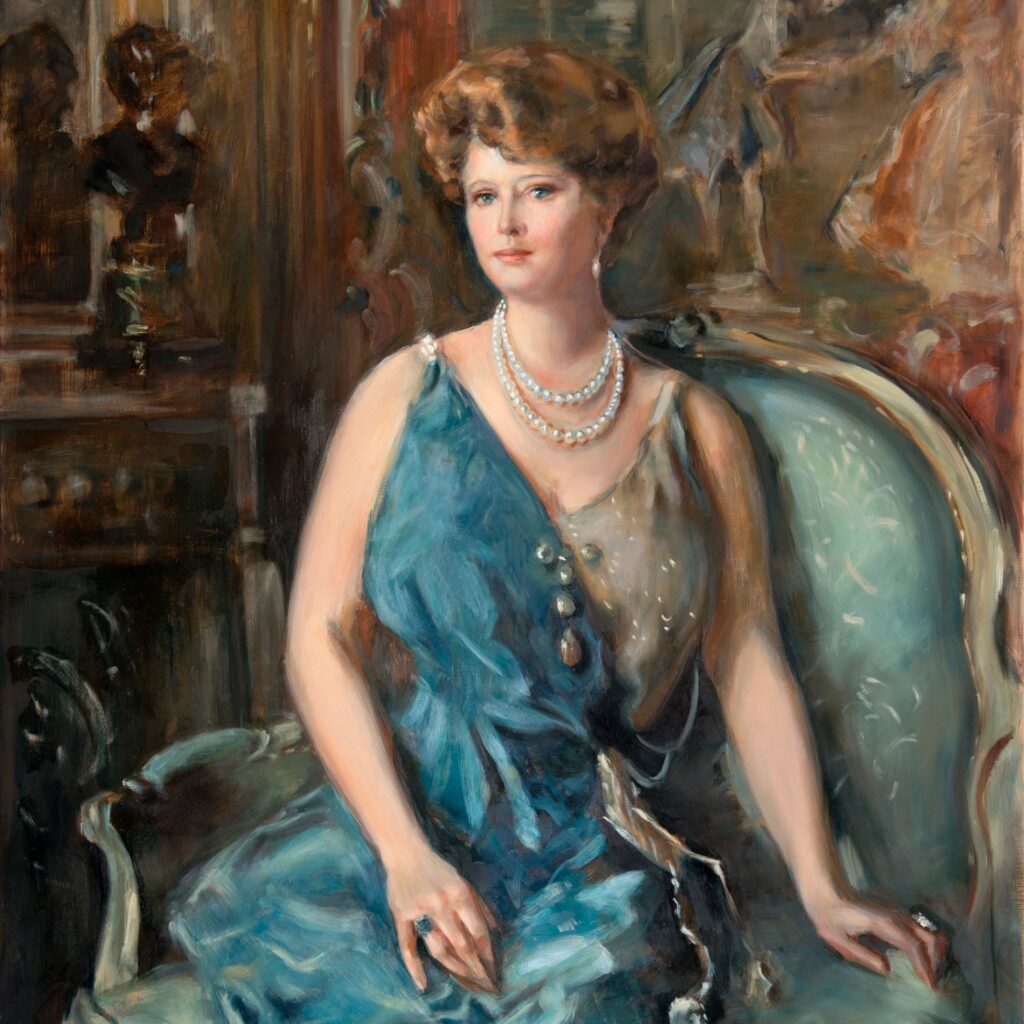
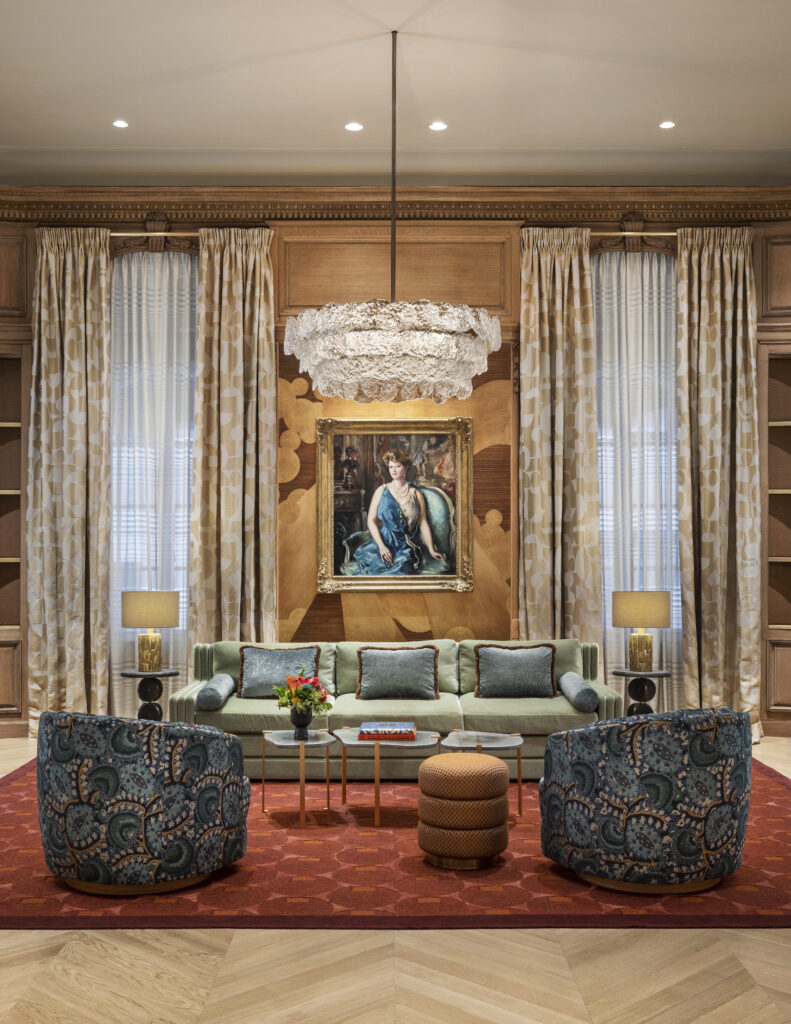
When I visited in 2016, the mansion had reopened after a 30-month renovation. Thierry W. Despont led the interior design, while Beyer Blinder Belle oversaw the architecture and historic preservation. The renovation expanded client space from 8,600 to 44,100 square feet and linked four floors with a central staircase. The Fifth Avenue entrance was centered, uneven floor levels were corrected, and an enfilade opened across the ground floor. Restored oak paneling, 30 chandeliers modeled on historic examples, and 35 bespoke furniture designs returned a residential scale to the salons. Several of the custom pieces honor Grace Kelly, Elizabeth Taylor, Gary Cooper, and Santos-Dumont; presiding over the rooms is a portrait of Maisie wearing the pearls that began the story. At the top of the house, an event space, terrace, and jewelry workshops complete the program.
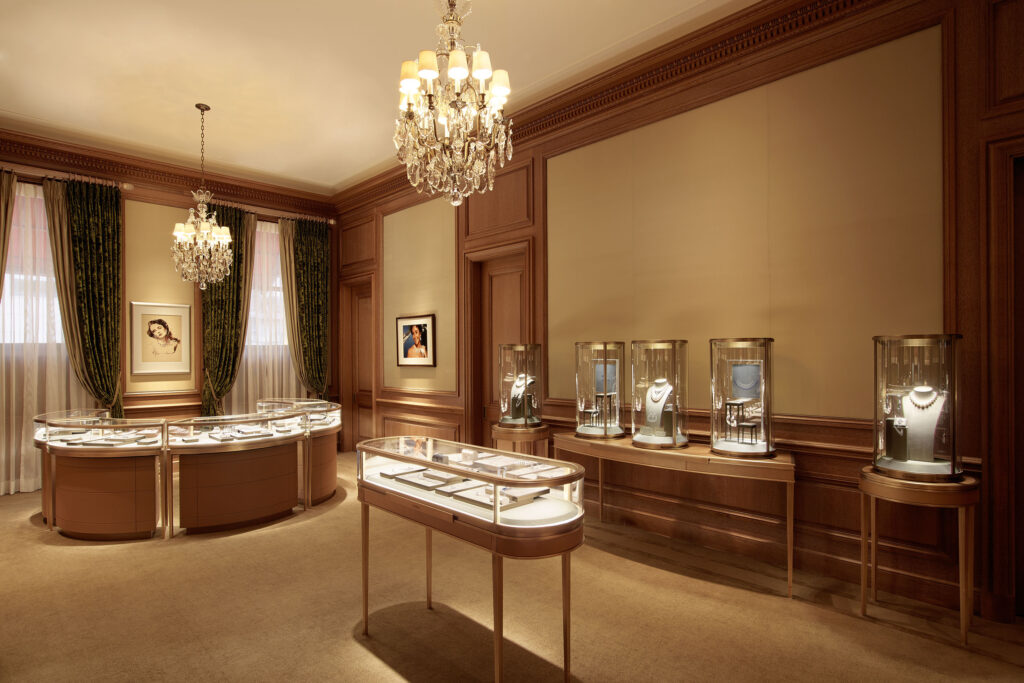
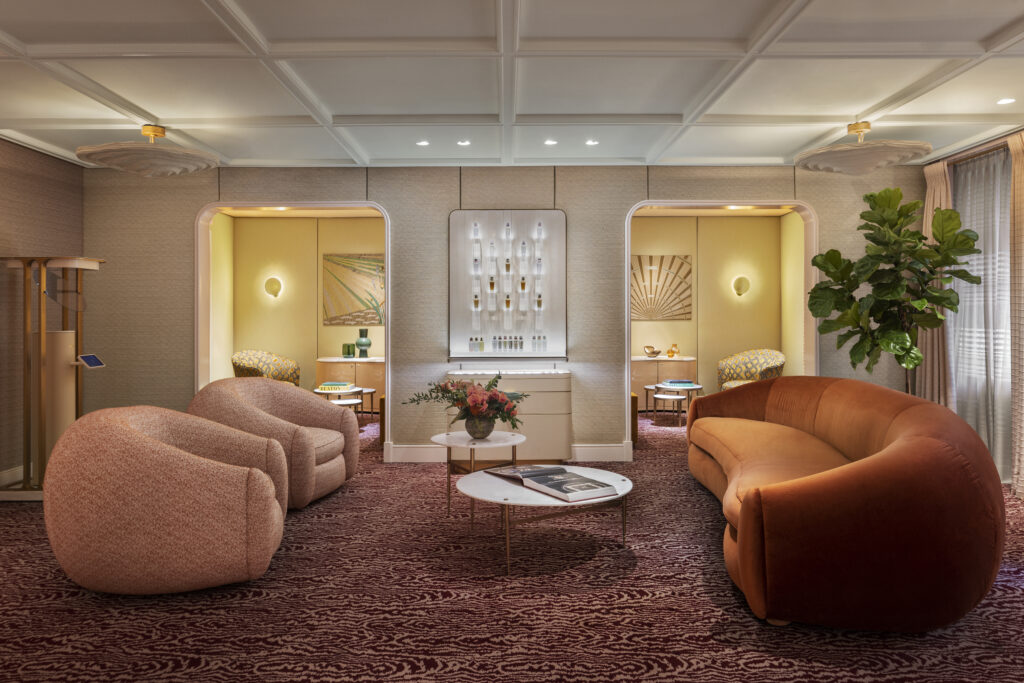
In 2022, Laura Gonzalez introduced another layer, approaching the interiors less as a boutique than as a New York apartment. Panthers climb the staircase across emerald carpeting; upstairs, Morton Plant’s former music room anchors a hospitality suite with a private dining room. The third floor holds bridal rooms with pink velvet and rose-quartz light fixtures beside a champagne-colored salon, while the fourth houses client services amid straw-marquetry panels inspired by vintage Cartier cases.
The most rewarding details emerge slowly. Peter Lane’s ceramic installation reimagines Maisie’s necklace as suspended pearl-like spheres, while Béatrice Serre’s travertine and quartz mosaic brings together an archival Art Deco bracelet and the Chrysler Building. Four salons evoke New York’s seasons, and a painting by François Mascarello sends a poodle and terrier through Central Park beneath the San Remo towers.
Perhaps this is why I have kept that invitation. The 2016 celebration was dazzling, but what stayed with me was the feeling of entering a house that had survived without becoming a relic. The pearls were eventually dispersed; the history still lives there, in the staircase, the salons, and a facade that makes me slow my pace whenever I walk down Fifth Avenue.