
On Madison Avenue, The Mark has become more than a hotel: a private New York world shaped by design, ritual, culture and the rare luxury of knowing when to change.
At The Mark Hotel, timelessness is not a look. It is a discipline: the ability to remain unmistakably itself while allowing the world to keep moving through it.
On the Upper East Side, where New York can still feel composed, The Mark has never confused permanence with stillness. Its identity is built on continuity, but its energy comes from movement: the return of familiar faces, the arrival of new ones, the quiet choreography of a house that understands discretion as a form of hospitality.
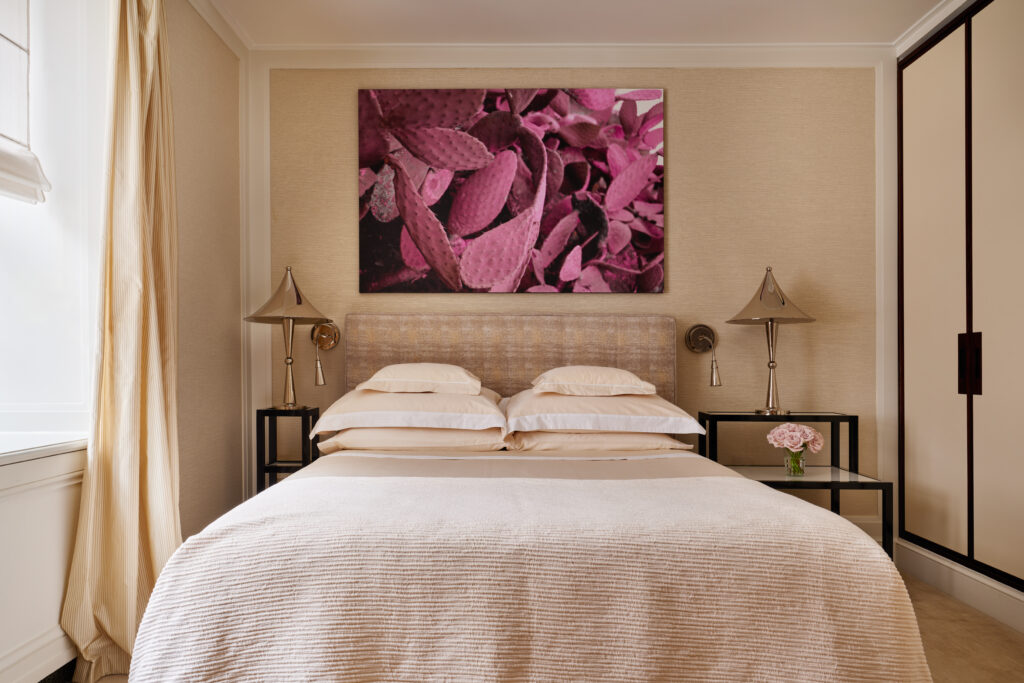
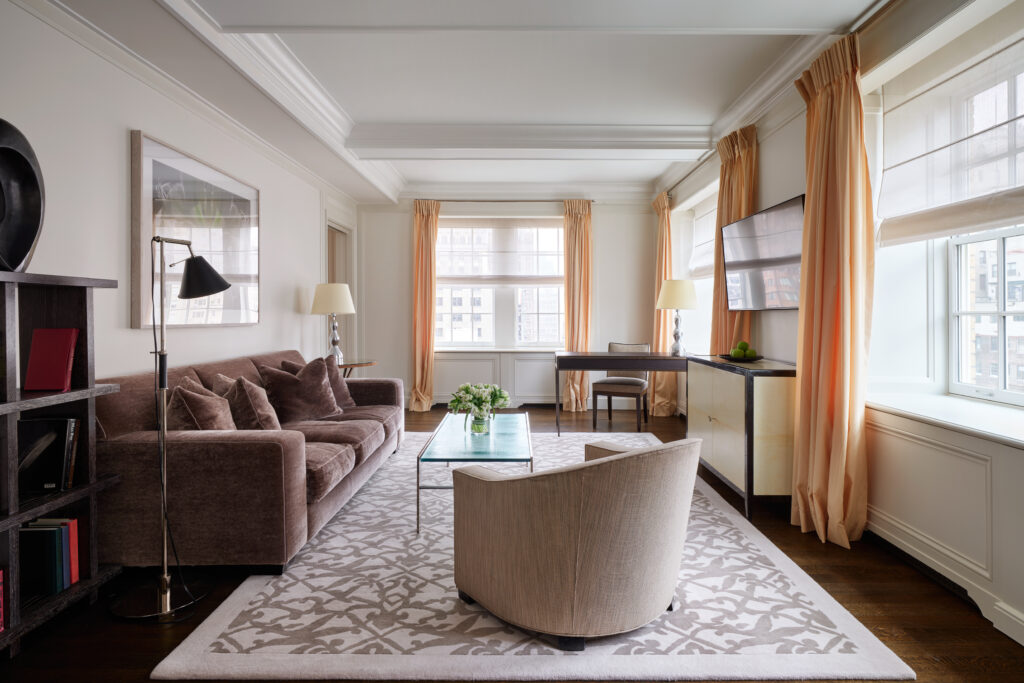
There is no single style to The Mark, and that is precisely the point. Jacques Grange’s interiors do not ask to be admired from a distance. They invite you to live among them: contemporary art beside older references, sculptural furniture beside rooms made for actual comfort, and the famous black and white lobby floor acting almost like the graphic signature of the house. Grange brought together a circle of artists and designers that included Karl Lagerfeld, Guy de Rougemont, Paul Mathieu, Mattia Bonetti, Ron Arad and Vladimir Kagan. The result is polished without becoming precious. Izak Senbahar, The Mark’s owner, once described Grange’s work as “elegant and chic in a glamorous and comfortable way.” The comfort is important. The hotel is dressed, but it never feels staged.
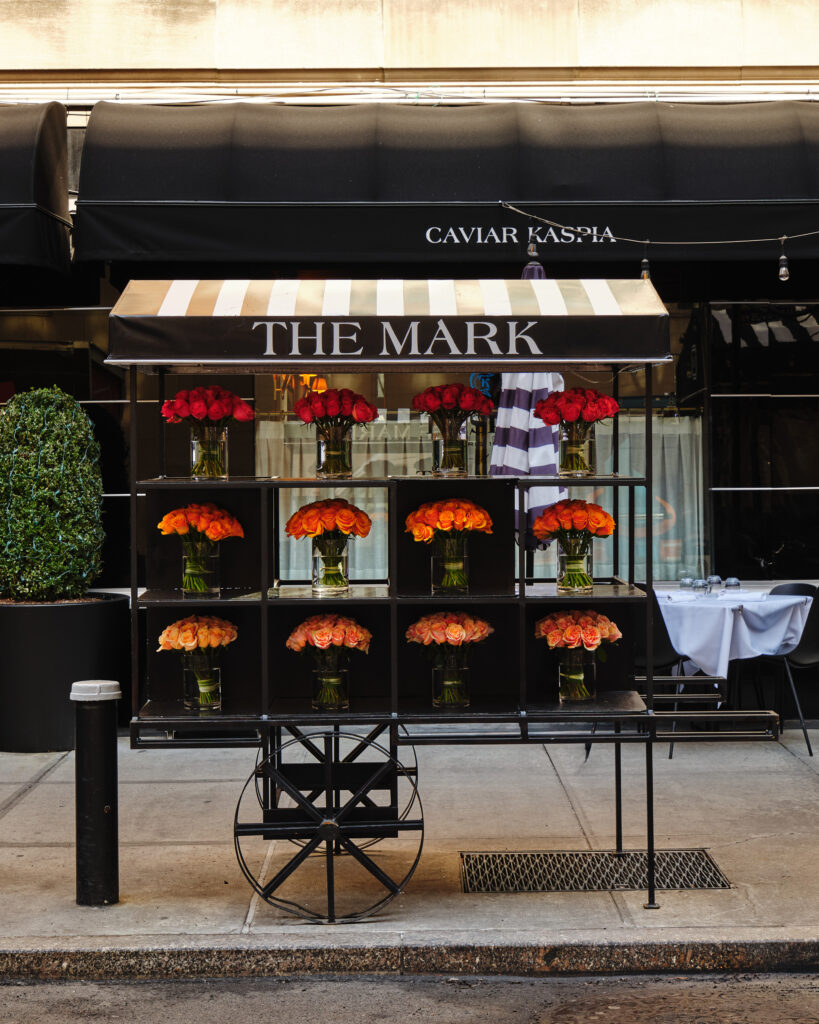
That balance also explains why The Mark can keep adding things without losing itself. Unlike a property whose personality is replicated across dozens of cities, this is a singular New York address, shaped over time by an owner and a recurring group of collaborators who appear to understand that consistency does not require repetition. The Mark’s most recognizable gestures have become a kind of vocabulary: the stripes, the bicycles, the pedicab, the flower cart, the hot dog cart, the books, the salon, the caviar, the sailboat. Individually, they are amenities. Together, they form a point of view.
Some of the most revealing details happen at street level. The Mark Haute Dog Cart, wrapped in Jacques Grange’s black and white stripes, serves Jean-Georges Vongerichten’s chicken and grass-fed beef hot dogs to hotel guests and neighborhood regulars. In warmer months, the flower cart brings another small piece of theater to Madison Avenue. In 2025, it became a lemon-filled “La Dolce Vita” installation with Assouline, accompanied by books from the publisher’s Italian travel series and soft-serve inspired by Capri and the Amalfi Coast. It is a useful example of how The Mark reinvents itself. Nothing fundamental changes, yet there is always a new reason to look again.
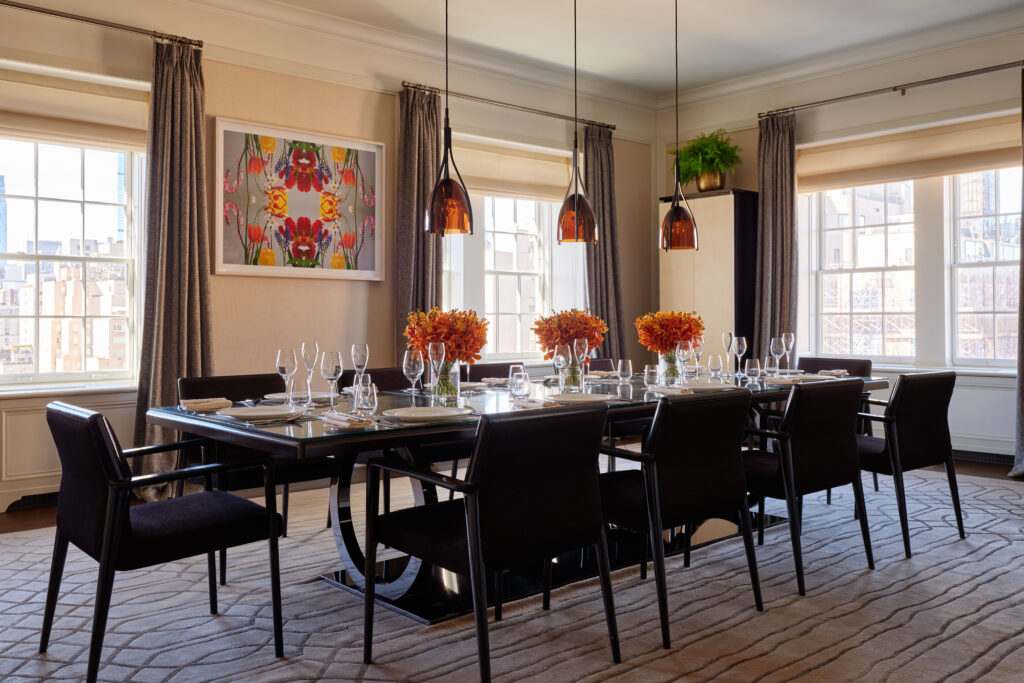
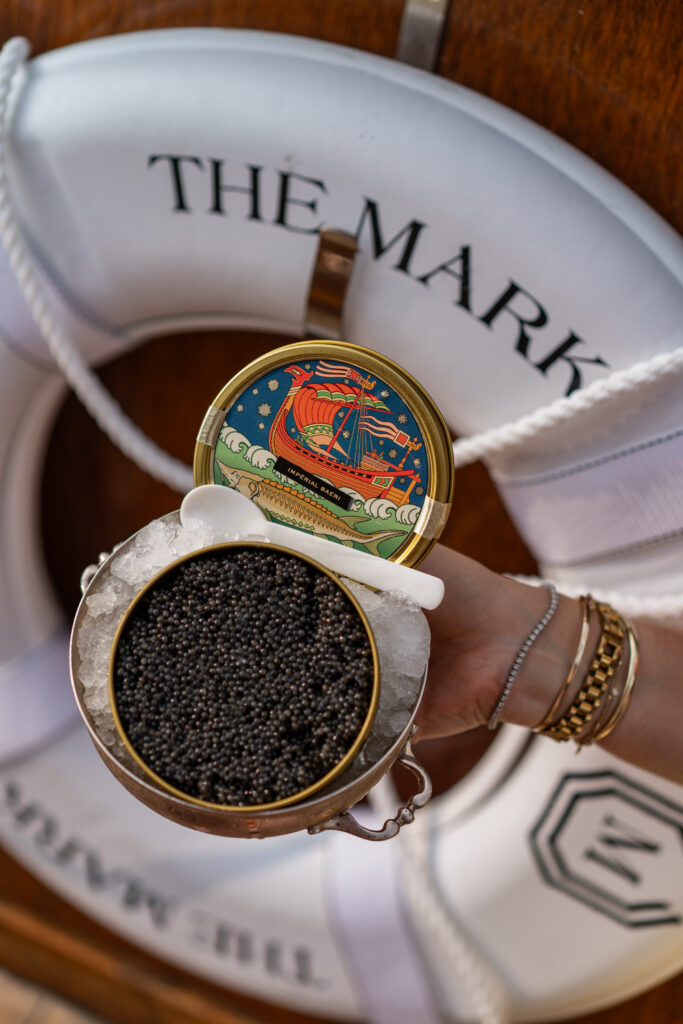
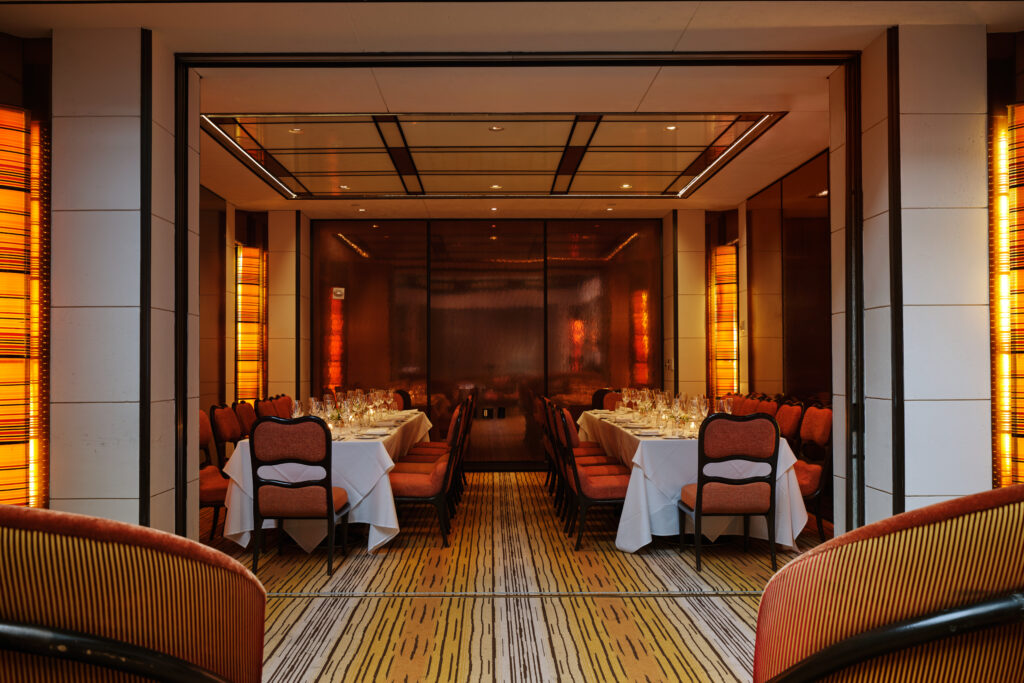
Inside, the same principle becomes more layered. Jean-Georges has anchored the hotel’s culinary life since the current incarnation of The Mark took shape, while Caviar Kaspia added a distinctly Parisian counterpoint in 2023. The original Caviar Kaspia was founded in Paris in 1927; its New York outpost at The Mark, also designed by Grange, brings the blue tablecloths, emerald banquettes and famously indulgent twice-baked potato into an Upper East Side setting. A few steps away, Assouline has its own bookshop with a street entrance on 77th Street. Upstairs, Frédéric Fekkai’s salon turns getting ready into part of the stay, and guests in certain suites can even host private Fekkai services. This is not hotel programming in the usual sense. It is closer to assembling the people and places one would want within reach if The Mark were a very well-connected New York home.
The home analogy matters because the most persuasive luxury here is not spectacle. It is the feeling that life becomes easier without becoming generic. Breakfast can arrive from Jean-Georges. A dog can have its own bed, bowls, accessories and a menu created by the same chef. A guest can schedule a massage, personal training or a Dr. Barbara Sturm treatment without leaving the room. A pair of shoes can be tended to the John Lobb shoeshine kiosk. A book can be chosen downstairs, a blowout arranged upstairs, and a picnic prepared for Central Park, which begins only a few steps away. The Mark does not simply keep adding services. It keeps editing the friction out of a day in New York.
That editorial instinct now extends to culture. Through Culture, à la Mark, guests in select suites can access experiences that would be difficult to organize independently, including after-hours visits connected to exhibitions at The Metropolitan Museum of Art and private tours arranged at The Frick Collection. It is a subtle but important evolution in hotel service. The concierge is no longer only solving logistics. The hotel is curating access to the city itself.
No night makes that relationship with New York more visible than the first Monday in May. Over the years, The Mark has become the unofficial headquarters of the Met Gala, the place where private preparation turns into public image. Before the museum’s staircase, there is Madison Avenue. Cars gather outside. Photographers wait. Stylists, makeup artists, designers and security teams move through the building. Guests emerge in couture and the sidewalk briefly becomes its own runway. The hotel’s importance to the night is not simply that famous people sleep there. It is that The Mark has learned how to hold the complicated hours around the spectacle: the preparation, the entrances, the returns, the changes of clothes, the late-night food, the decompression after the cameras.
That connection has become formal as well as symbolic. The hotel’s partnership with The Met includes exclusive after-hours tours of the Met Gala exhibition and other shows throughout the year for guests in eligible suites. Fashion, art and hospitality overlap here in a way that feels unusually natural because the geography makes sense. The museum is within walking distance. Madison Avenue is outside. Central Park is around the corner. The Mark sits at the intersection of all three worlds.
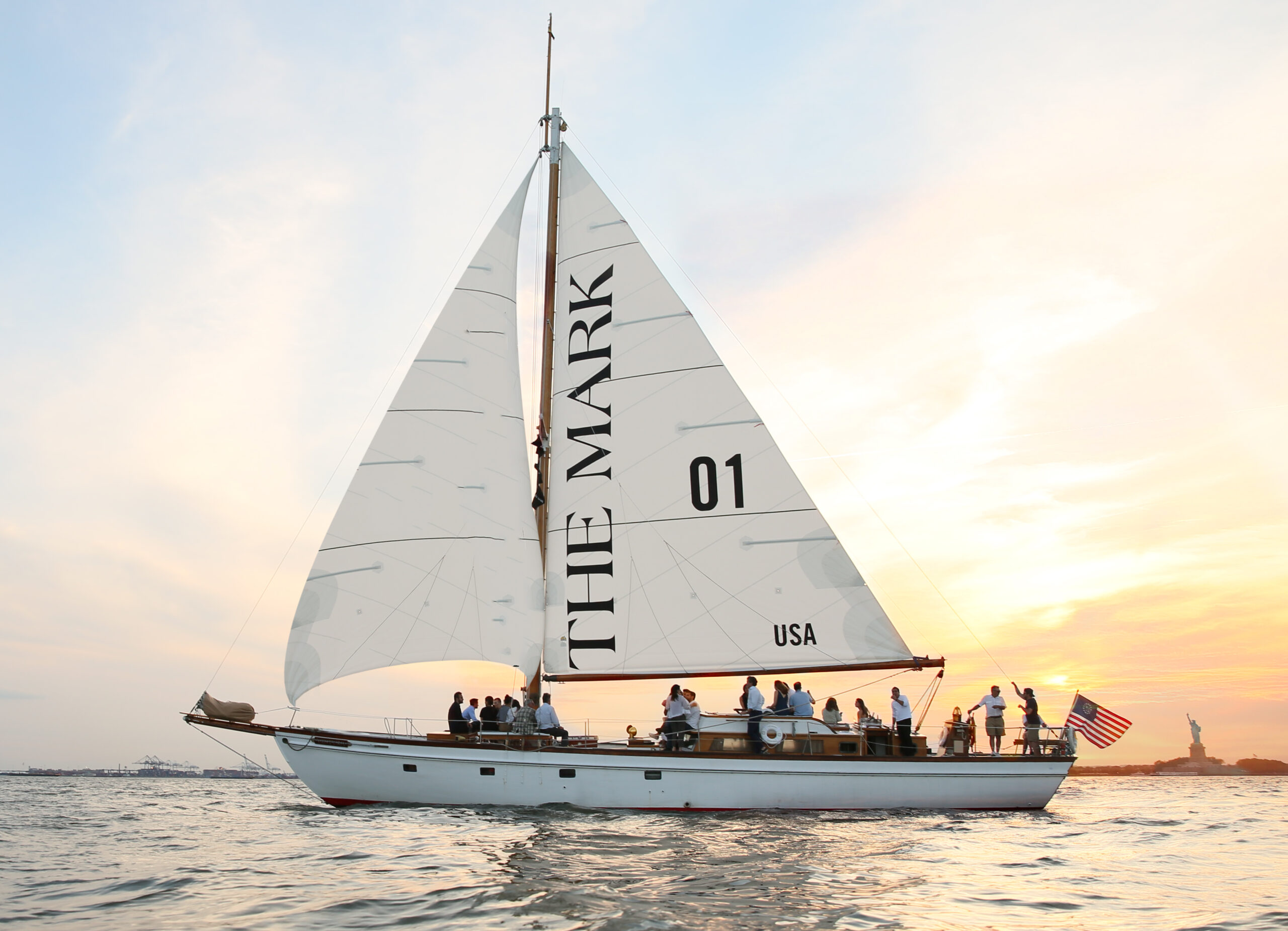
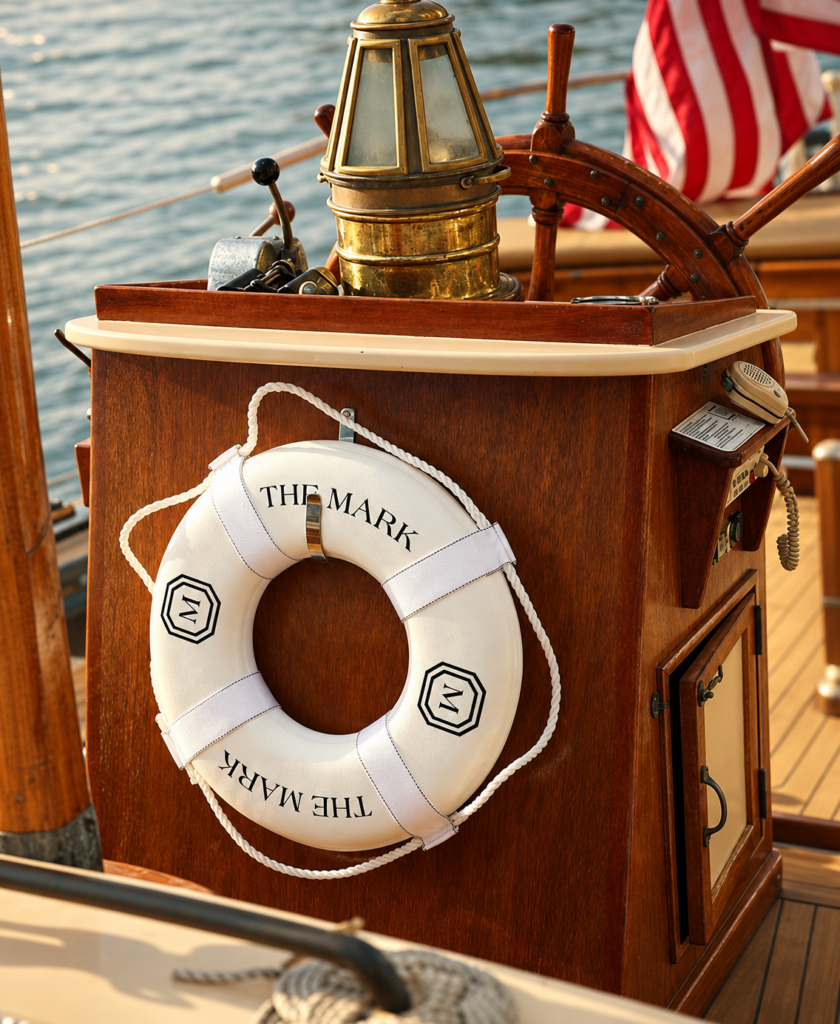
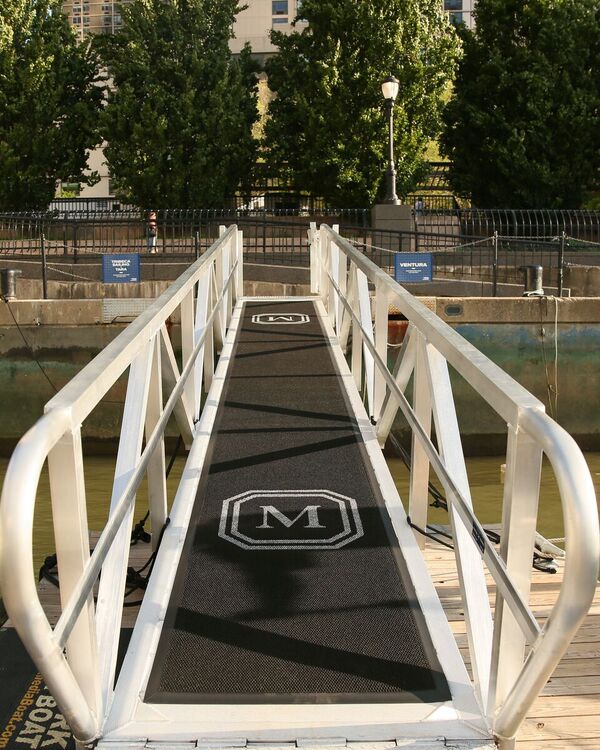
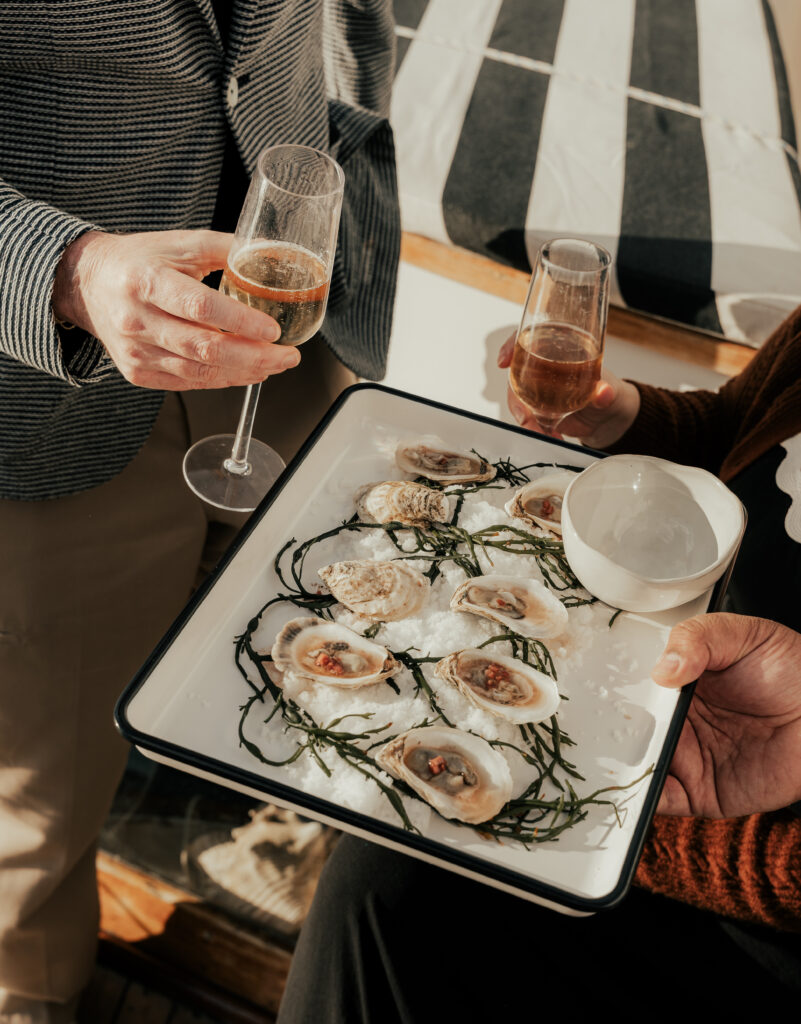
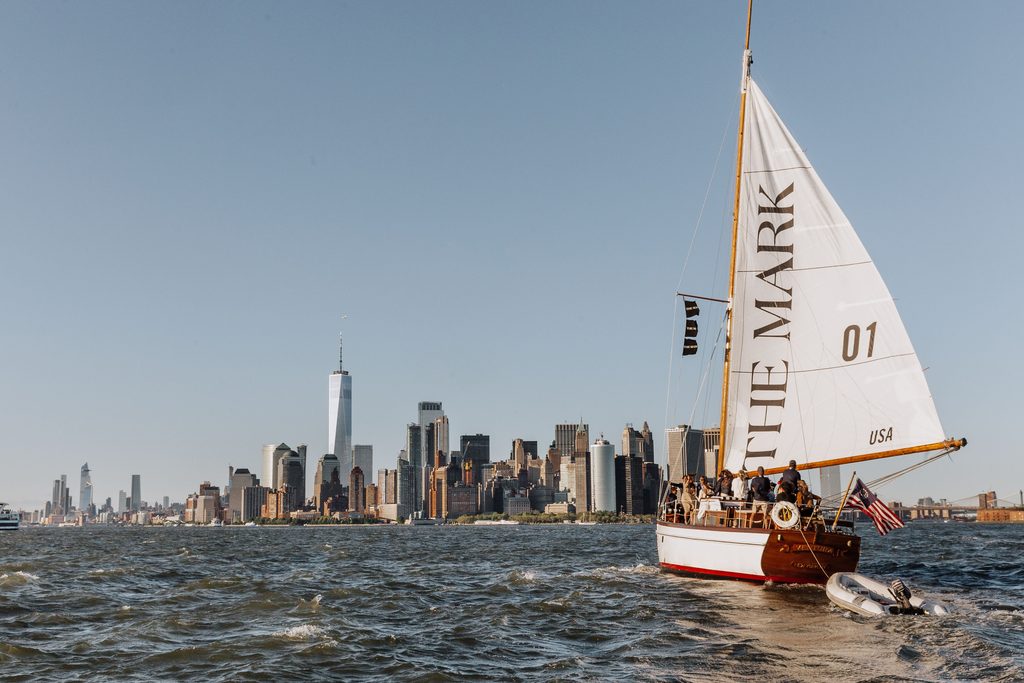
Then there is the sailboat, perhaps the clearest proof that The Mark understands hospitality as something that can leave the building. In 2026, the experience returned for its ninth summer aboard a 70-foot Herreshoff sailboat, one of the last of its kind. Up to 25 guests sail for two hours through New York Harbor from Chelsea Piers, with food and cocktails by Jean-Georges. Private charters can be customized with Caviar Kaspia. The pleasure is partly the boat, of course, but also the change of perspective. The same hotel known for Madison Avenue suddenly gives its guests the skyline from the water.
This ability to move between formality and play is what keeps The Mark from becoming trapped by its own image. There is seriousness in the design, but humor in the hot dog cart. There is caviar, but also bicycles. There is couture in the lobby one night and a family heading to Central Park the next morning. The hotel can host the world’s most photographed fashion departures and still understand that a guest may want room service in pajamas. That mixture is difficult to manufacture because it depends on tone, not merely on budget.
In December 2025, as The Mark celebrated a century since the hotel’s first iteration and two decades since its reimagining, Assouline published the first book devoted to the property. Written by Derek C. Blasberg, the 200-page volume brings together the design, personalities and rituals that have turned the hotel into an uptown institution. Senbahar’s own description is revealing: “People come to The Mark because they know it’s more than just a hotel. It’s a place that makes for unforgettable memories.” The line could easily become marketing language. Here, it reads more like an guiding principle. The hotel keeps looking for small ways to make a stay memorable enough to become a story.
It is also why The Mark makes sense as the setting for Lifestyle Mag’s cover with Claire Rose. The hotel is photogenic, certainly, but beauty alone would be too simple an explanation. What photographs well is the tension between the composed and the alive: a graphic floor beneath a moving dress, a carefully designed room holding the messier energy of getting ready, a landmark Upper East Side address that keeps making room for new rituals.
Many grand hotels are built around the preservation of an idealized past. The Mark’s more interesting talent is preservation without nostalgia. It protects its codes, keeps its collaborators close, and allows new ideas to enter that vocabulary. Caviar can arrive from Paris. A sailboat can become part of a Manhattan stay. A flower cart can turn Italian for a summer. A museum visit can continue after hours. The lobby can belong to the Met Gala and, by breakfast, return to being a lobby.
That may be the real art of staying new. Not changing so much that people no longer recognize you, and not remaining so fixed that recognition becomes predictability. The Mark has made a practice of holding both ideas at once. It feels familiar enough to return to, yet full of enough surprises to keep discovering. In a city that reinvents itself almost compulsively, that kind of continuity may be one of the most New York luxuries of all.