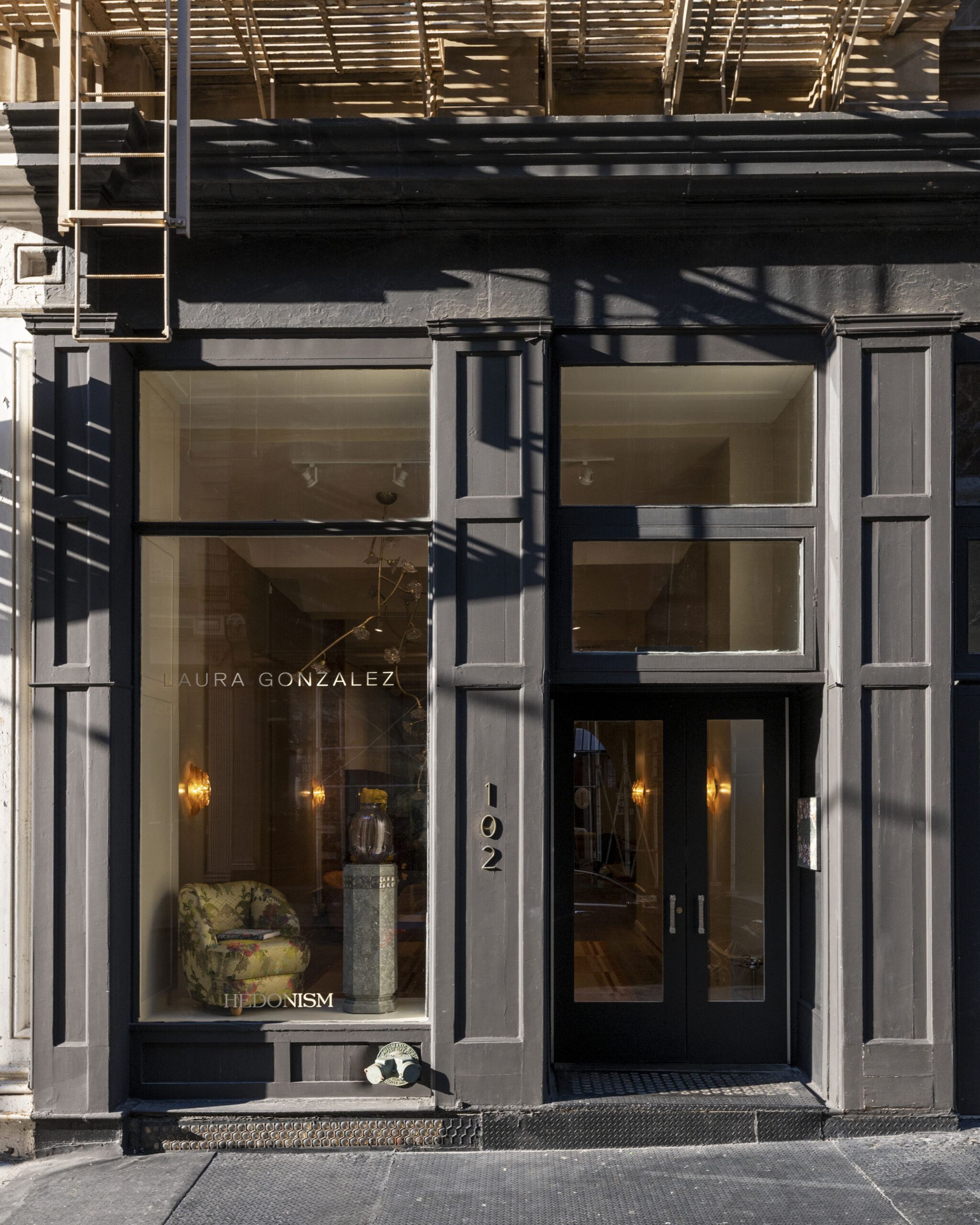
At her Tribeca gallery, Laura Gonzalez turns French craftsmanship, color, and a distinctly sensual approach to interiors into something closer to a home than a showroom.
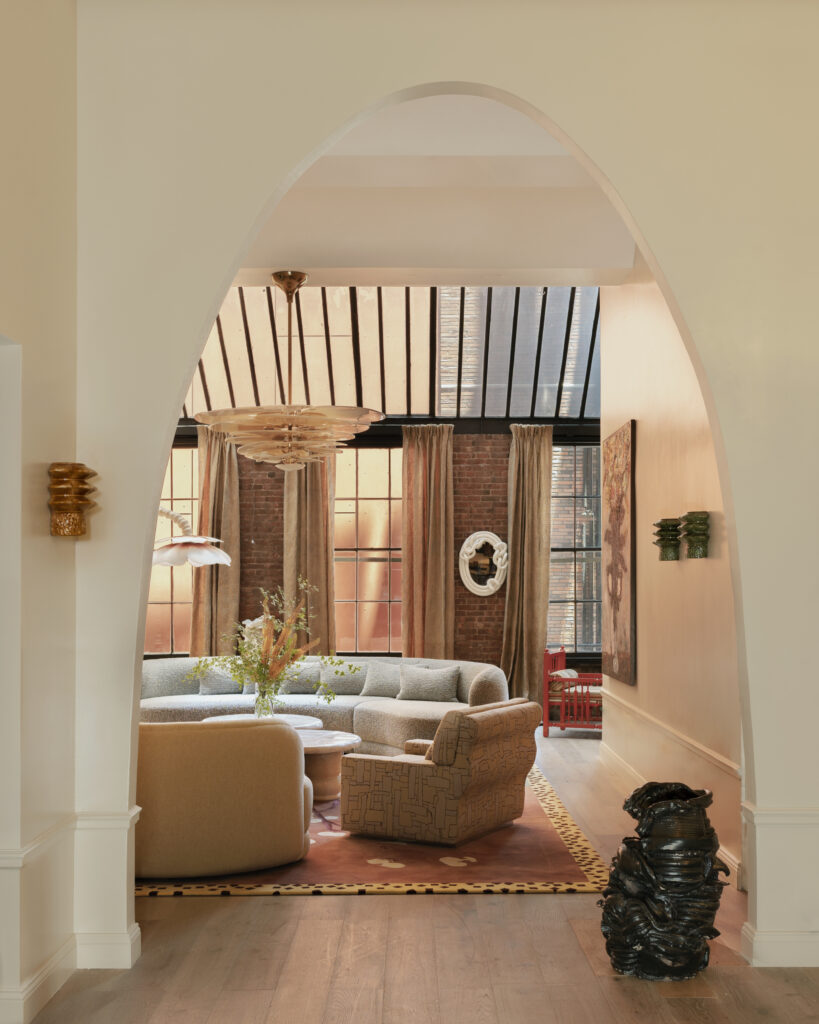
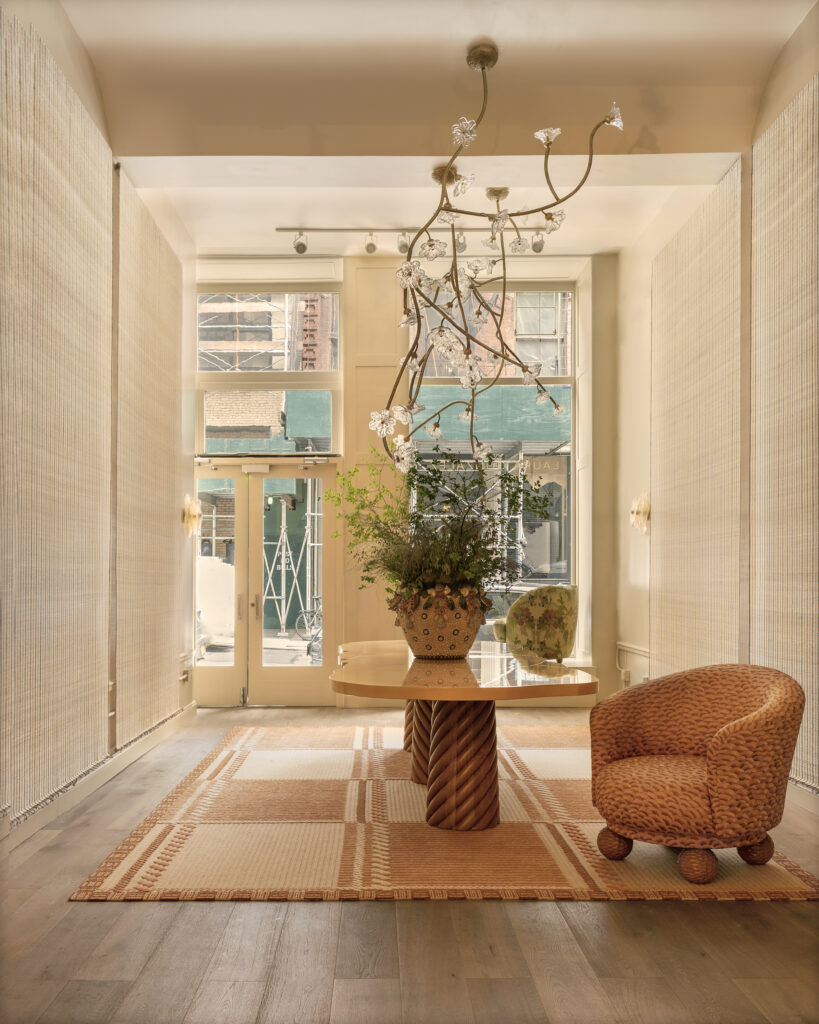
Walking into Laura Gonzalez’s gallery on Franklin Street feels less like entering a conventional showroom than arriving at the home of someone with an unusually cultivated eye. Natural light moves across enameled surfaces, patterned fabrics, wood, ceramic, bronze, and glass. A sculptural lamp sits beside a generous armchair; furniture and art coexist without the rigid separation of an exhibition. Everything feels considered, but very little feels staged.
The location helps explain the choice. Tribeca’s former commercial buildings retain the high ceilings, large windows, and open plans of the neighbourhood’s industrial past. Gonzalez introduces a French way of living within that Manhattan scale without attempting to turn the space into a replica of Paris.
At 102 Franklin Street, her first gallery outside the French capital is considerably larger than her address on Rue de Lille. The difference allows her to create complete environments rather than present furniture as isolated objects. The New York architecture remains visible, softened by a fireplace made for the space, conversational groups of chairs, art, lighting, and objects that explain each piece in relation to a room.
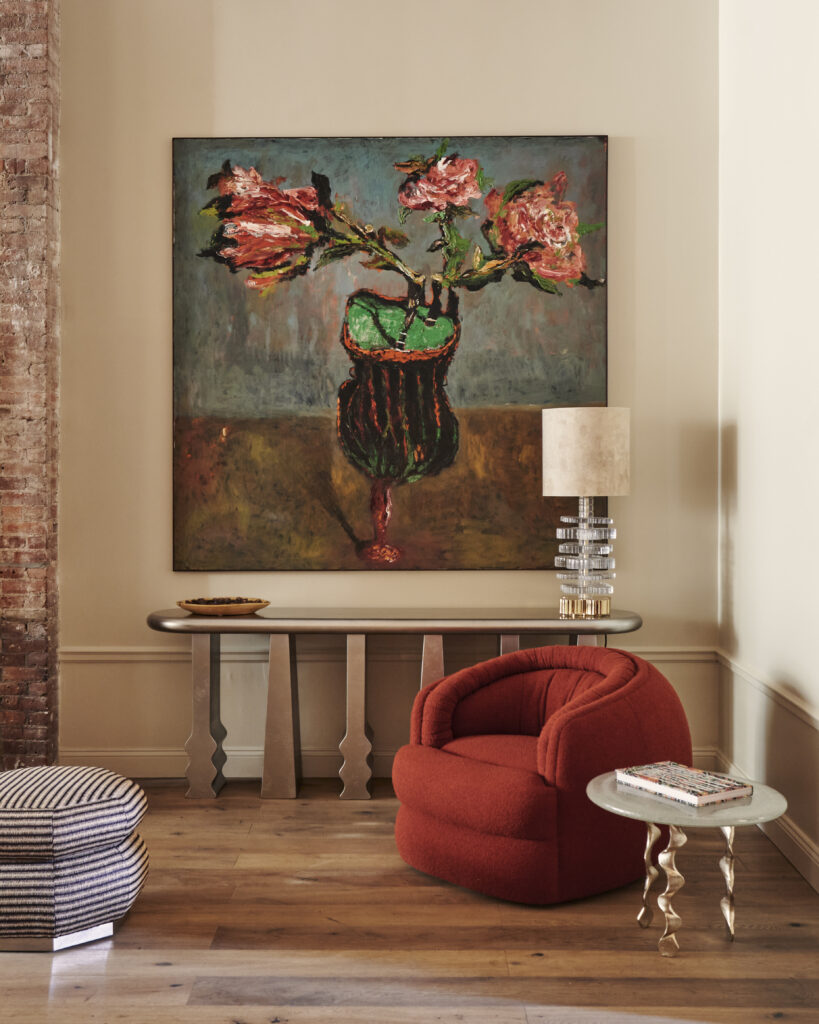
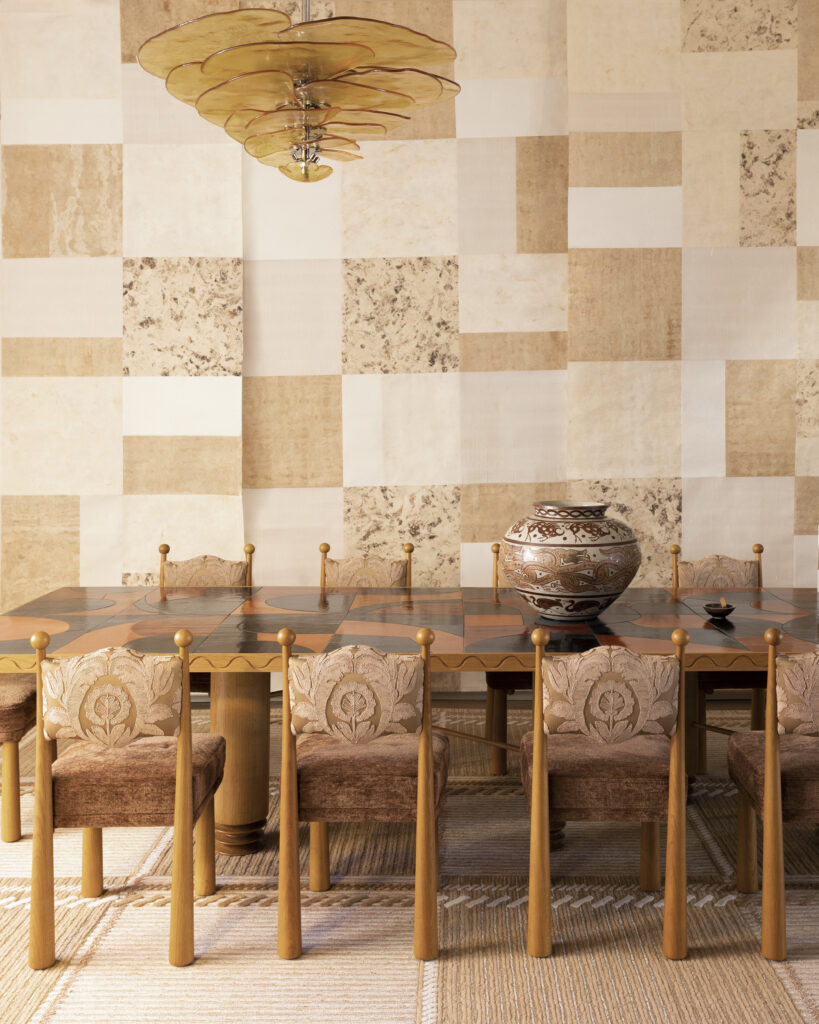
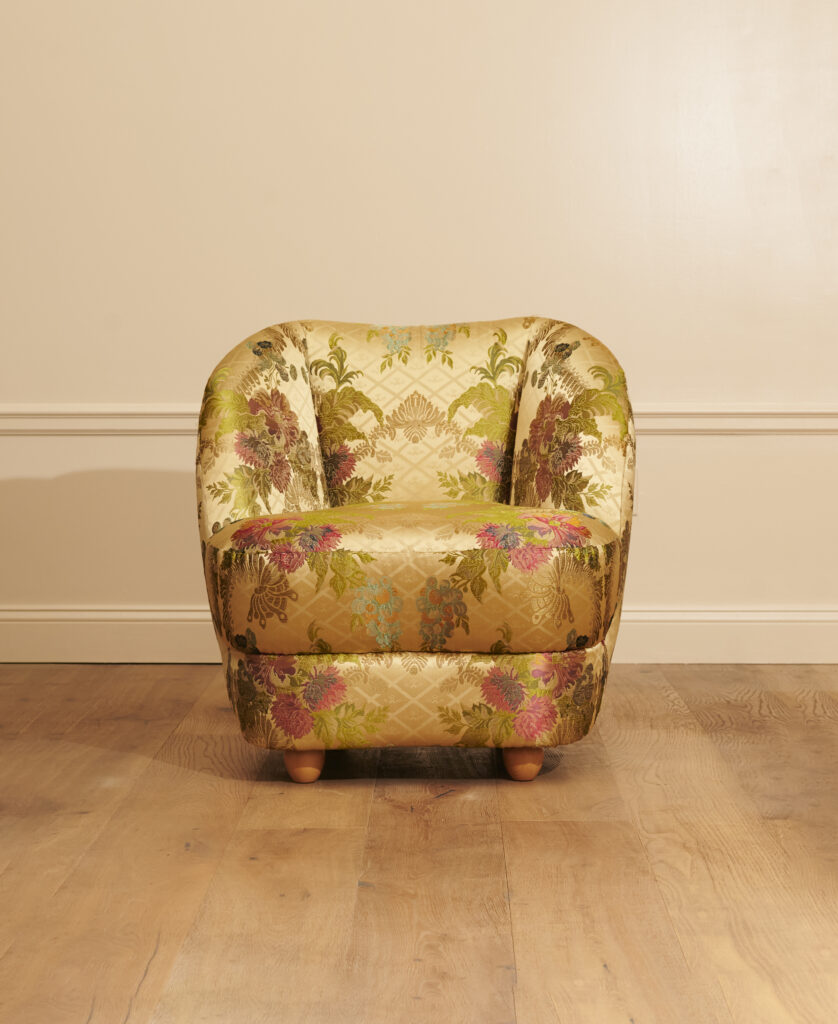
Hedonism is a recurring word in Gonzalez’s world, but pleasure appears less through excess than through materials and the time invested in making things. The Medusa table rests on twisted cast-bronze legs; the Himawari floor lamp has the presence of a sculptural flower. Ceramics and shell-covered objects preserve the small irregularities of handwork. Her vocabulary moves between furniture and sculpture without requiring either label to win.
Curves, organic forms, and botanical references bring certain pieces close to Art Nouveau. Geometry, worked surfaces, and the artistic ambition of functional objects recall Art Deco. Gonzalez reproduces neither period. She folds both into contemporary proportions, unexpected color, and artisanal techniques, creating rooms that belong fully to no single era.
Craftsmanship is the structure beneath that eclecticism. The gallery reveals details that would disappear in a photograph and places pieces from Gonzalez’s collection beside unique objects and art. It becomes a laboratory for combinations she also explores in homes, restaurants, and hotels. French savoir-faire is more than an aesthetic reference here. It is visible in the way each object is made.
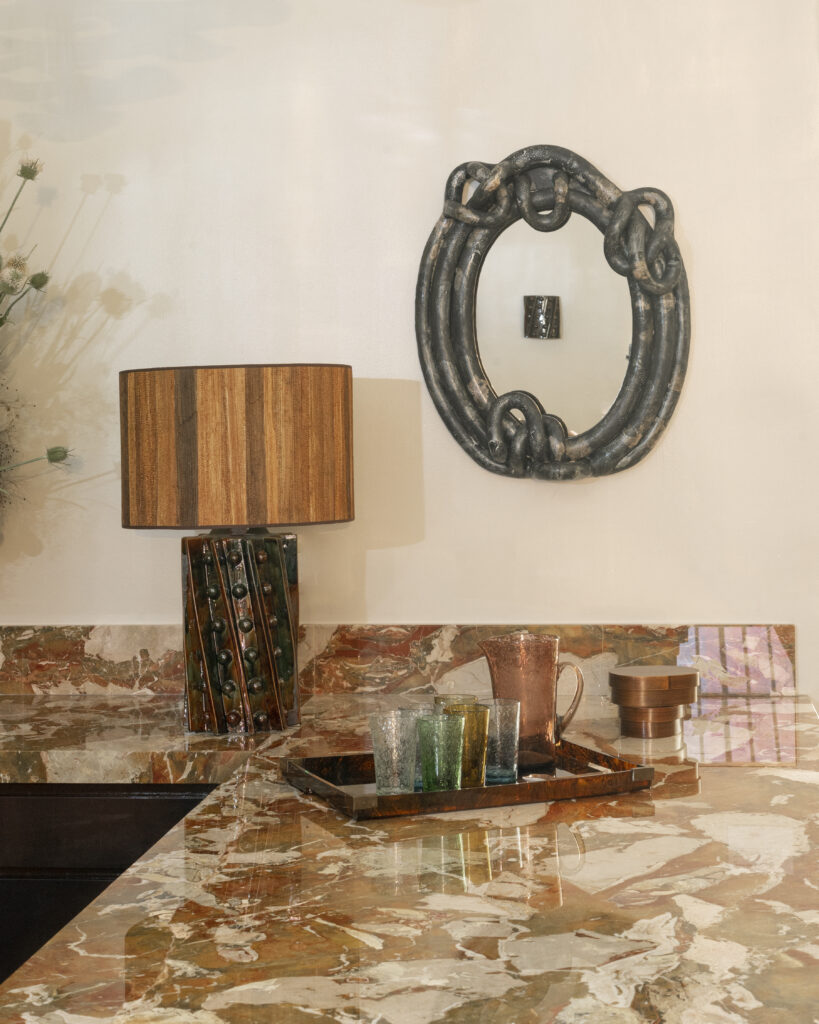
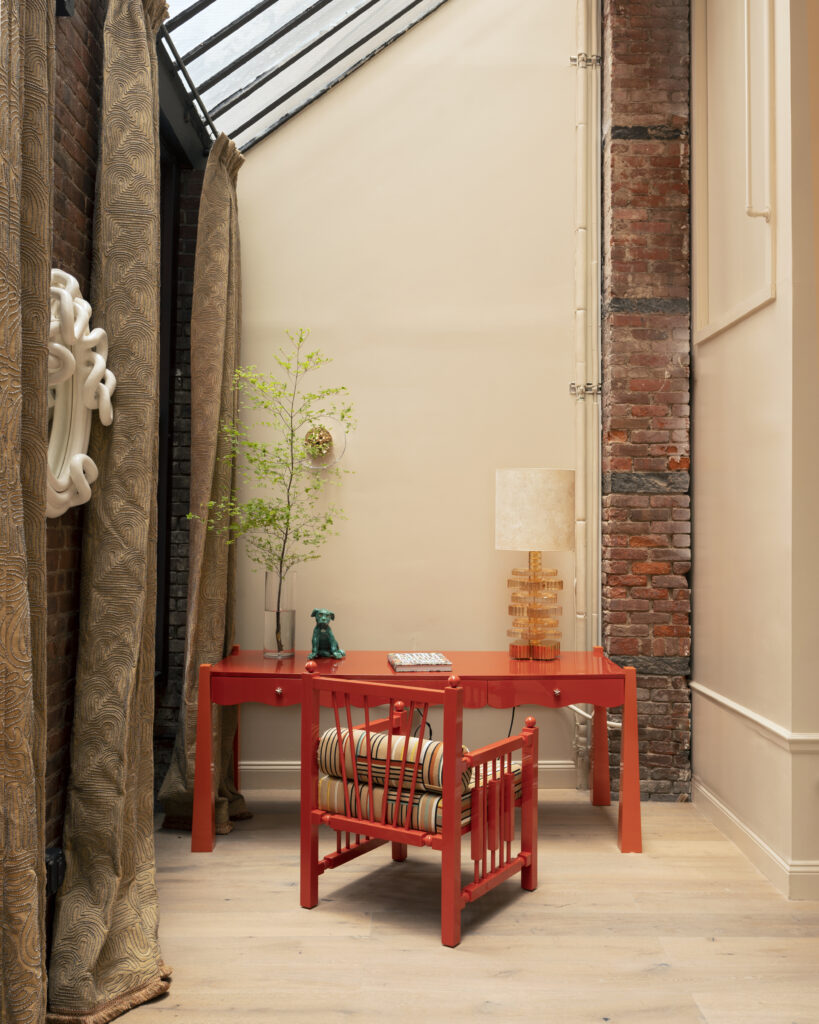
The space was not designed to remain static. A rotating exhibition programme brings other artists into the world of the furniture, reinforcing the sense of a house rather than a fixed display. Interiors need not arrive complete or remain frozen. They change as objects, works, and stories enter the room.
This may be the most precise way to understand art de vivre in Gonzalez’s work. A chair changes how someone lingers; a lamp alters the atmosphere; a textile or ceramic can become as important to the memory of a place as its architecture. On Franklin Street, Tribeca’s scale, the discipline of French craftsmanship, and the exuberance of color coexist without competing. Gonzalez’s particular luxury lies in making objects that remain interesting after the first look.