At de Gournay, walls become inhabited landscapes, shaped by historic techniques, years of training and the unmistakable intelligence of the human hand.
I first understood de Gournay through sensation rather than technique. While working on a story about Le Bristol Paris, I entered one of the hotel’s suites and found my attention drifting beyond the furniture, silks and precisely composed grandeur of the room toward the landscape covering its walls. It seemed to respond to that particular architecture and light, as though every branch, bird and opening flower had been placed only after considering how the room would be inhabited.
Le Bristol uses de Gournay’s hand-painted silk wallcoverings in the Suite Impériale and at Epicure, its three-Michelin-star restaurant. Within the suite, Chinese lacquer, Lyon silk velvet and the painted walls participate in a single decorative language, creating an atmosphere that reveals itself gradually as daylight moves across the surfaces. What fascinated me was not simply the beauty of the wallcovering, but the certainty that it belonged to that room and could not have produced the same effect anywhere else.
The distinction between de Gournay’s work and conventional wallpaper became clear in that interior, because a mechanically printed pattern relies on exact repetition, while a composition painted by hand develops in response to the architecture. Branches can be redirected around a doorway, birds repositioned in relation to a bed, and palettes devised for the natural and artificial light of a particular space. The image may be painted onto Xuan paper, India tea paper or dyed silk, while other grounds are gilded with silver, white gold or deep gold before receiving layers of pigment, antiquing, lacquer, bas-relief or embroidery.
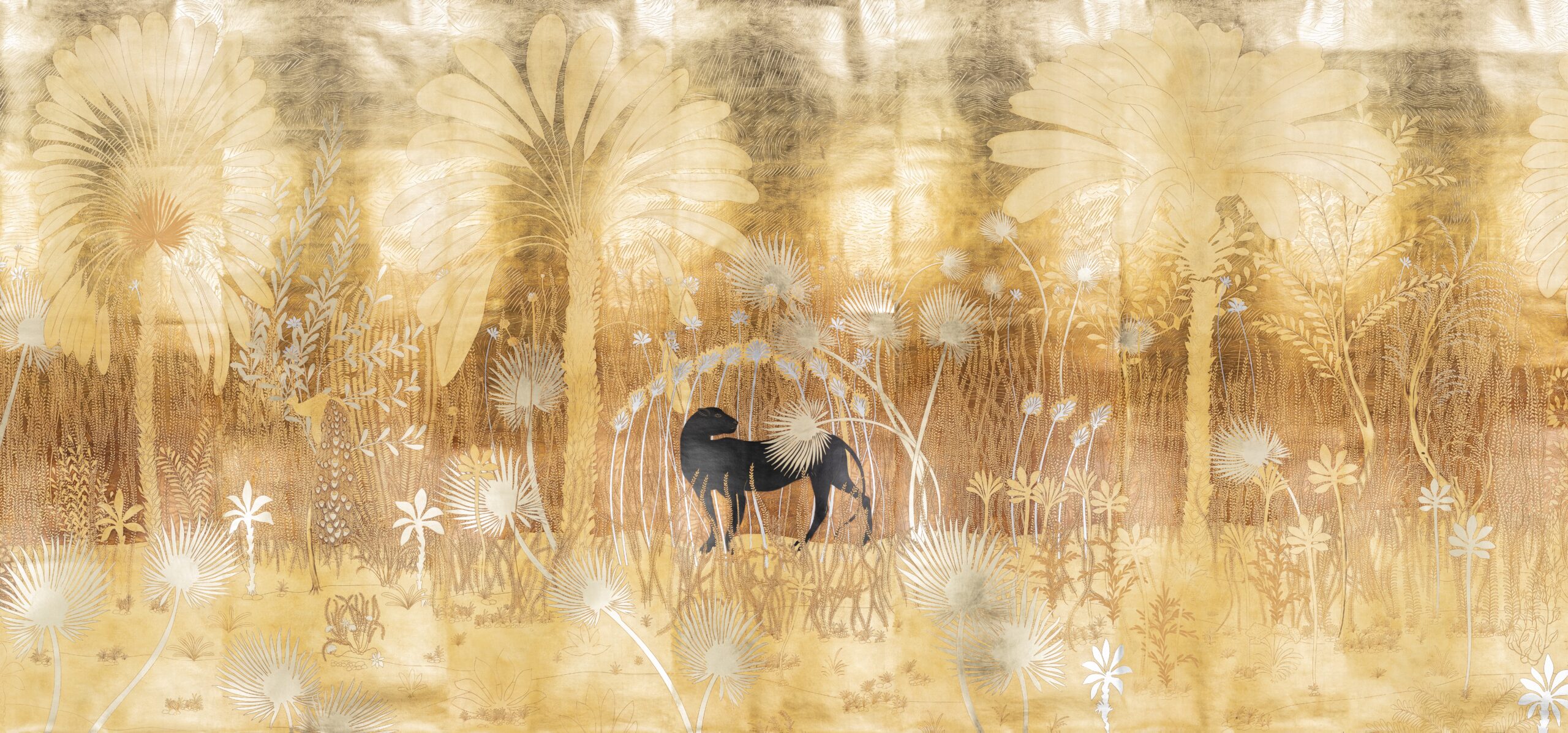
The company took shape in the 1980s, when Claud Cecil Gurney began researching how the splendor of seventeenth-century Chinese wallcoverings might be recreated. Traveling through China, he found that industrial production had displaced many of the traditional craft practices he was seeking, yet he eventually met artists whose parents and grandparents had practiced these methods. Their knowledge became the foundation of a contemporary studio that could preserve historical techniques without reducing them to reproduction of the past, and the family business now includes his daughters, Hannah and Rachel.
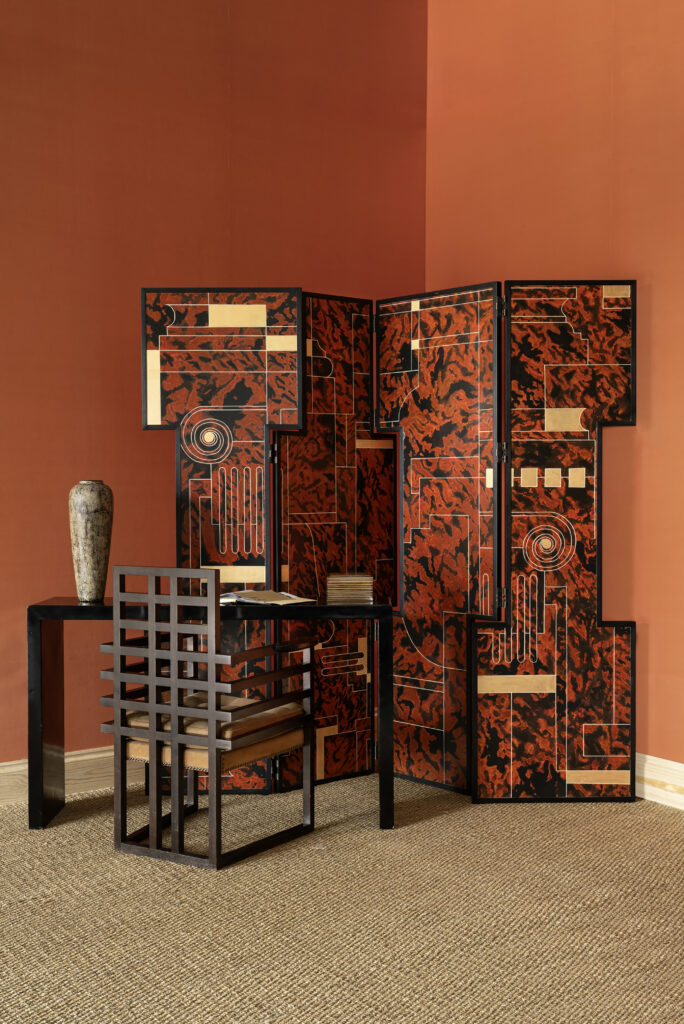
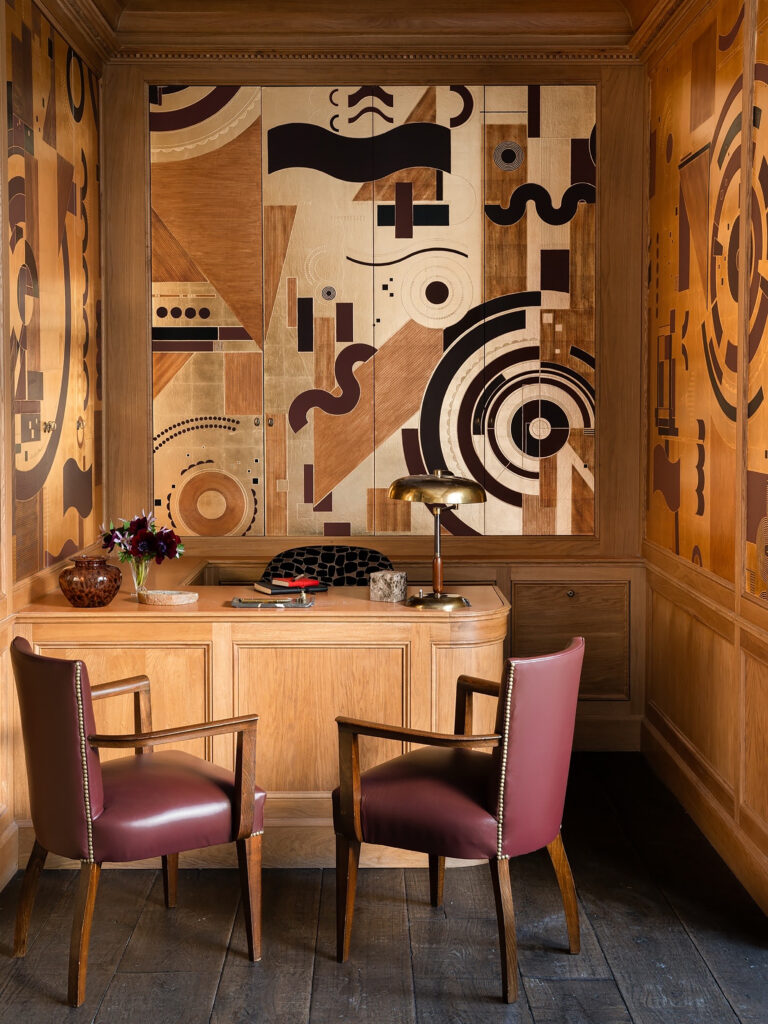
Artists in de Gournay’s Chinese studio train for five years, learning to prepare grounds, develop palettes and work across decorative vocabulary that includes Chinoiserie, Japanese and Korean subjects, panoramic landscapes and Art Deco geometry. Among the techniques they master is a two-brush method in which one brush applies watercolor while another, carrying only water, draws the pigment outward, allowing color to move almost imperceptibly from shadow into light.
A botanical Chinoiserie panel may require three artists and as many as 250 hours of work, although time alone does not account for its character. The pressure of an individual wrist alters the contour of a leaf, just as the temperament of a painted bird changes subtly from one artist to another. De Gournay does not erase these differences in pursuit of uniformity, because they give the surface something a flawless reproduction cannot possess: evidence of authorship.
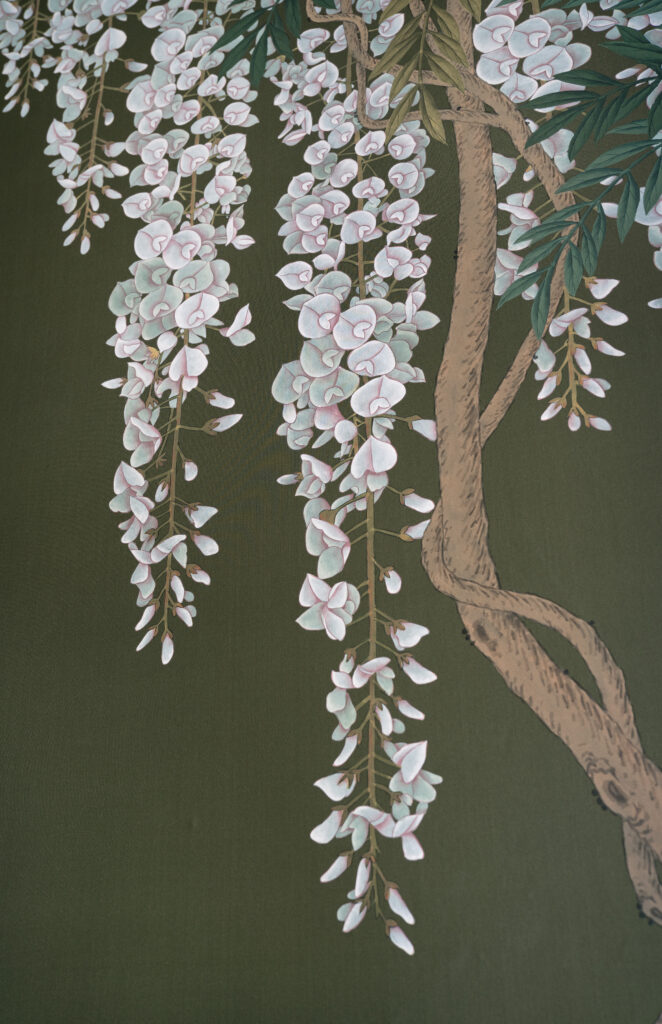
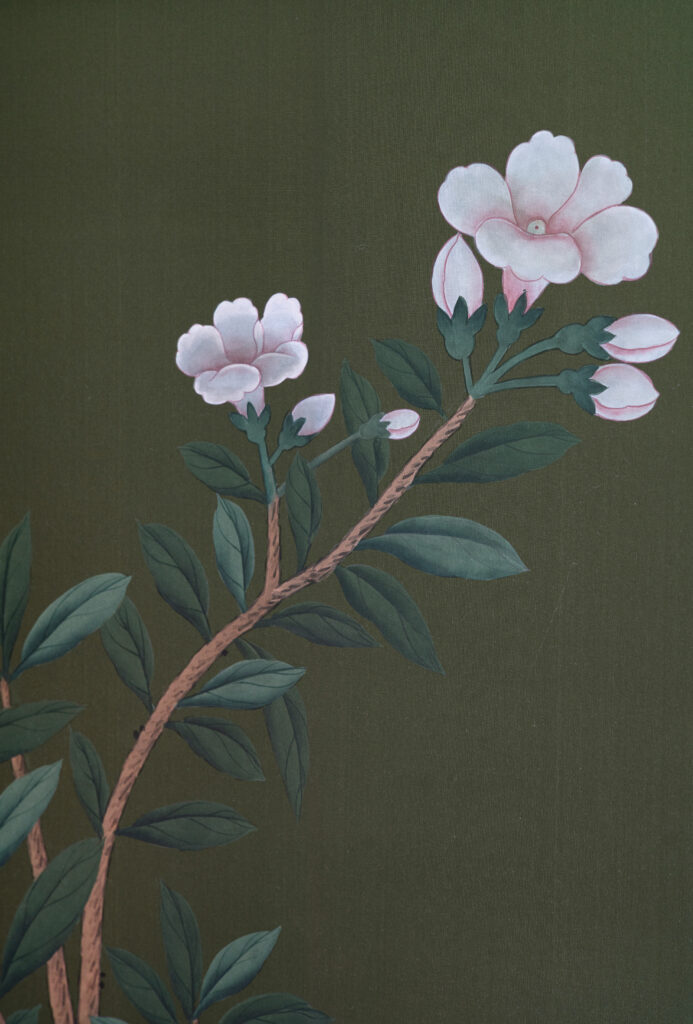
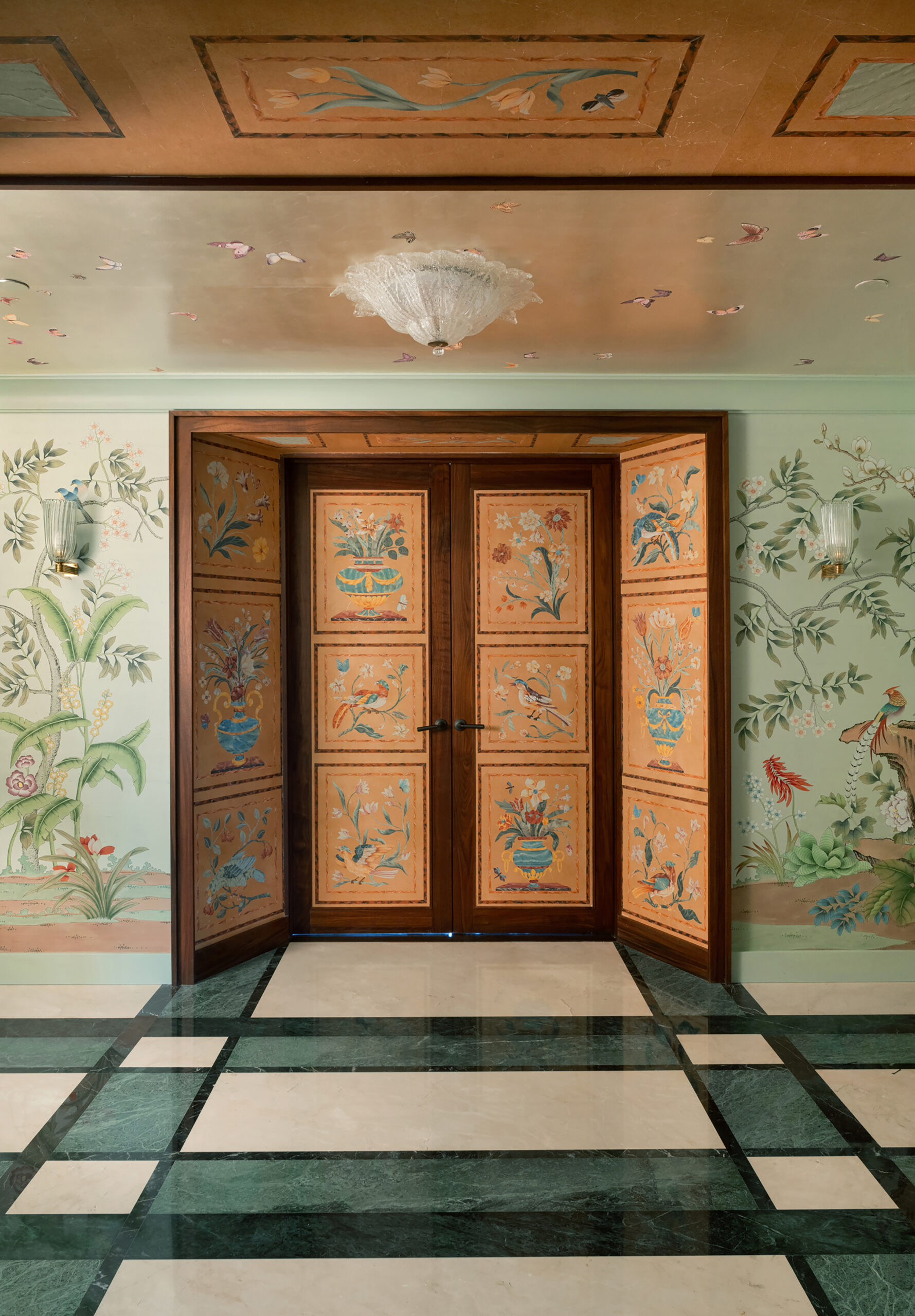
The house associates this presence with “spirit resonance,” one of the six classical principles of Chinese painting, rooted in the belief that an artist’s vitality remains within the finished work. Seen from this perspective, the small variations between one painted passage and the next are neither accidents nor imperfections; they are traces of the people who made the work.
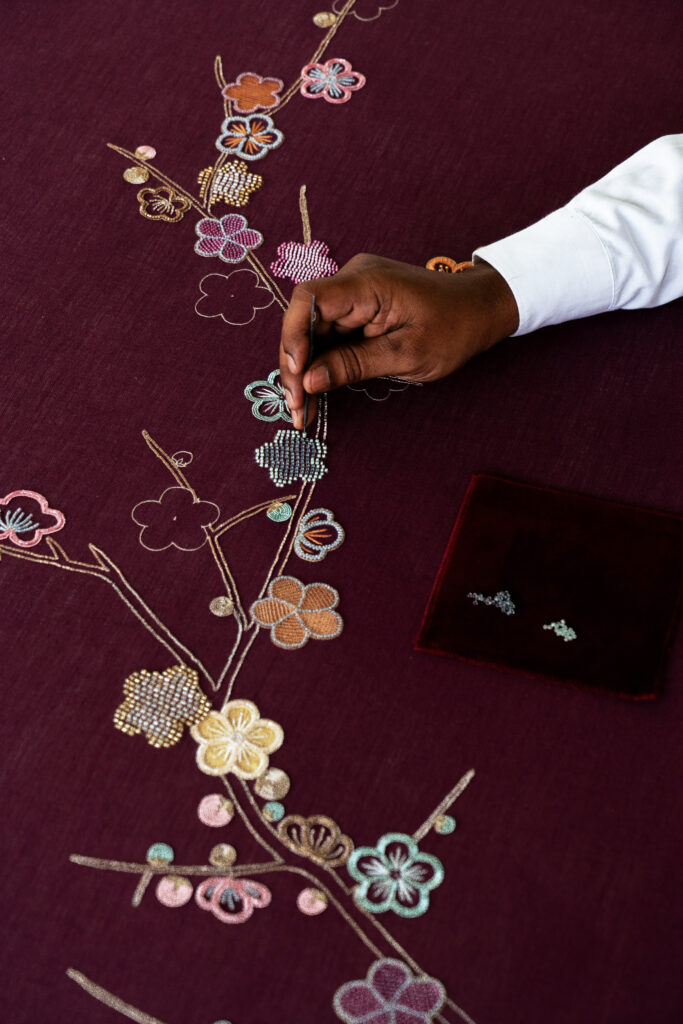
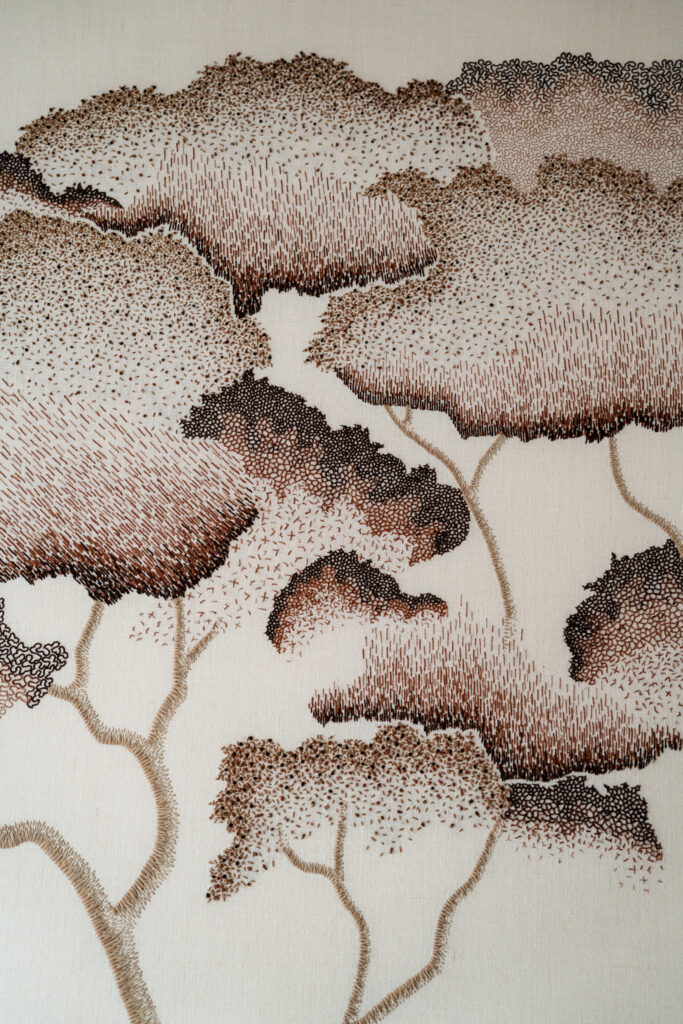
That same philosophy extends into hand-embroidered wallcoverings and textiles executed in silk, linen, velvet and wool sateen, sometimes with metallic thread, glass beads, sequins or raffia. De Gournay’s artisans also design and paint porcelain by hand, producing dinnerware, lamps, vases and figurines that draw upon the knowledge of historic Chinese workshops. Although the references may belong to another century, the combinations of scale, materials, and color are developed for contemporary interiors, which keeps the work from becoming an exercise in nostalgia.
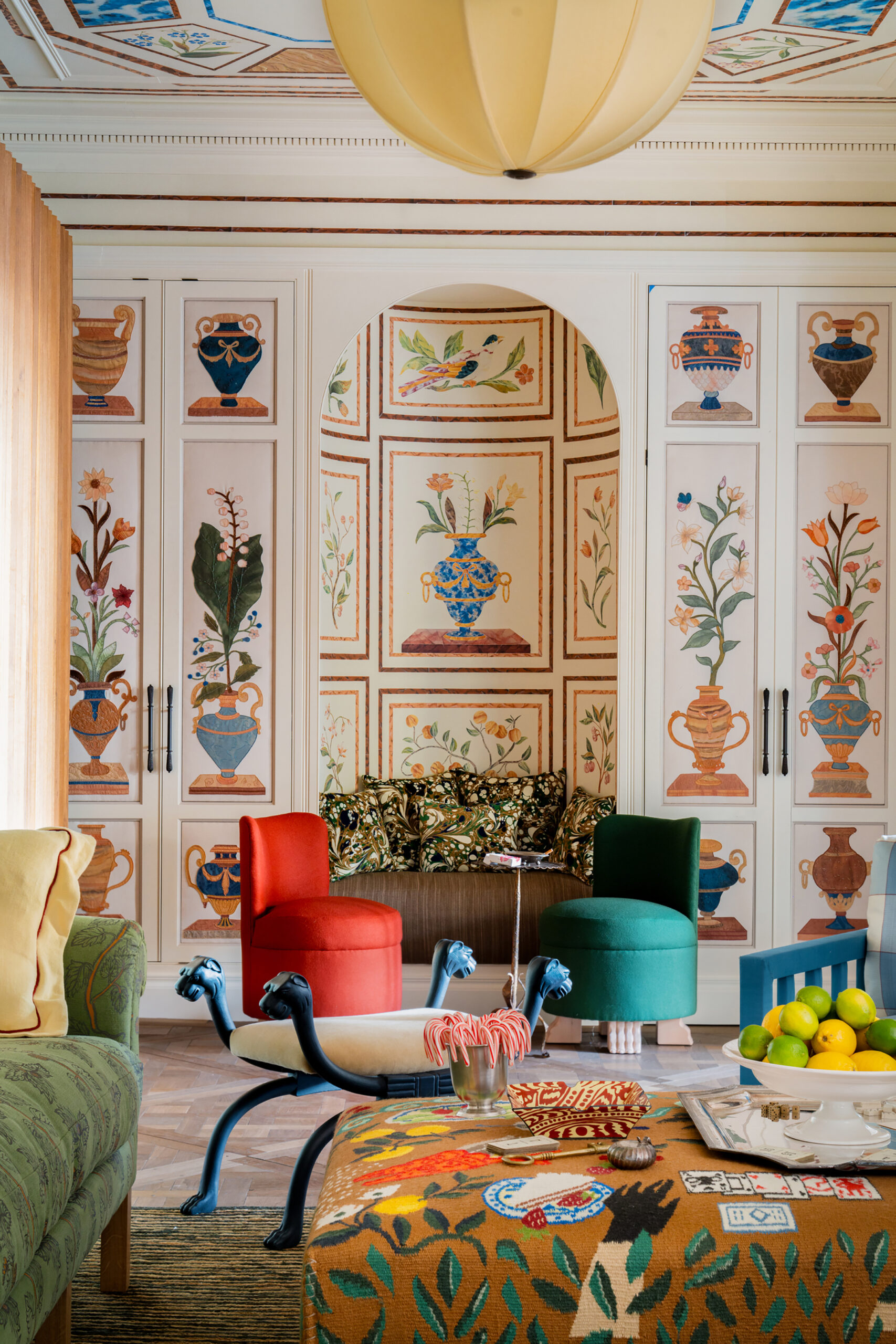
This adaptability has brought de Gournay into markedly different settings, including Annabel’s in London, The Colony Hotel in Palm Beach, Claridge’s, The Savoy and Bergdorf Goodman in New York. In some rooms, the painted surface recedes quietly behind antiques and textiles, while in others it establishes the architecture’s dominant rhythm, proving that a recognizable visual vocabulary need not produce a predictable result.
I still think of the suite at Le Bristol and of the moment when the wall began to feel less like a backdrop and more like a presence in its own right. Somewhere, an artist had determined how each branch should turn, where a flower should open and at what point the eye might pause before continuing through the landscape. The person who made those decisions was no longer in the room, but the movement of the hand remained visible.