
Removed from their original context, the designs of the molas spent decades in museum collections before Guna representatives encountered them and brought their visual references back home.
By Letícia Lima Laurino
In Guna Yala, on Panama’s Caribbean coast, molas are textile panels sewn onto the front and back of Guna women’s blouses. They move with the women throughout the day. When a panel is removed from a garment and framed, however, it can take on a different meaning.
A palm tree might be repeated and rotated across the fabric until it nearly disappears into its own shapes. In another composition, the body of an iguana blends into the lines surrounding it. One mola in the collection of the Cleveland Museum of Art features the boxing kangaroo from Matilda, a 1978 film. Translated onto cotton, the movie poster takes on new contours and colors. Packaging and advertisements also find their place among plants, animals and geometric figures.
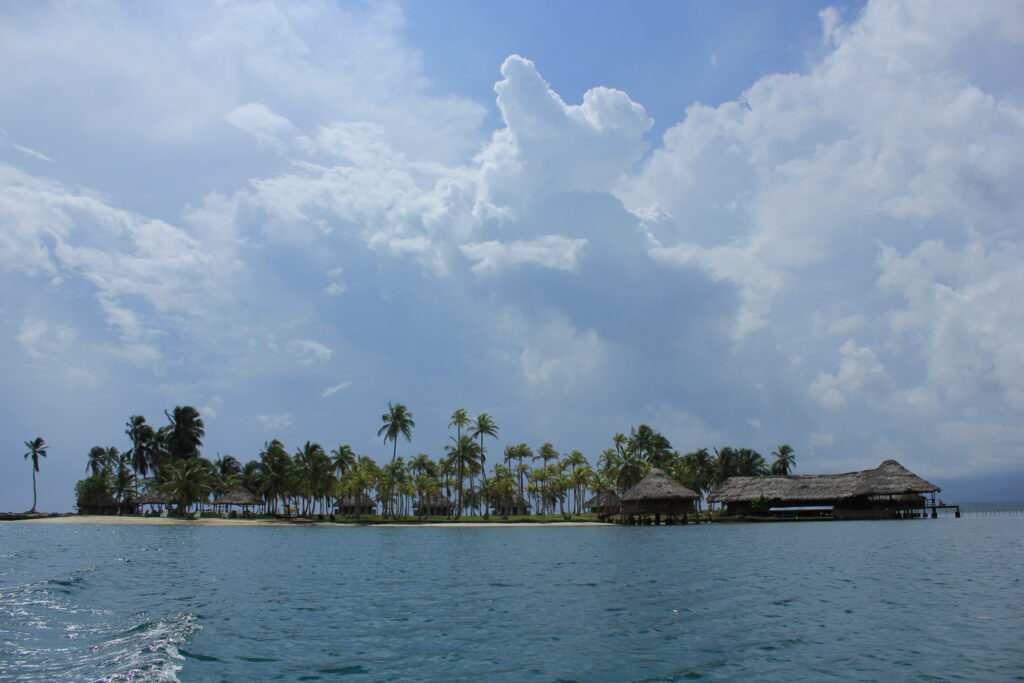
Photo: Ayaita
As they sew together, the women look at one another’s work. They comment on color combinations, the finish of the outlines and the way the figures are arranged. Before the designs accompany the women who wear them or make their way into a buyer’s hands, they also pass through these conversations.
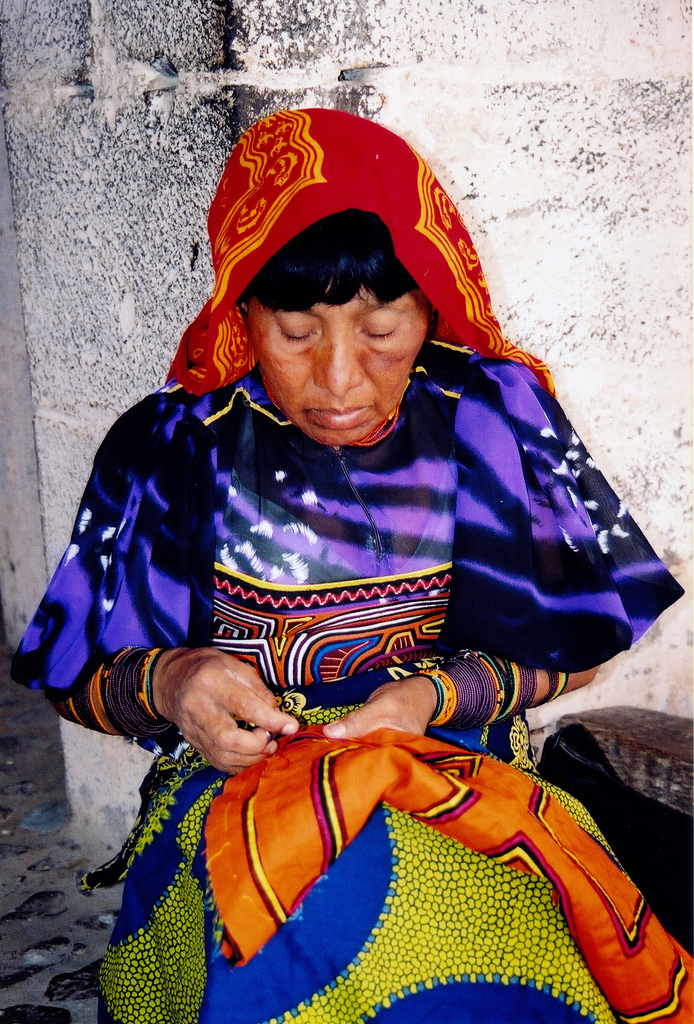
Photo: Christian Dory
Some molas reach the market after being part of a blouse. Others are made specifically for sale, a practice that gained momentum with the growth of tourism beginning in the 1960s and became a source of income for families. Among the pieces visitors take home are textiles that have been worn as clothing and others that have never been worn.
Read more: Why Do We Still Want Objects We No Longer Need?
Once framed, a panel removed from a blouse may be separated from its counterpart. On the wall, the composition remains fully visible, free from the folds created by the body. When made into a cushion, the panel is surrounded by another fabric and takes on a new role among the objects in a home. Those who choose a piece may know the name of the woman who made it and the community where it was created. They may be drawn only to its color combinations or the figure of an animal. The blouse, the maker and the conversations surrounding the designs may not be part of the purchase.
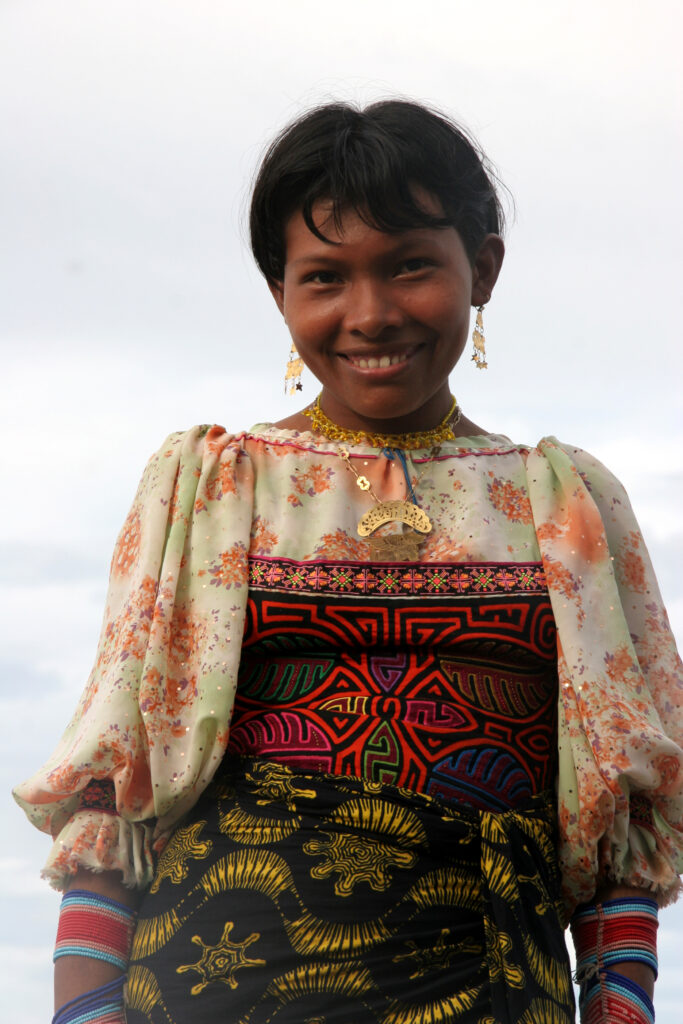
Photo: Yves Picq
There was a time when authorities tried to prevent these blouses from being worn. Beginning in 1918, police stationed in Guna communities banned ceremonies and gatherings and sought to suppress women’s traditional clothing. The women continued to sew and wear molas throughout the repression. In 1925, the Guna revolted and forced the police to leave the region. The wearing of molas remained among the customs the communities sought to preserve.
Decades later, molas collected in the early twentieth century were seen again by Guna representatives in Smithsonian collections in the United States. In the 1990s, members of the communities visited these collections and encountered designs created by earlier generations, preserved far from the places where they had been sewn.
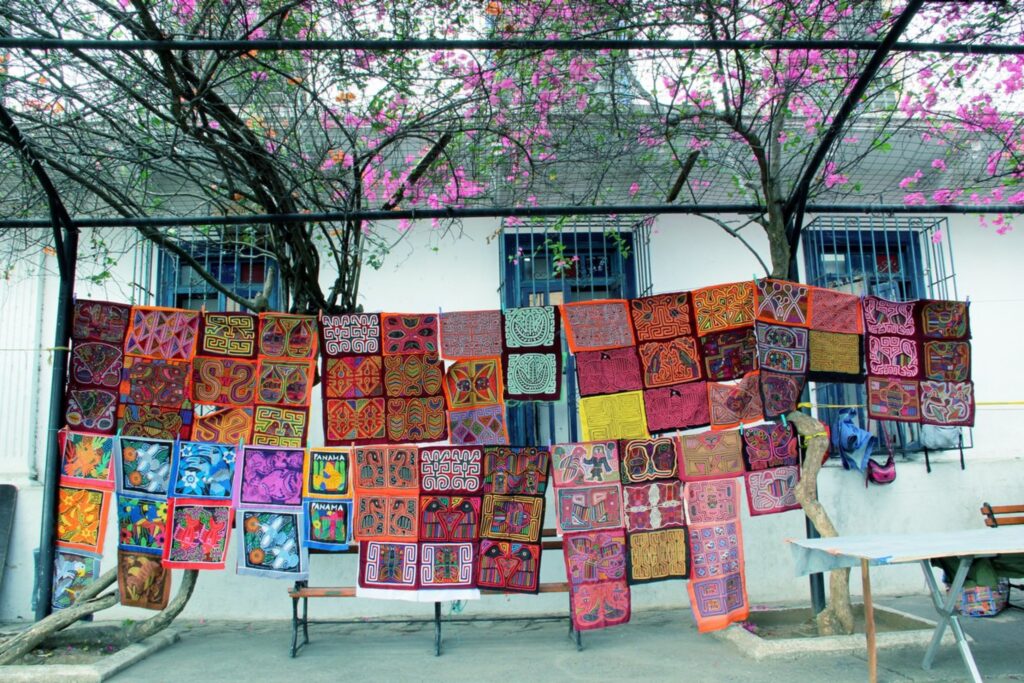
Photo: Ayaita
The representatives documented the pieces and brought their visual references back to Guna Yala, where they could share them with other makers. The textiles remained in museums; the designs began circulating in the communities again.