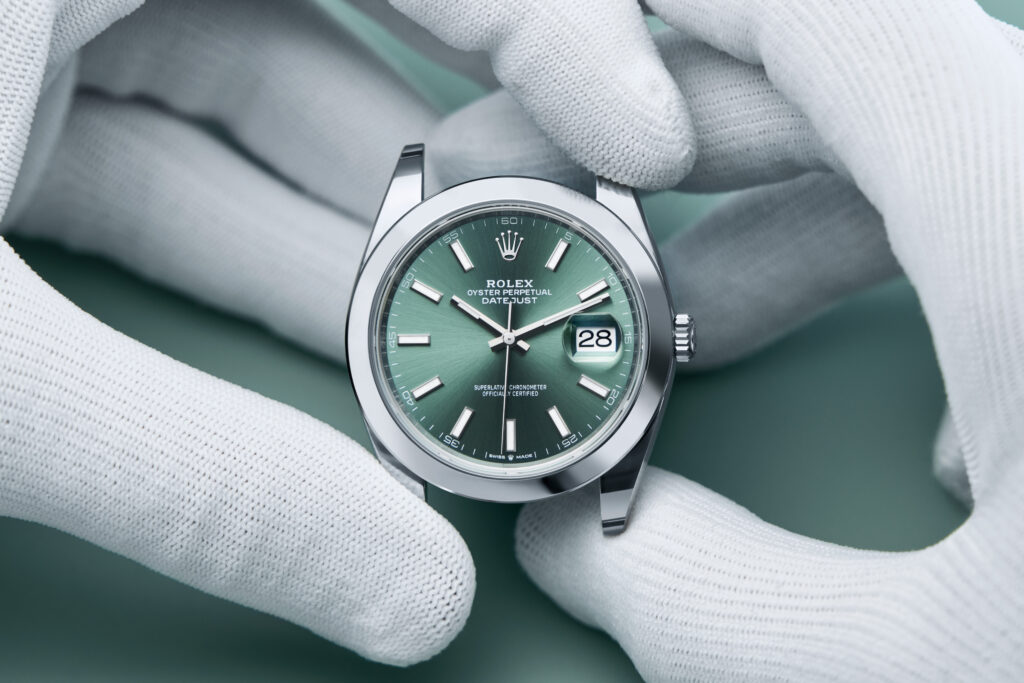
Watchmaking, Final Assembly, 2022.
Watchmaker during the final assembly. Detail.
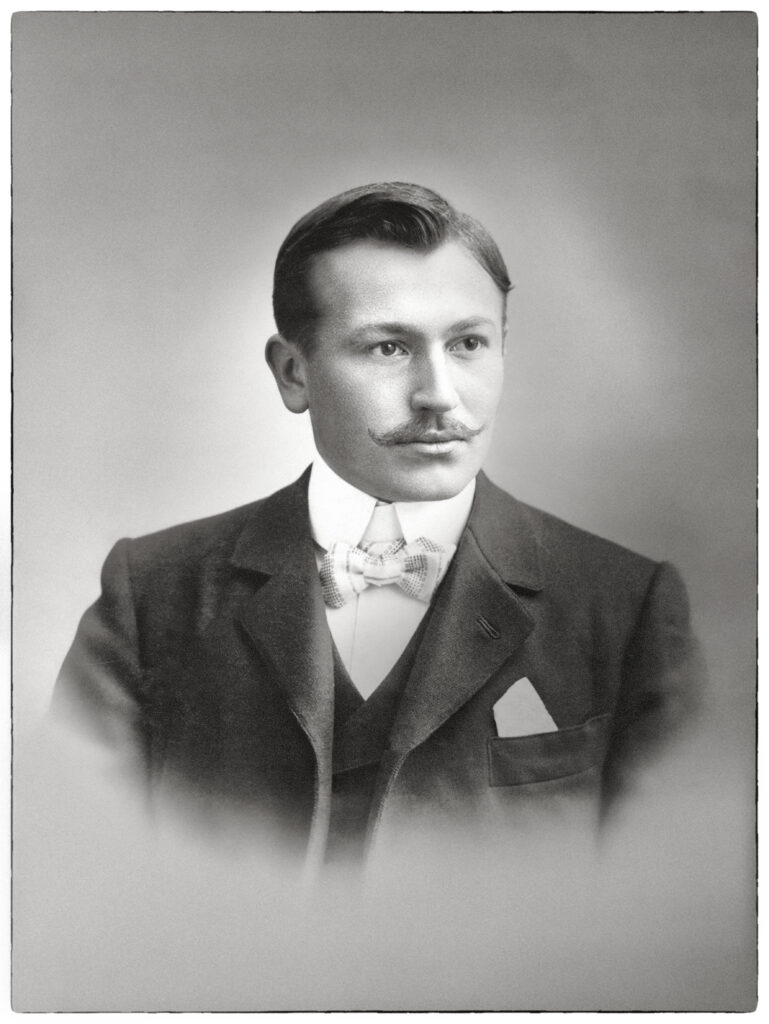
Hans Wilsdorf, founder of Rolex
Before 1926, the wristwatch had a problem it could not solve. Dust, moisture, and the ambient humidity of ordinary life entered through the crown, the caseback, and the bezel, corroding the movement inside. A gentleman’s watch could endure a London afternoon. It could not endure a swim, a monsoon, or a shift on a factory floor. The pocket watch was being replaced by the wristwatch, but the wristwatch, for all its convenience, remained a fragile instrument.
Hans Wilsdorf, the German-born founder of Rolex, regarded this fragility as intolerable. In 1926, he patented the Oyster case: a hermetically sealed housing with a screw-down bezel, caseback, and winding crown that made the wristwatch, for the first time, genuinely resistant to water and dust. The name was deliberate. An oyster is sealed, self-contained, and protects something of value inside. It was not just an engineering solution. It was a proposition about what a watch, and by extension its wearer, might be capable of.
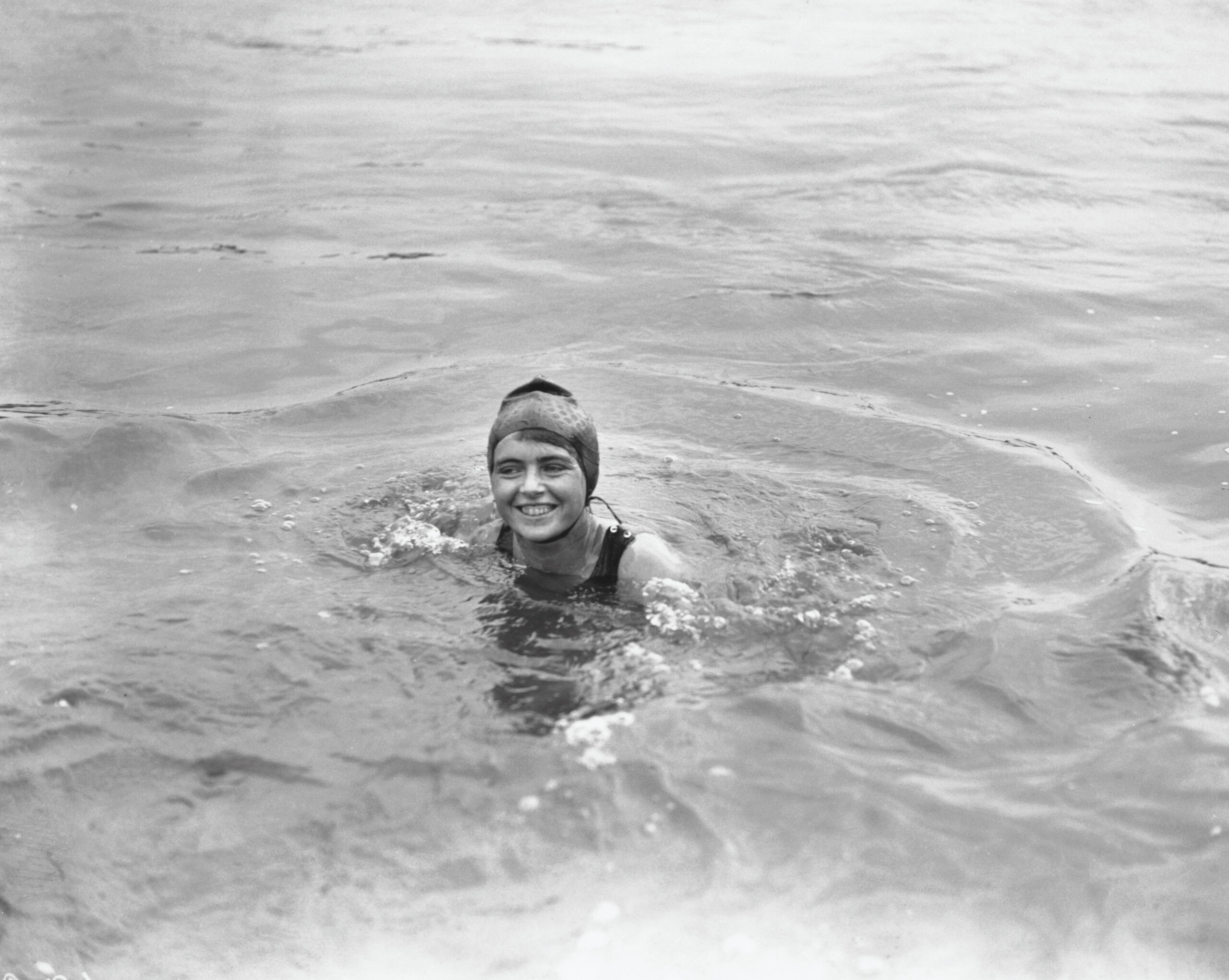
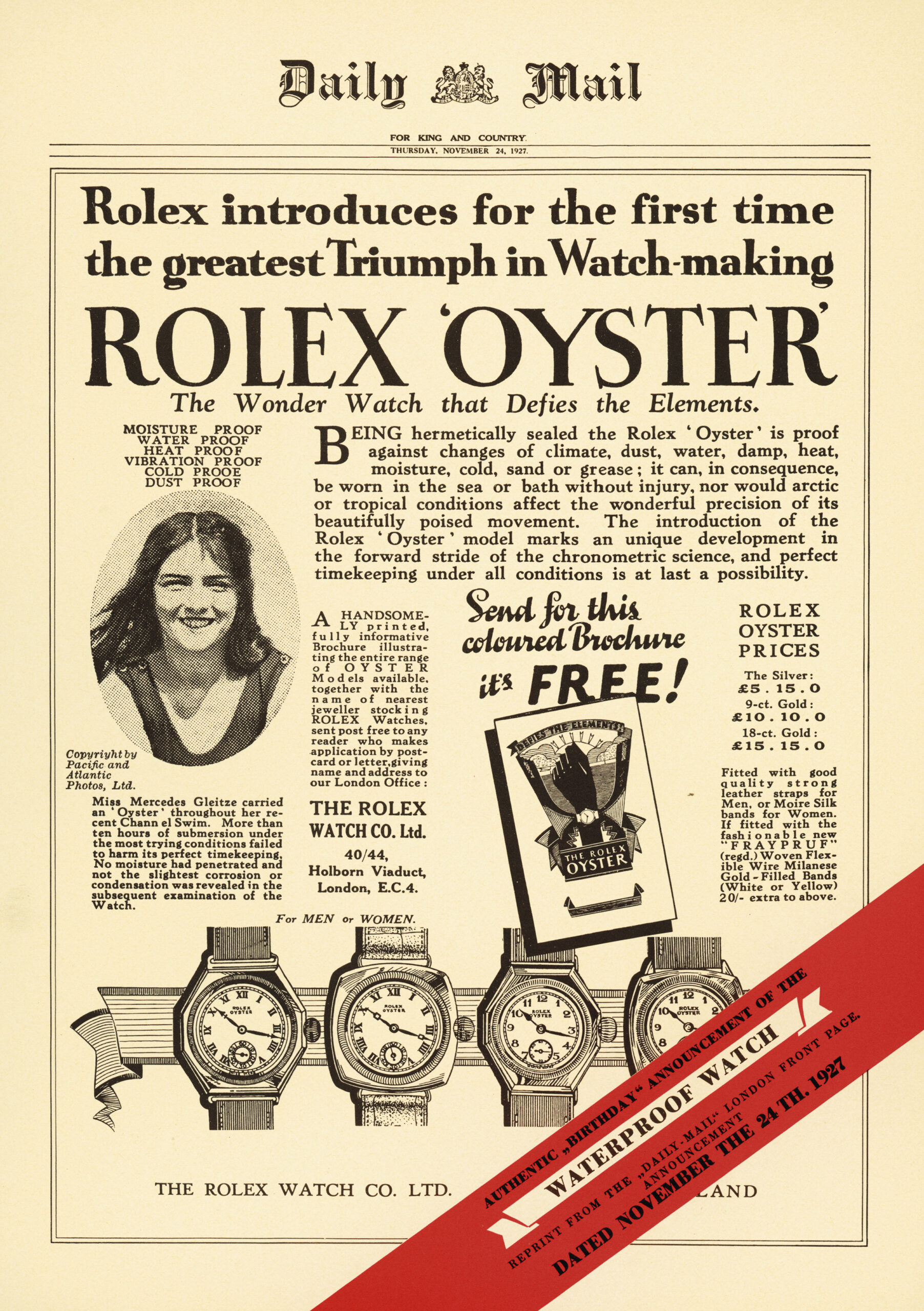
The proof arrived the following year with a calculated piece of theater. In October 1927, the young English secretary and distance swimmer Mercedes Gleitze strapped a Rolex Oyster to her wrist and entered the English Channel. After more than ten hours in cold water, the watch emerged functioning perfectly. Wilsdorf, who understood narrative as well as he understood mechanics, placed a full-page advertisement in the Daily Mail announcing the result. It was among the earliest instances of what would become a defining Rolex principle: associating the watch not with social display but with human achievement, endurance, and the test of both machine and body under pressure.
Mercedes Gleitze swimming the English Channel with a Rolex Oyster on her wrist, 1927.