
The rebirth of Fondation Cartier transforms Paris into a stage where architecture, art and audacity illuminate a new cultural era.
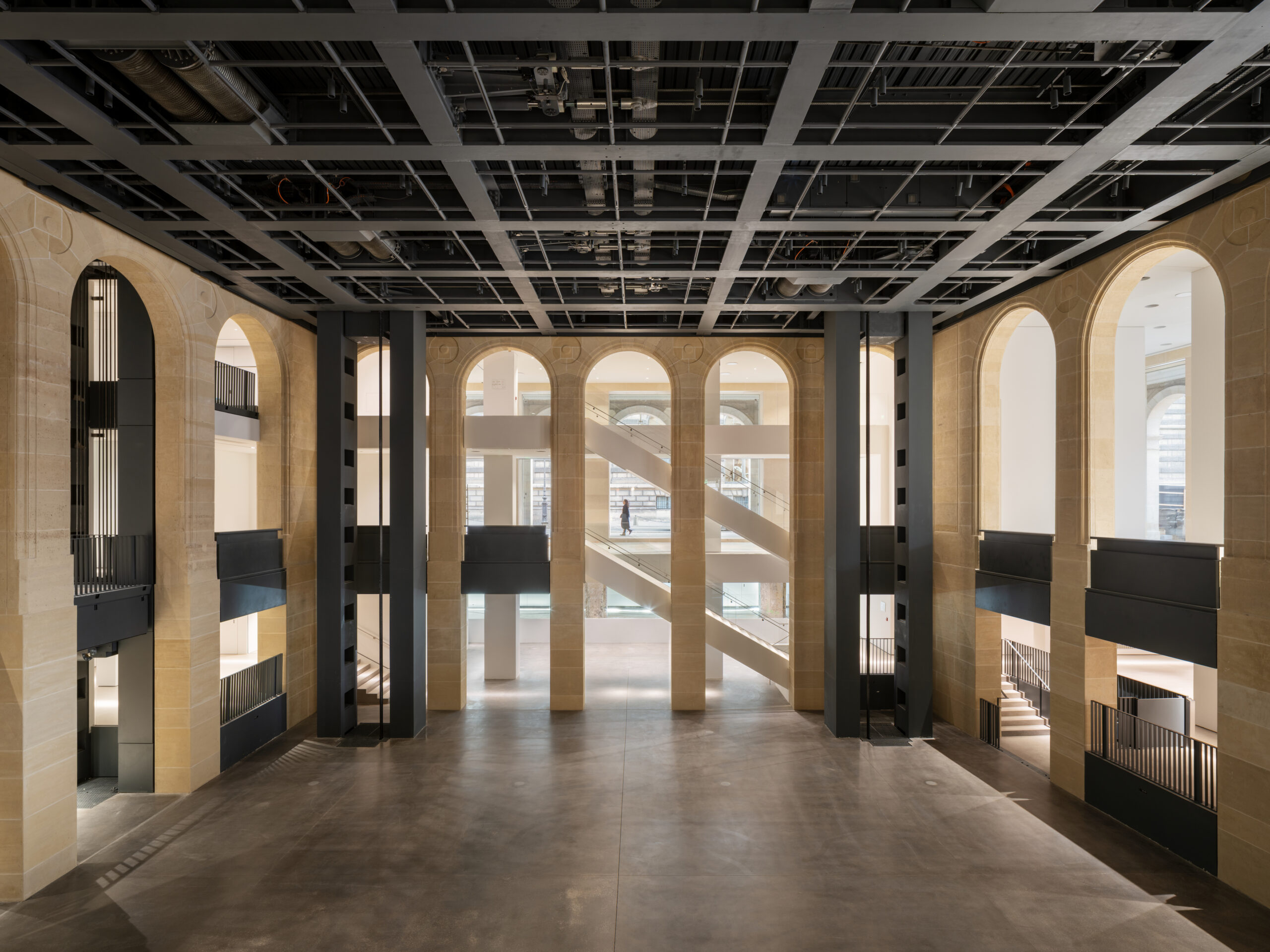
There are buildings that reopen, and there are buildings that resurrect Paris. The renewed Fondation Cartier belongs to the second category. Rising once again on Boulevard Raspail with its unmistakable transparency, Jean Nouvel’s mythical structure reemerges not simply as a museum, but as a cultural apparatus, part theater, part greenhouse, part dream machine, reaffirming itself as one of the most daring institutions in the city of daring.
Conceived in a moment when glass was still a provocation, Nouvel imagined an architecture that erased boundaries, walls dissolving into gardens, reflections folding onto themselves, and visitors suspended between presence and apparition. His original vision, revisited with intelligence and affection for this reopening, is a lesson in how buildings can be both poetry and precision, both prophecy and memory.
An architecture that erased boundaries, walls dissolving into gardens.
To understand the magnitude of this renaissance, one must return to 1984, when Cartier made the unexpected decision to create a foundation not for jewels, but for ideas. In the landscape of European luxury, this remains one of the most refined expressions of cultural patronage. Instead of monumentalizing its own heritage, Cartier chose to become an interlocutor for the future, offering artists space, visibility, freedom and, perhaps most importantly, institutional courage.
Under the leadership of President Béatrice Grenier, whose career has been shaped by a profound commitment to artistic discourse and international collaboration , the foundation has consistently championed voices ahead of their time.
The reopening’s inaugural exhibition, L’Abri des Imprévisibles, reveals the depth of this ethos. Conceived as a sweeping embrace of global contemporary creation, the exhibition unites more than six hundred artists who have marked the foundation’s history. Their works form an unexpected atlas of imagination, a cartography of experiments, disruptions, pleas, subversions, tenderness and revolt. This is not mere curation; it is choreography. Nouvel’s architecture acts as a conductor, framing each encounter with intentional ambiguity. Where does the building end and the artwork begin.
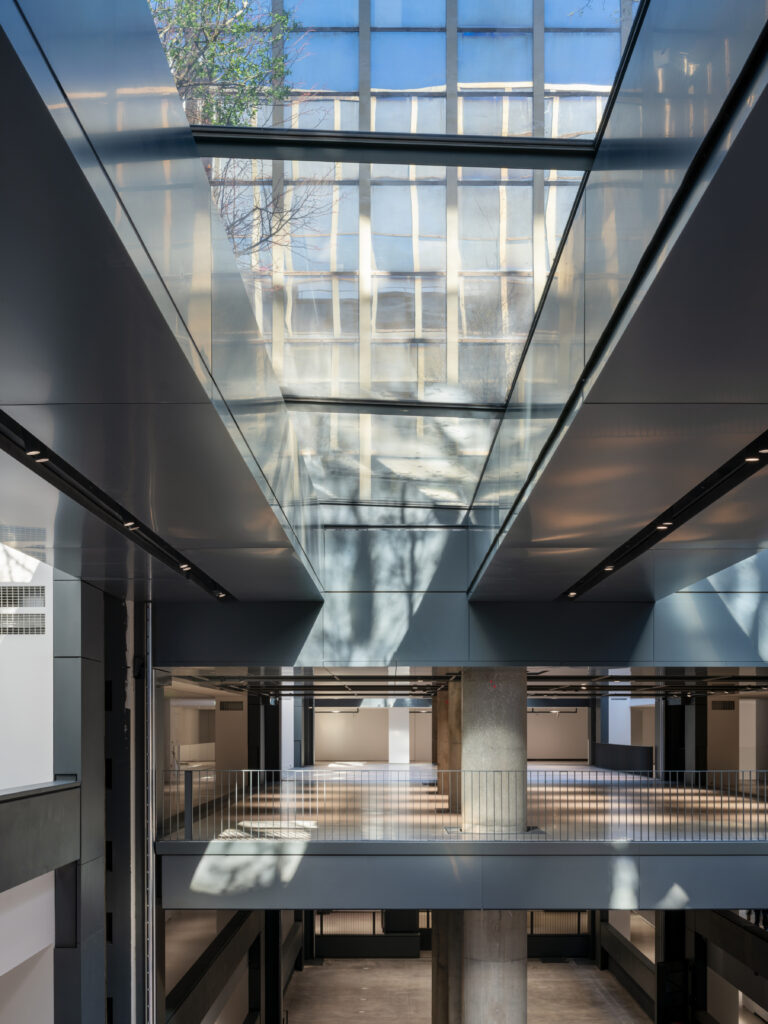
Where does the visitor’s body belong in this play of shadows and transparencies. The foundation once again proves that art, when well housed, becomes atmospheric, environmental, almost meteorological. The building itself, after months of meticulous restoration, returns sharper, lighter and more crystalline. Its double layers of glass, a signature gesture of Nouvel’s vocabulary, have been polished to reveal the garden of Lothar Baumgarten with renewed clarity.
It is the ability to gather thinkers, creators, architects, musicians, botanists and activists under one transparent canopy, letting their ideas refract like light.
The vegetation, always part of the foundation’s scenography, now performs like a living installation, shifting with daylight, wind and season. Inside, new technical systems discreetly enhance conservation, digital integration and environmental performance, aligning the space with twenty first century museography while preserving its original soul. Yet the Fondation Cartier’s true sophistication lies not only in aesthetics, but in its intellectual mission.
The institution has long operated as a platform where disciplines collide, art meeting science, philosophy encountering ecology, anthropology conversing with fashion. Cartier’s patronage is elegant precisely because it is invisible. No logo asserts itself, no commercial message intrudes. The luxury here is intellectual, relational, atmospheric. It is the ability to gather thinkers, creators, architects, musicians, botanists and activists under one transparent canopy, letting their ideas refract like light.
The foundation’s reopening arrives at a moment when Paris is experiencing cultural reconfiguration. As the city prepares for new museum wings, cultural districts and architectural evolutions, the Fondation Cartier reminds the world that innovation is not only built; it is cultivated. This return is strategic. It reinforces the idea that contemporary art must inhabit a space that breathes, shifts, mutates, seduces and sometimes destabilizes.
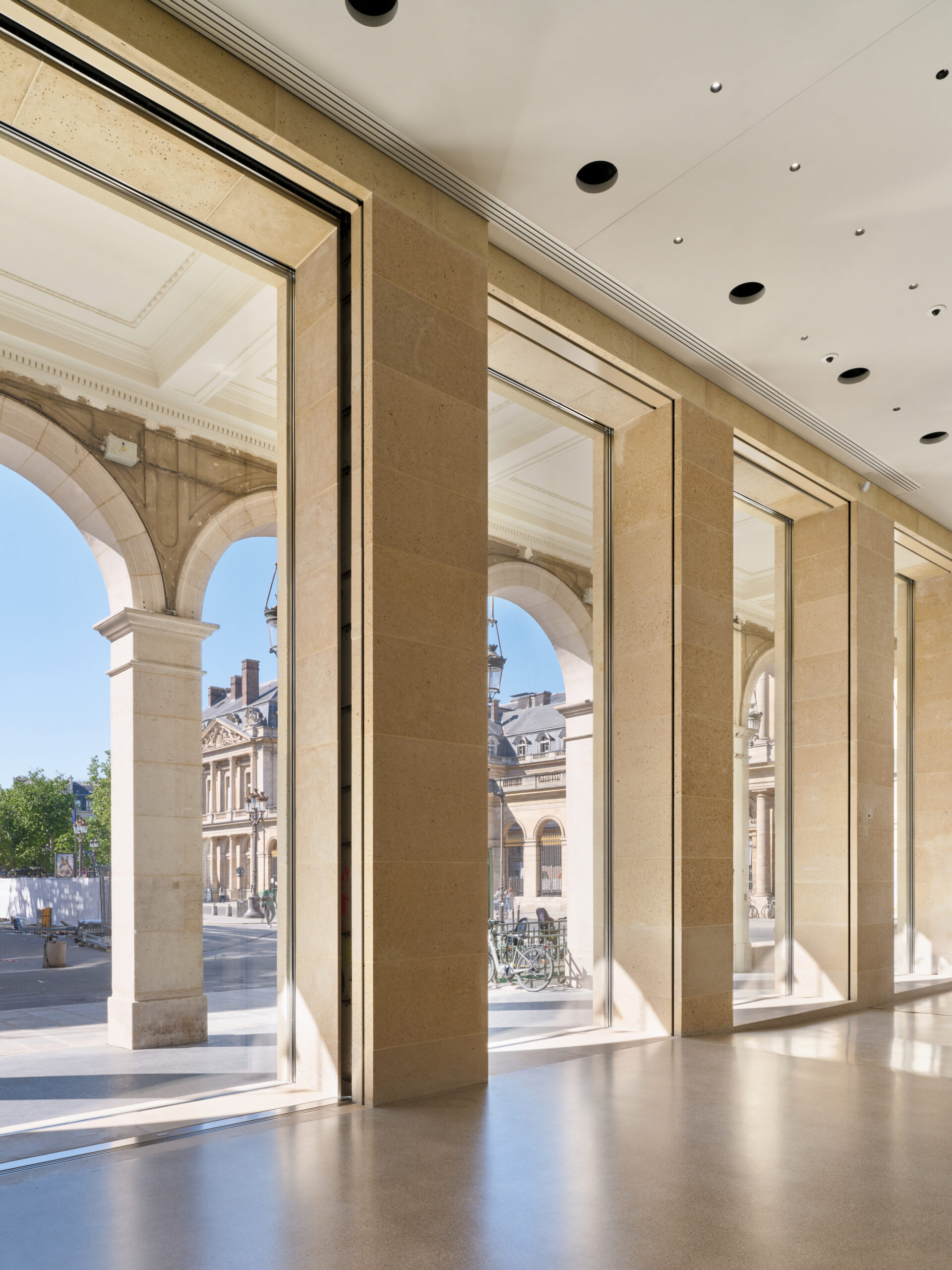
In this sense, the Fondation Cartier has always been more than a venue; it is a viewpoint. A prism through which Paris observes the world and the world observes Paris. It is a space where the unexpected is not curated; it is invited. And with its reopening, the city regains one of its intellectual lungs, an architecture of light that shelters the unpredictable, a space where beauty is not merely exhibited but argued, questioned and redefined.
Cartier reveals that the rarest form of luxury is the one that cultivates the spirit, gives shape to the invisible, and returns a deeper sense of meaning to the world.