Born from a painter’s studio in Stockholm, Byredo has grown into one of the most intriguing names in contemporary luxury. Its founder, Ben Gorham, turned personal memories into global fragrances, shaping a brand that is as much about culture and design as it is about perfume.
When Ben Gorham decided to create a fragrance house, he was not a perfumer, nor did he come from the traditional lineage of the French industry. He was a basketball player who had studied fine arts and who, by chance, met a master perfumer who showed him how memory could be captured in scent. That moment, almost accidental, marked the beginning of Byredo in 2006. Instead of starting with the formulas of luxury houses, Gorham began with something more intimate: his own recollections.
Byredo derives from an old English expression, “by redolence,” meaning “sweet smelling.” The word had almost vanished from common language, yet Gorham chose it to title a project dedicated to memory
Childhood summers, the smell of his father’s perfume, fragments of India where his mother was born — these became the raw material for his early creations. From the start, Byredo was a brand where perfume was not only about wearing a smell, but about carrying a story. The name itself holds a secret. Byredo derives from an old English expression, “by redolence,” meaning “sweet smelling.” The word had almost vanished from common language, yet Gorham chose it to title a project dedicated to memory.


That choice already revealed the brand’s nature: an attempt to preserve what tends to fade, to bottle what might otherwise be forgotten. The debut fragrance, Green, combined sage, orange, and musk in a way that recalled the scents of his family life.
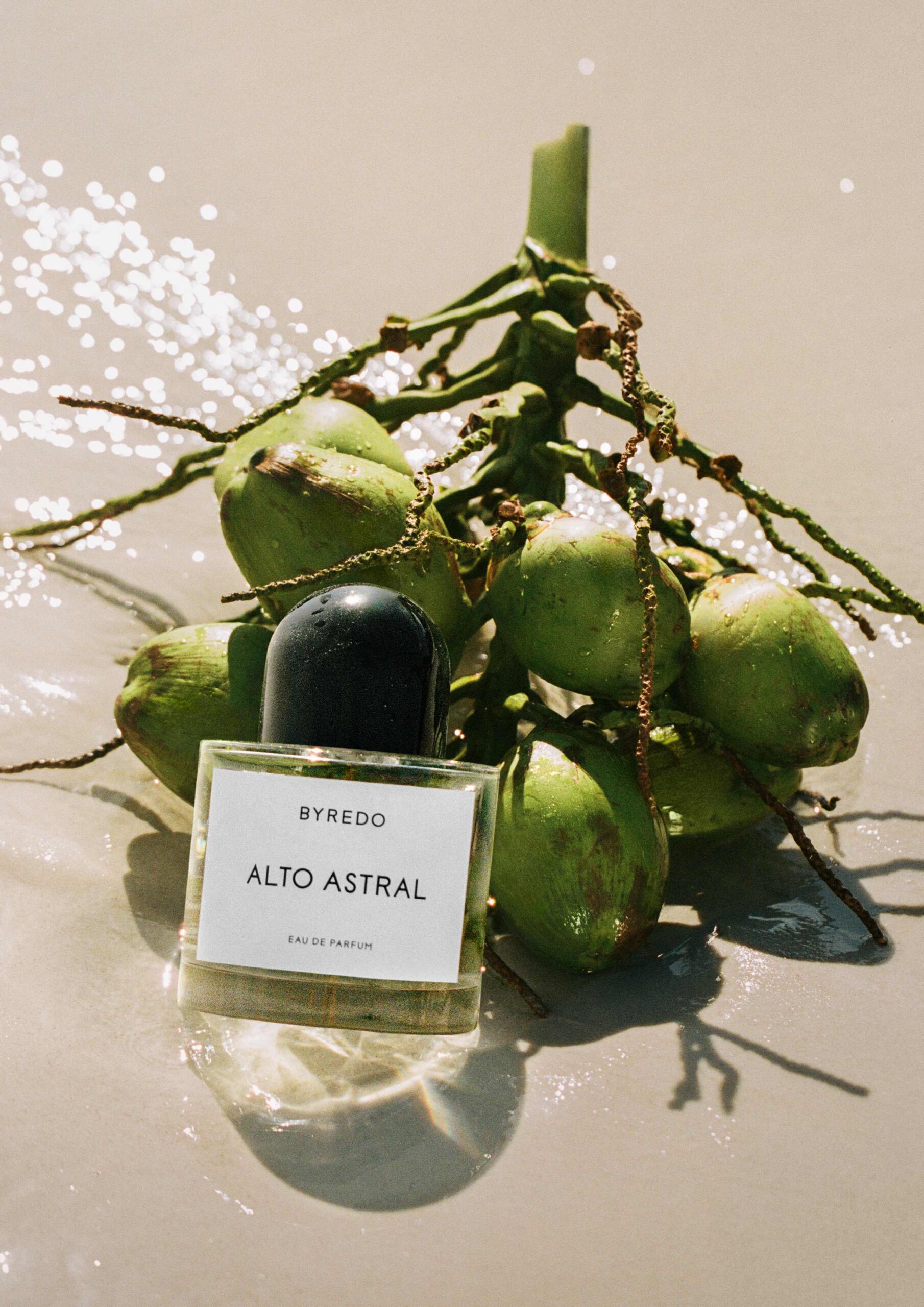
Instead of inventing fantasy, Byredo distilled experience. If the stories inside the bottles were intimate, the design of the bottles was the opposite: rigorous, impersonal, even austere. Clear glass, heavy weight, a perfectly rounded magnetic black cap, and a simple white label with stark typography. While other brands competed for attention with ornate shapes, Gorham went in the opposite direction, stripping everything down to silence. That minimalism, almost anonymous at first, became one of the most recognizable signatures in modern perfumery.
Today, a Byredo bottle can be identified across a room not because it shouts, but because it whispers with absolute confidence. This careful balance between memory and design became the foundation for a strategy that allowed Byredo to grow without ever feeling diluted. Each fragrance is developed slowly, sometimes requiring as many as one hundred and fifty iterations before reaching the final form.
This patience is unusual in an industry often tied to fashion calendars. The result is a portfolio that feels cohesive, where each release is not a seasonal product but a chapter in a novel. The rhythm is deliberate, and it has allowed Byredo to maintain a sense of rarity even as it became global. Retail expansion followed the same philosophy. The flagship in New York’s SoHo, with terrazzo underfoot and a luminous grid of glass blocks, was conceived as an architectural extension of the bottles.
Stores in London, Paris, and other cities appeared only when the right space was found, sometimes after years of waiting. Walking into a Byredo boutique feels less like entering a shop and more like stepping into a curated atmosphere. Light, material, and scent combine to create continuity between the product and its environment. The product universe also widened cautiously. After perfumes came candles, then leather goods, then cosmetics. Each addition felt natural, as if the objects already existed in the brand’s imagination.
A travel case for perfume was not just an accessory but part of the ritual of memory. A lipstick or eyeshadow followed the same design codes as the bottles, reinforcing the identity across categories. Even the foray into fine jewelry in 2024 felt coherent, confirming that the brand’s grammar was strong enough to apply to metal and stone.
Much of this coherence comes from Gorham himself. He rarely wears perfume, which might seem paradoxical, but it explains his position: he creates for others, not for himself. The perfumes often reference his biography — Bal d’Afrique inspired by his father’s journals, Mumbai Noise drawn from the sensory density of Indian streets — yet they are designed to invite anyone into the memory. His role is closer to that of a storyteller than a consumer, translating fragments of life into universal experiences.
Collaborations have become part of this storytelling. Rather than treating them as marketing stunts, Byredo uses partnerships to explore new questions. A project with Virgil Abloh produced a fragrance called Elevator Music, which suggested that perfume could exist in the background like ambient sound. A collaboration with a furniture company extended the idea of memory into domestic space.

These experiments broadened the brand’s cultural vocabulary, proving that a fragrance house could also speak fluently in design and art. Corporate growth has also been handled with the same sensitivity. When Byredo sold a majority stake in 2013 to Manzanita Capital, Gorham remained the creative force. In 2022, when Spanish group Puig acquired a controlling interest, the agreement once again preserved his role as creative director and minority shareholder. Investors understood that the true value of Byredo lay not only in sales but in its creative integrity. Protecting Gorham’s voice was part of protecting the brand itself.
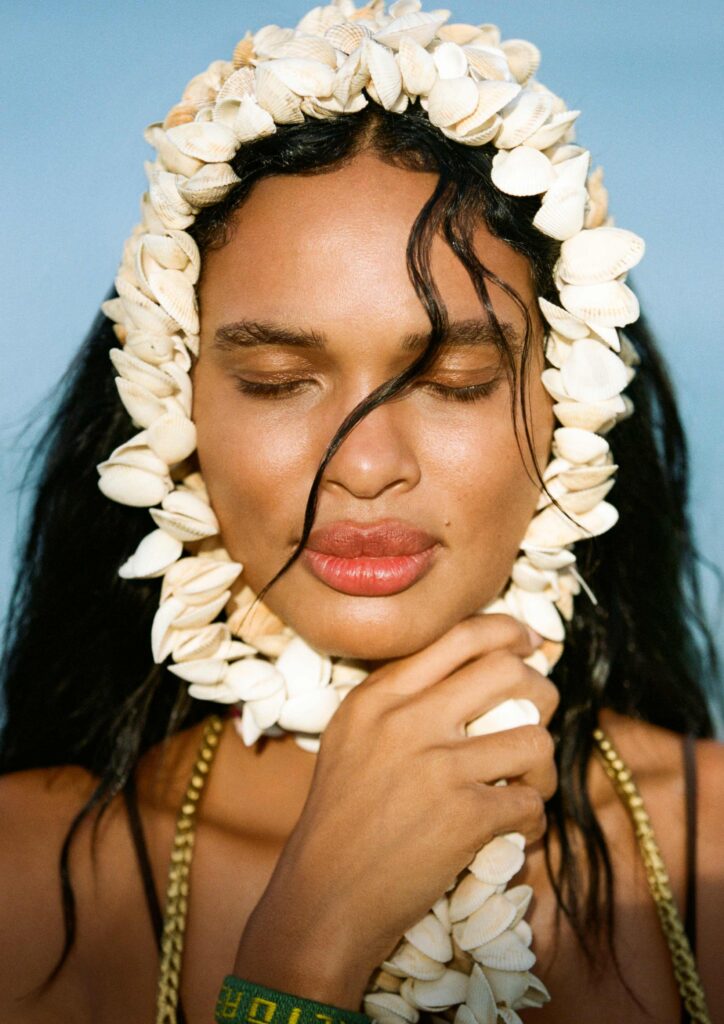
The latest addition, Alto Astral, captures this philosophy in new form. Inspired by Brazil, it carries aldehydes and coconut at the opening, unfolds into jasmine, incense, and musk, and settles into sandalwood, cashmere wood, and salted amber. The scent is luminous, but what makes it compelling is the way it channels optimism as a cultural state. The campaign was created with Brazilian artists and photographers who portrayed the joy of samba, the rush of motorcycles, and the intimacy of beach life without resorting to cliché. In doing so, Alto Astral became not just a perfume, but a vision of Brazil through the lens of authenticity.
Byredo’s story is filled with details that read like small curiosities yet together form the architecture of a brand. The name taken from a forgotten word. The first fragrance tied to family life. The design of the bottles that turned absence into identity. The patience of more than a hundred trials before a formula is chosen. The boutiques that take years to find the right space. The founder who creates but rarely wears perfume. The collaboration that suggested luxury could be silent. The acquisitions that preserved the creative voice. The jewelry line that extended identity beyond scent. And now, a fragrance that interprets Brazilian optimism with respect and nuance.
From the beginning, Byredo has shown that luxury is not about adding decoration but about removing everything unnecessary until only truth remains. Its power lies in coherence: the consistency of form, the discipline of growth, the clarity of vision. To encounter Byredo is to encounter an idea that memory can be designed, and that in the quiet of a bottle, entire worlds can be carried.