Where Art Meets the Table
Photograph by Sean Thomas.
Inside Sotheby’s Breuer Building, Marcel brings the auction house, dinner table, and design studio into one carefully chosen room.
Rich Stapleton Marcel Interior.
The building at 945 Madison Avenue has housed four institutions in sixty years, each one layering new meaning onto Marcel Breuer‘s original concrete geometry. It opened in 1966 as the Whitney Museum of American Art, one of the most assertive works of Brutalist architecture in the United States: cantilevered granite, inverted-pyramid massing, and those distinctive trapezoidal windows, which Breuer called “eyes,” designed to modulate the light entering the galleries without revealing the streetscape outside. The Whitney moved downtown in 2015. The Met Breuer occupied the building from 2016 to 2020. The Frick Collection used it temporarily while its own building was under renovation. In 2024, Sotheby’s purchased the structure for a reported one hundred million dollars and commissioned Herzog and de Meuron to restore it as the auction house’s new global headquarters, a restoration the Swiss architects have described as “quasi-invisible,” intervening only where the original concrete demanded structural repair.
Now the building has a restaurant. Marcel opened on April 16, 2026, a collaboration between Sotheby’s and Roman and Williams, the New York design studio founded by Robin Standefer and Stephen Alesch. The name invites a double reading: Breuer, the Bauhaus-trained architect who designed the building, and Duchamp, the conceptual artist whose major retrospective happens to be running across town at MoMA through August. Whether the allusion is intentional or serendipitous, it suits a room that treats the boundary between art and daily life as something to be dissolved rather than respected.
Nothing here is sourced for convenience, everything is chosen with purpose.
Roman and Williams are responsible for some of the most influential restaurant interiors in New York over the past two decades. The Ace Hotel, the Greenwich Hotel lobby, Le Coucou, The Dutch: each project established a particular material vocabulary, a dense layering of vintage and custom elements that reads as inherited rather than designed. Their downtown restaurant, La Mercerie, occupies the ground floor of the Roman and Williams Guild, the duo’s own design store in SoHo, and anyone who has spent time there understands the operating principle: craft, commerce, art, and the rituals of eating exist on the same plane. There is no hierarchy between the croissant and the hand-thrown ceramic it arrives on.
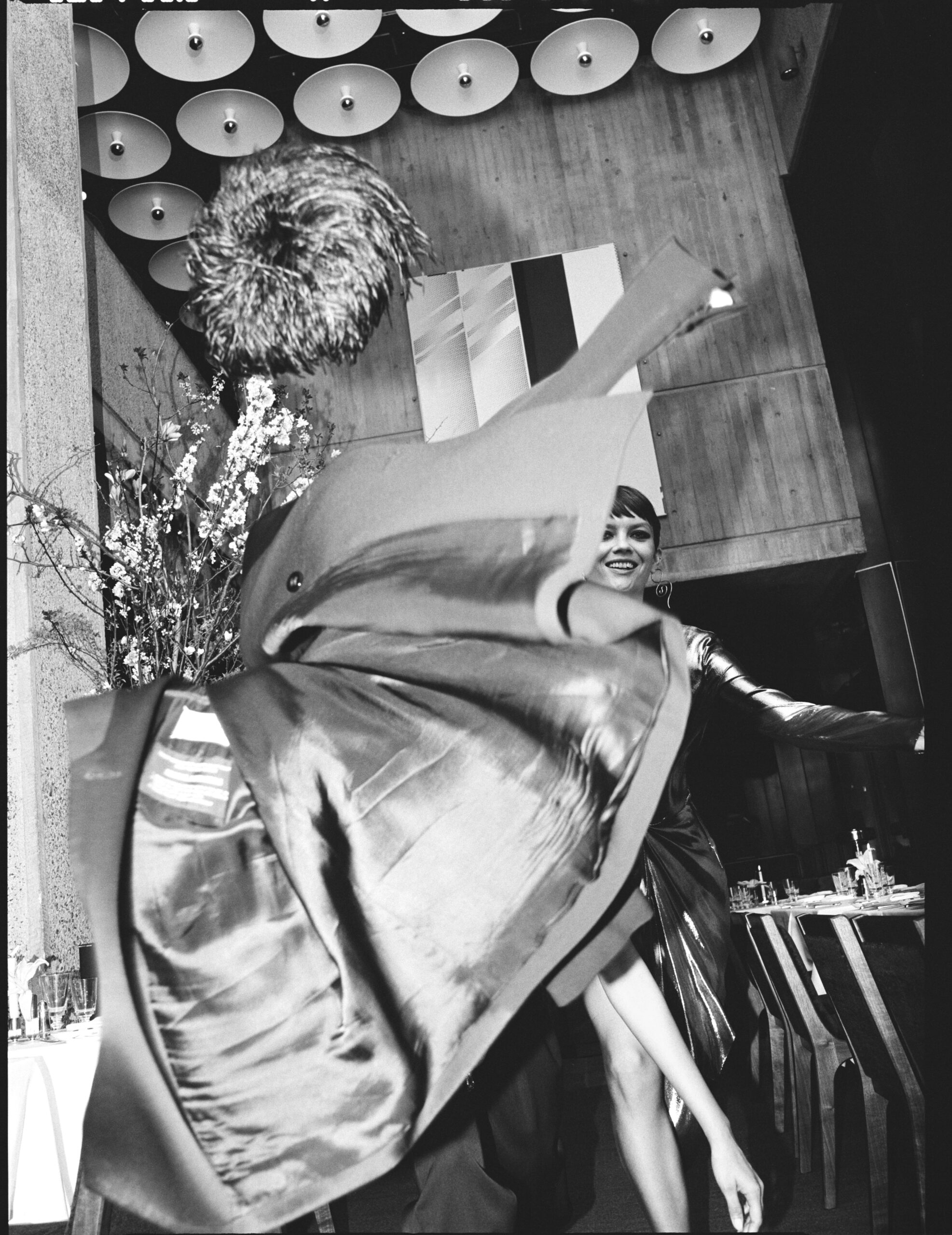
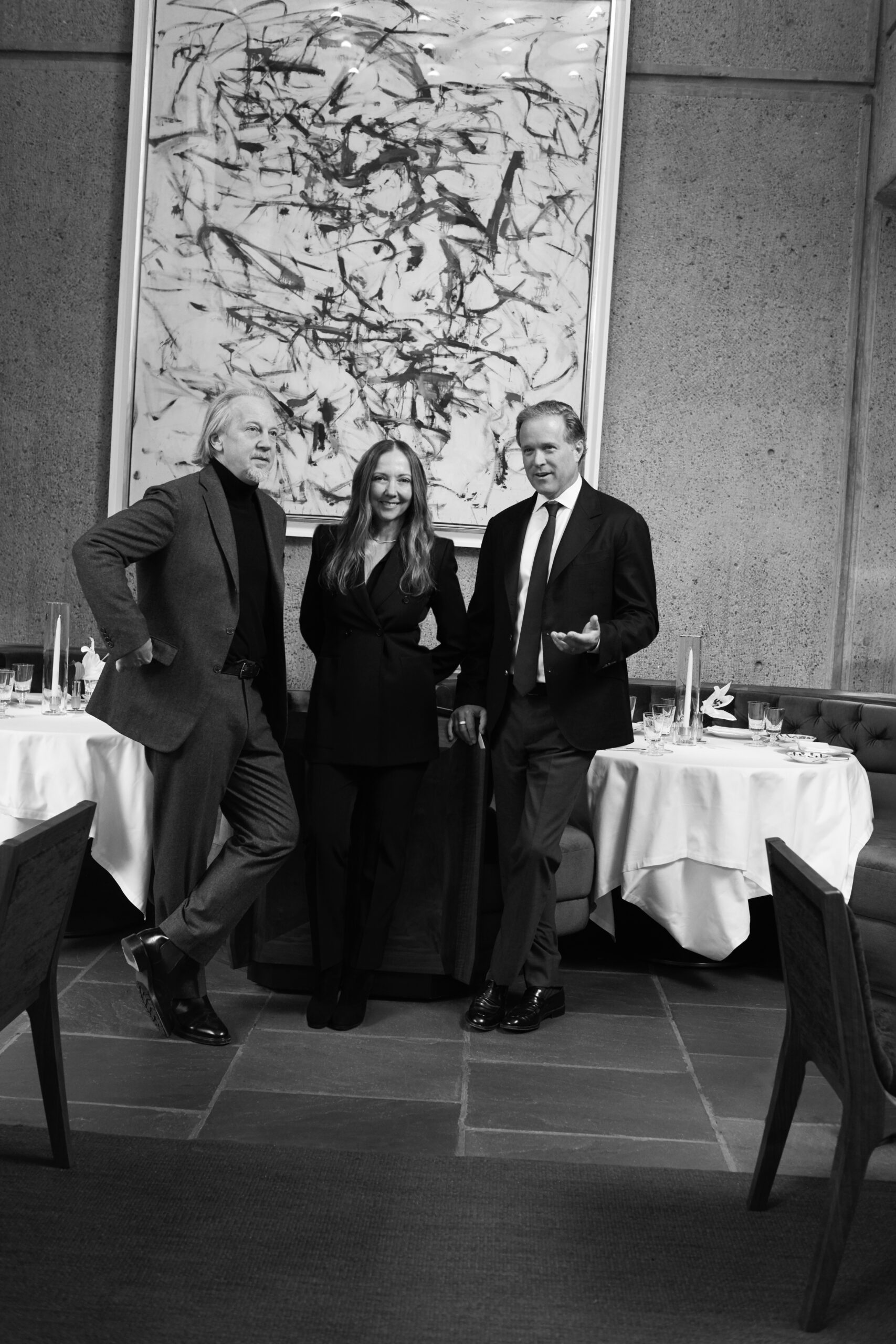
Marcel extends that principle uptown and into a radically different architectural context. The design works through what Robin Standefer has called “choreographed tension,” the warmth and density of a downtown sensibility inserted into Breuer’s disciplined concrete shell. Walnut-paneled walls. Candlelight. Mohair banquettes in a shade of dusty cocoa. Custom bronze and cast-glass lighting fixtures, designed by Roman and Williams, hang alongside original fixtures that Breuer specified for the Whitney. The bar is a mirrored composition of glass and spirit bottles, where cocktails arrive in handcrafted Japanese glassware. The flatware and serving pieces come from the Guild, Roman and Williams’ own store, a detail that communicates the room’s philosophy without requiring a placard: nothing here is sourced for convenience. Everything is chosen.
The dining room rotates works from Sotheby’s collection. On any given evening, the walls may hold an Andy Warhol, a Joan Mitchell, a Calder mobile, or a sculpture by François-Xavier and Claude Lalanne. Vitrines near the entrance display jewelry by David Webb and Boucheron alongside more unexpected objects: an asteroid fragment, a Tyrannosaurus rex tooth. If a guest discovers a wine they enjoy during dinner, a case can be ordered through Sotheby’s Wine before they leave the building. The line between dining and acquiring has been deliberately erased.
The kitchen is led by chef-partner Marie-Aude Rose, who also oversees La Mercerie, and pastry chef Rae Gaylord, who has worked alongside Rose since La Mercerie opened in 2017. The menu is continental with a pronounced French accent: confit de canard, côte de boeuf for two or four, grilled salmon, tartines with French ham and comté. But the dish that anchors the experience is the gratin de cabillaud, a cod encased in a golden crust of fine breadcrumbs that yields, beneath, to a bed of creamy mashed potato. It is a dish of deceptive simplicity, the kind of preparation where technique hides inside comfort, and it delivers the sort of deep satisfaction that elaborate tasting menus often promise and rarely achieve. The pâtisserie operates as a destination within the restaurant, offering glazed madeleines, custardy flans, and seasonal tarts that arrive in ribbon-bound boxes in dusty blue, pale peach, and lavender.
Outside, the reimagined sculpture garden offers dining from morning through evening among trees, contemporary sculpture, and an outdoor bar, a gardened space that shelters guests from Madison Avenue while immersing them in the architecture of the Breuer. It is among the most considered places to eat outdoors in Manhattan this spring.
Marcel is currently open for dinner, with full daytime service to follow. The address is 945 Madison Avenue, at 75th Street. The building has lived many lives. Marcel may be its most convivial.
Suzanne Saroff Patisserie, Madelaine Shells.