
Through studios, homes, and galleries, LA Design Week/end offered a different way to experience design, bringing visitors closer to objects, their makers, and the neighborhoods that shape them.
By Letícia Lima Laurino
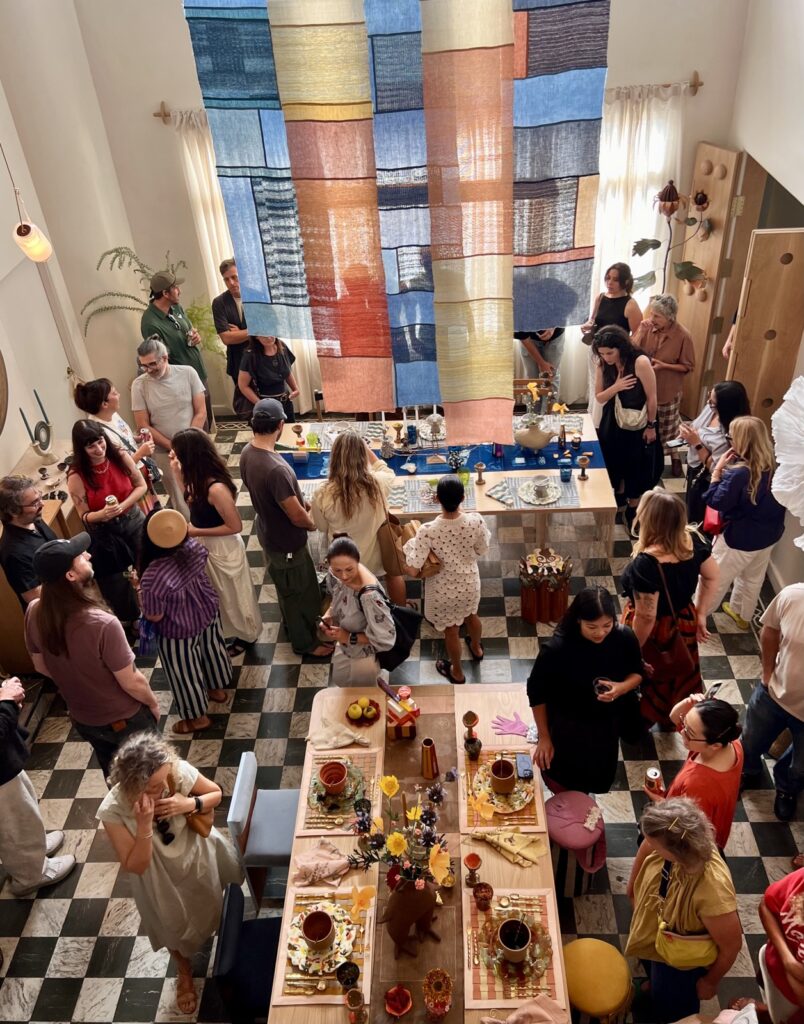
At Ravenhill Studio, long yellow and pink strips hung down in hand-shaped forms. They hung from Waverly Linens’ textile pieces draped over Raina Lee’s striped stools, some nearly touching the floor. Around the tables of Los Angeles Sets a Table, tableware, glassware, and chairs by different designers came together in a single composition. The colorful fabrics added humor to a table ready to welcome guests.
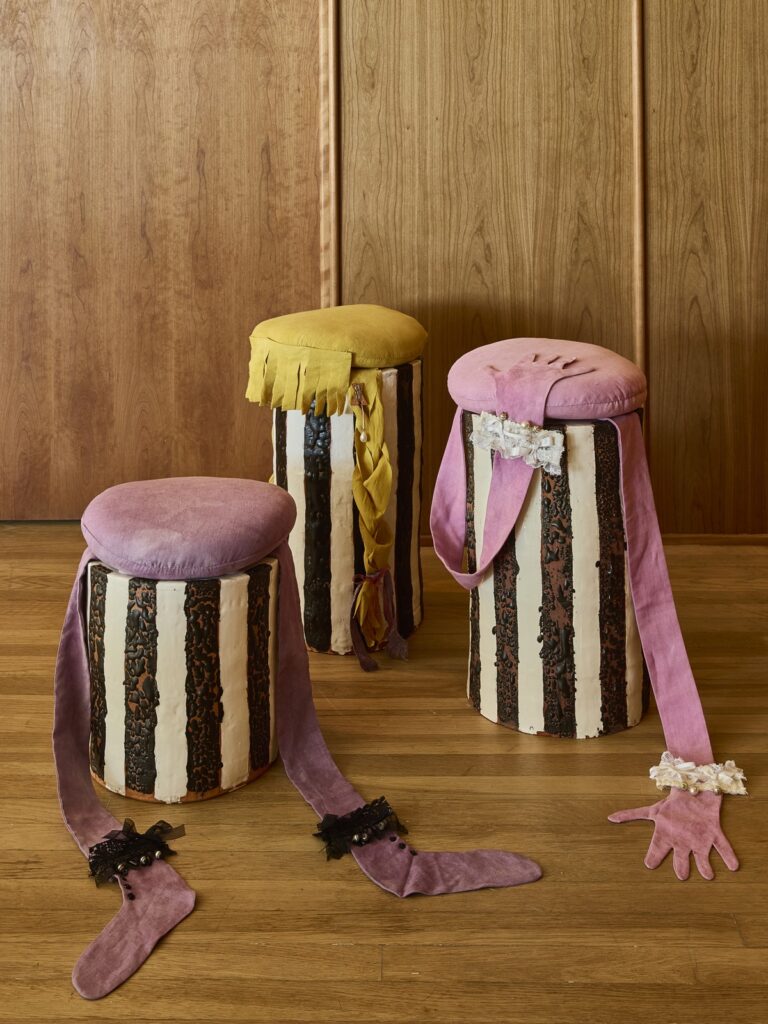
The studio was one of the venues open during the third edition of LA Design Week/end, held from September 30 to October 4, 2026. Founded by Holland Denvir in 2024, the festival brought together presentations across studios, homes, and workshops, with each host opening their own space.
There was a map, but visitors could decide how much time to spend at each stop. A conversation could change the route; an installation could invite a longer stay. The expansion from three to five days and the grouping of nearby venues were intended to make the itinerary feel less rushed. Between visits, the city itself became part of the experience.
Read more: PatBO Brings Brasil Esplêndido to NYFW 2026
At Alabaster, the Ludo rug by Nayanika Sharma, founder of AGNYA, reinterpreted in wool the board of a game traditionally played in Indian homes, bringing its geometry into dialogue with motifs from Banjara textile traditions. Sharma developed the piece with artisans in Uttar Pradesh, who tied its knots by hand. Sharma works with family-run workshops and her mother, a textile and interior designer who has worked in India for more than four decades.
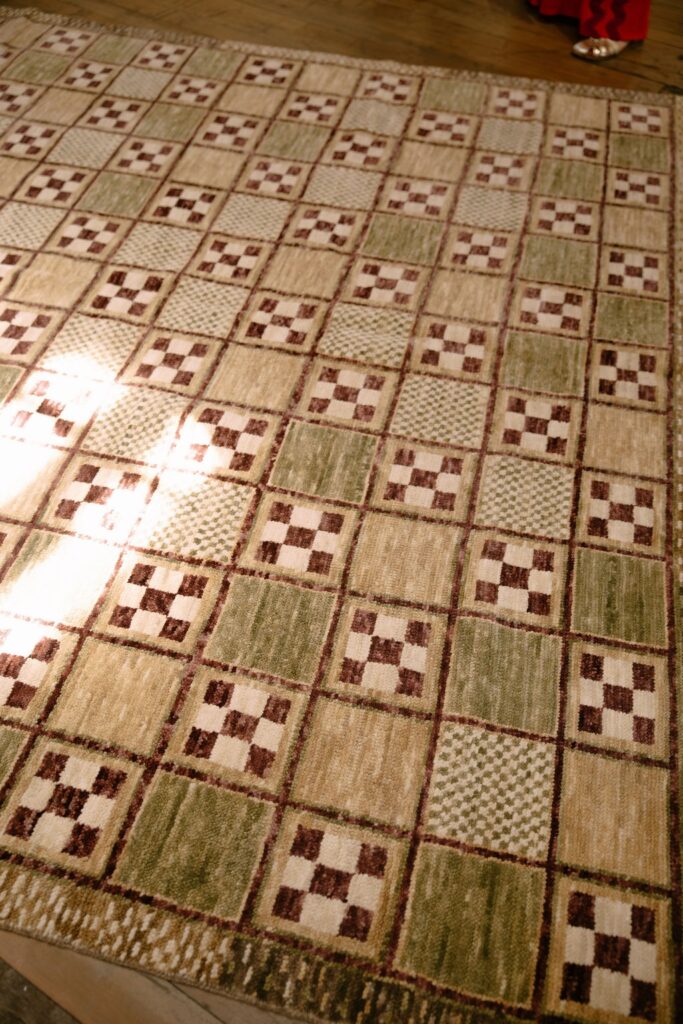
The rug was part of Our Joy Is Resistance, a selection curated by Sarah Al-Qatou. In her text, the curator connected the right to pleasure and leisure to a cultural moment marked by crises. Everyday play, textile references, and handcraft found a place in an exhibition that invited visitors to consider joy without separating it from the context in which it is experienced.
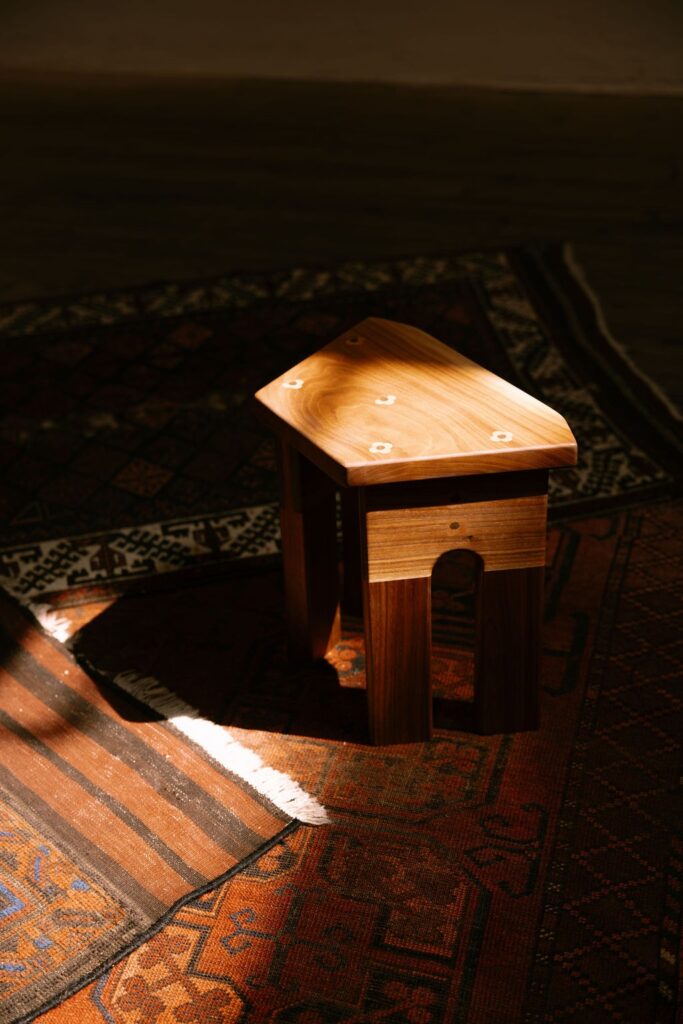
The Poppy Stool, by Studio Sour, offered another connection to origins. Adam Mansour incorporated symbols of Palestinian identity into the walnut and cherry wood piece. In the catalogue, Al-Qatou connected her affinity for the studio to a shared experience of the Palestinian diaspora. The piece extended the exhibition’s exploration of the relationship between pleasure, identity, and cultural experience.
At Small Green Door, After the Tide used water to create shifting forms. Sound frequencies sent ripples across the surface of a small basin, while a beam of light projected its changing patterns onto the wall. Luminous forms appeared, dissolved, and returned; sound filled the gallery.
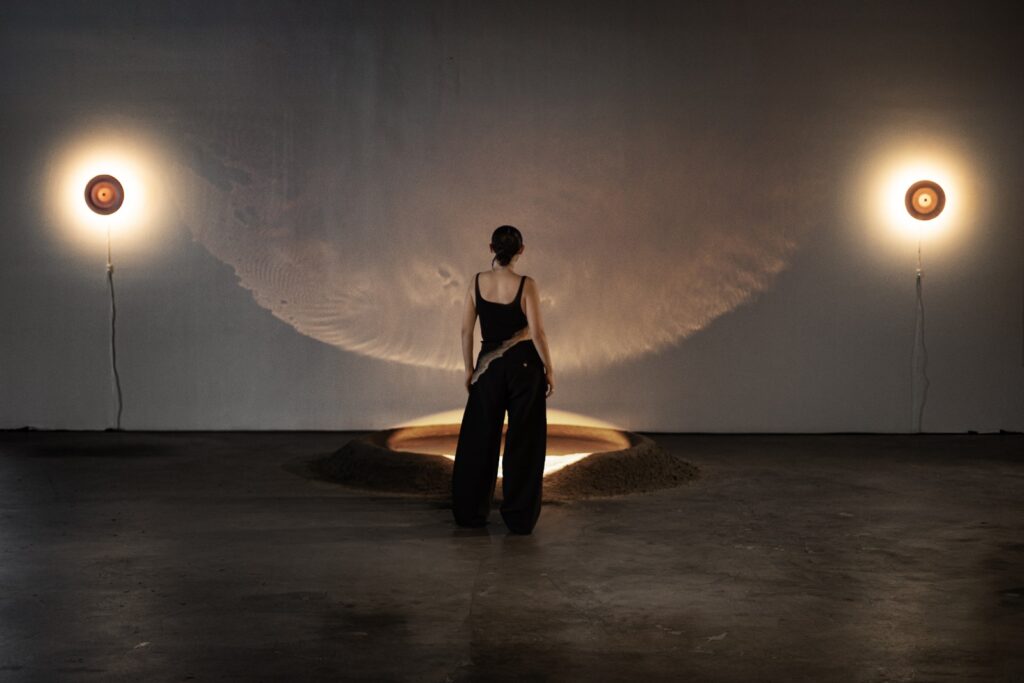
Developed in collaboration with EDGE Sound Research, the installation changed as visitors watched. A single instant offered one image; staying allowed the next to unfold.
At night, the routes converged again. A program organized with independent radio station dublab brought together, through music, people who had spent the day at different locations across the city. The map of visits gave way to a gathering.
Photographs from Ravenhill Studio show visitors chatting with glasses in hand beneath a large suspended textile panel. The tables remain set, and the stools with their colorful strips stand among the guests. The gathering took place in the same studio where the pieces had been presented. The work, the space, and the people came together in one place, without the usual separation between an exhibition and an everyday setting.
We had the pleasure of interviewing Holland about LAD/W; check out their answers below.
LM: What initially led you to create LAD/W as a decentralized, neighborhood-based alternative to the traditional design fair model?
HD: I wanted LAD/W to reflect how design actually exists in Los Angeles. The city’s creative community is spread across studios, homes, galleries, workshops, showrooms, and industrial spaces. Asking everyone to leave those environments and enter a single convention center never felt like the right model.
The decentralized format allows people to experience design in context. They can enter a working studio, meet the person who made an object, and understand the neighborhood and community surrounding the work. It also turns the city itself into part of the experience.
LM: What have you learned from the first two editions about the way people want to experience design today?
HD: People want some structure, but they also want the freedom to explore. They appreciate having a thoughtful map and a clear progression through the city, but they don’t want to be told exactly what to see or how long to stay. I’ve also learned how important the social aspect is.
People come to see design, but they also come to meet one another, enter spaces they normally wouldn’t have access to, and feel part of a larger creative community. The experience is as much about discovery and connection as it is about the objects themselves.
LM: LAD/W has grown significantly since its launch in 2024. How has that growth affected the festival’s original focus on community and discovery?
HD: Growth has required more structure, but the original focus hasn’t changed. In fact, the larger the festival becomes, the more intentional we have to be about protecting the experience that made the first edition special. After the second year, we heard that the number of events could feel overwhelming.
This year we expanded from three days to five, giving each neighborhood more space and allowing visitors to move through the schedule without feeling rushed. We have also remained disciplined about geography. More programming does not necessarily mean covering more of the city. Maintaining density is what allows people to move between events, encounter one another repeatedly, and experience that sense of shared momentum.
LM: What does it mean, in practical terms, to create a design event that is rooted in the neighborhoods and creative communities of Los Angeles?
HD: It means building the festival around the people and spaces that are already here rather than creating a temporary environment and asking everyone to come to us. We map where designers, makers, galleries, and studios are concentrated, then organize the schedule into neighborhood-based progressions.
Each host produces something within their own space and on their own terms, while LAD/W creates the larger framework connecting everything. It also means keeping participation accessible. Independent makers and small studios need to be able to take part alongside larger brands and established institutions. Both are necessary for the design community to thrive.
LM: This year, music and sound have a larger presence through the partnership with dublab. What does that add to the way people experience design during the festival?
HD: Music changes the energy of the festival. It gives people a reason to stay, gather, and experience a space differently rather than simply walking through an exhibition and leaving. LA is home to an incredible community of musicians and DJs, and some of our producers come from music festival production, so expanding that part of the program felt very natural.
The dublab partnership also creates larger shared moments within a decentralized week. Everyone spends the day following their own route, then comes together at night to dance and celebrate. Sound is also a form of design. Bringing it into the program expands the conversation beyond furniture and objects and makes the festival feel more reflective of the way creative disciplines overlap in Los Angeles.
LM: Looking beyond LAD/W, what do you think the traditional design fair model is missing and what would you like the future of design events to look like?
HD: Traditional fairs can be expensive, transactional, and disconnected from the places where design is actually being made. They are often centered around established brands, while independent designers are placed in a separate emerging category or left out entirely. I would like the future of design events to be more accessible, less hierarchical, and more connected to local communities.
Independent makers, small studios, galleries, manufacturers, and legacy brands should all be able to exist within the same conversation. I also think people want more than rows of products. They want context, access, participation, and a reason to spend time together. The most meaningful design events will create opportunities not only to see new work, but to understand where it came from and meet the people behind it.