
Hotel Eden, an intimate Roman landscape between permanence and metamorphosis.
Rome is made of layers that overlap like veils of time: sleeping ruins, churches that still echo with chants, piazzas alive with movement, and suspended gardens that seem to defy gravity.
On a hilltop, between Piazza di Spagna and Via Veneto, stands an address woven into this secret cartography of enchantment: Hotel Eden, inaugurated in 1889 by the visionary Francesco Nistelweck, a German hotelier who believed hospitality should reflect the grandeur of the Eternal City itself. His choice was both strategic and poetic: to create a haven that combined modern innovation, palatial elegance, and a view capable of taking one’s breath away.
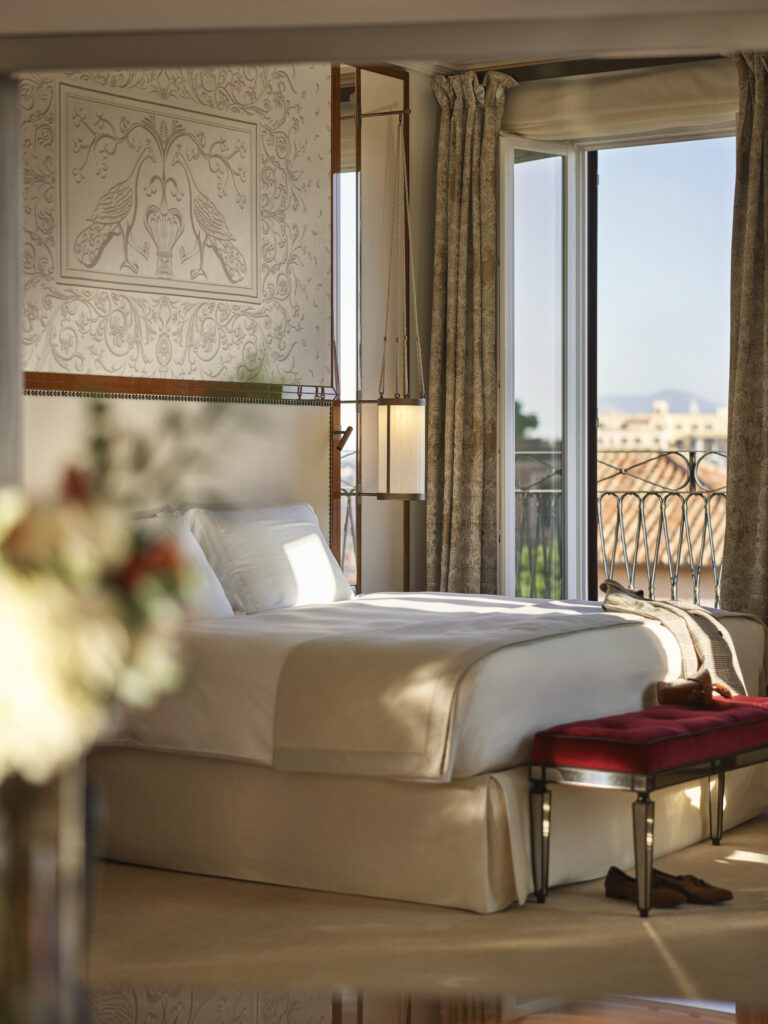
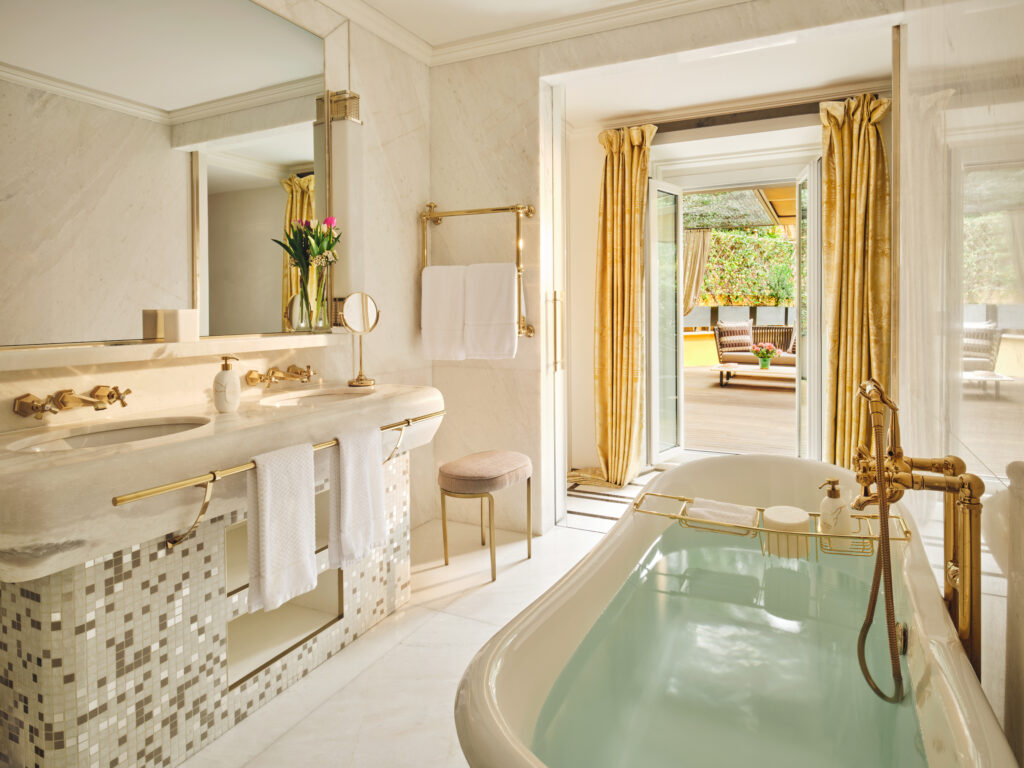
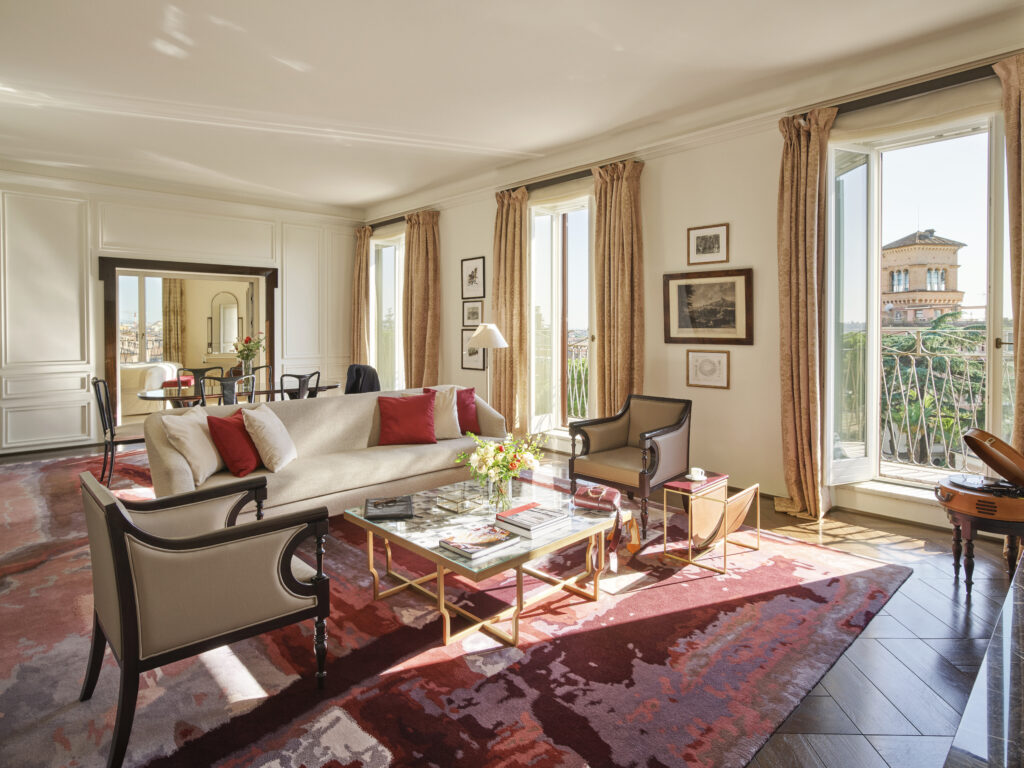
By the early 20th century, Eden already seemed to announce the future. It was among the first hotels in Rome to offer electricity and elevators — conveniences that today appear ordinary but at the time felt almost magical. Diplomats, artists, and cosmopolitan travelers found not merely a place to rest, but a stage where Rome unfolded with theatrical splendor. From its terraces and windows, the dome of St. Peter’s, Piazza Venezia, and a sea of rooftops stretched out, inspiring painters and poets alike.
During the brilliance of the Belle Époque, Eden became a salon of cultural elites. It was here that foreigners first experienced Italian cuisine elevated to artistry, as Roman chefs reimagined traditional recipes in refined menus. By the 1930s, its halls glittered with high-society receptions, while Via Veneto blossomed into a worldly epicenter. War brought shadows: like so many palaces of prestige, the hotel was requisitioned by military forces. Yet it endured, preserving its soul. In the rebirth of the postwar years, Eden flourished once more.
In the 1950s and 60s, during the golden age of Italian cinema, it became a sanctuary for international stars. Ingrid Bergman, Brigitte Bardot, and Audrey Hepburn found in its suites an intimate refuge, while Federico Fellini, a frequent guest, declared that Roman light appeared even more magical when viewed from Eden’s terrace. Across the decades, ownership changed hands, yet the spirit remained intact.
In 2013, it joined the Dorchester Collection, part of the Brunei Investment Agency, and entered a decisive chapter in 2017 with its reopening after a two-year restoration. The project was led by the French studio 4BI & Associés, founded by Bruno Moinard and Claire Bétaille, in collaboration with designers Patrick Jouin and Sanjit Manku. Their task was delicate: to preserve the legacy of 1889 while offering a contemporary interpretation.
Soft textures, palettes inspired by Roman light, and integration with Italian art gave the hotel new vitality. Ceilings from the 19th century, long muted by dust and silence, were restored with traditional techniques, revealing colors hidden for decades. Today, Eden houses 98 rooms and suites, each with its own character. Some open onto St. Peter’s Basilica, others onto Piazza Venezia; all share a singular atmosphere: handwoven Italian fabrics, rare marbles, and works by contemporary artists that converse with the city’s classical soul.
On the sixth floor, experience becomes ritual at the table. La Terrazza, hailed as one of the world’s most beautiful panoramic restaurants, invites guests to taste Rome from above. Chef Salvatore Bianco crafts menus that weave unexpected ingredients — acorns, pea miso, donkey’s milk — into ancestral traditions. Each dish becomes a story, each glass a fragment of Italy past and present.
Beside it, Il Giardino Ristorante celebrates Roman classics in a convivial atmosphere, while Il Giardino Bar extends the evening with cocktails framed by the most cinematic sunset in the city. Eden’s bond with art remains vital. In collaboration with designer Coralla Maiuri, the Eden Home porcelain collection was created — hand-painted pieces that now live both in suites an on curated tables, as though they were gallery works.
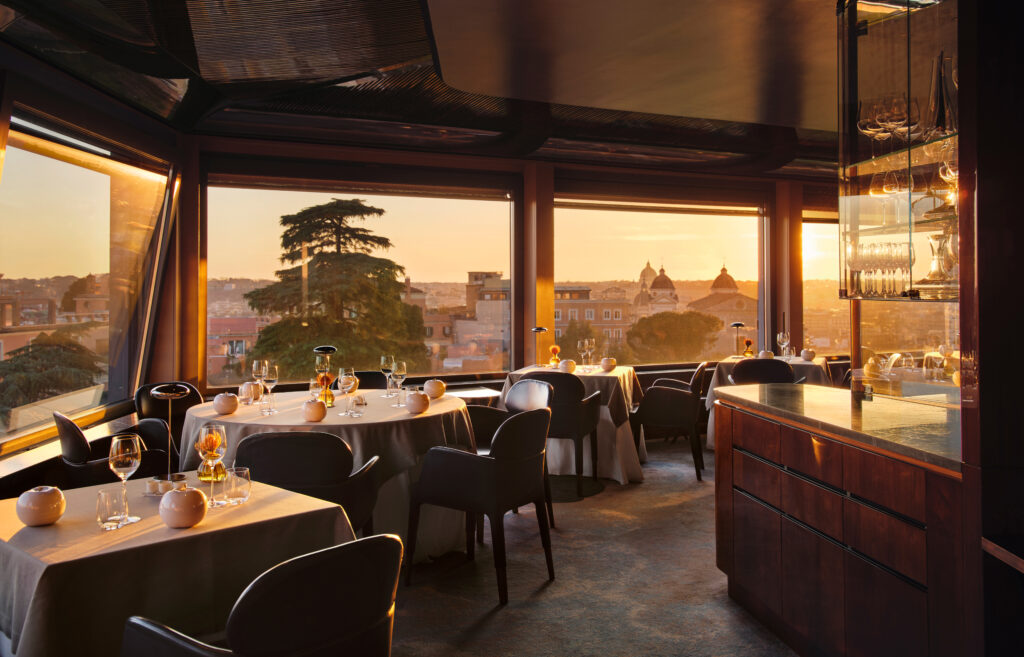
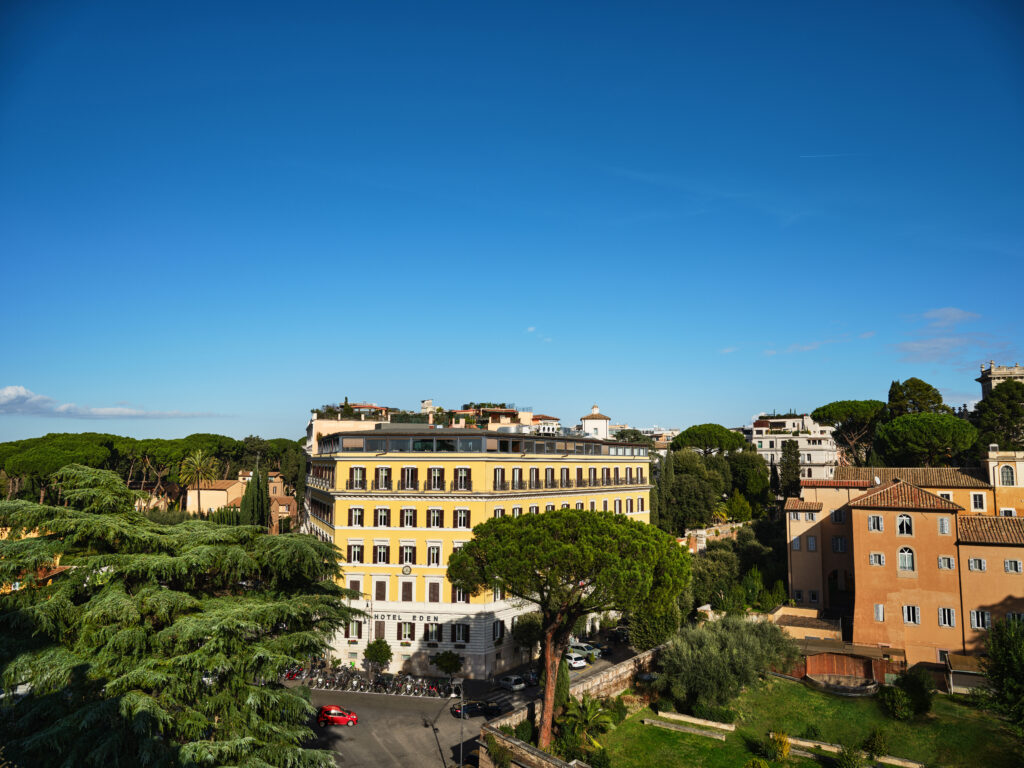
Beyond its walls, the hotel reveals secrets: itineraries curated by historian Corinna Turati uncover hidden Rome. Among them, a 16th-century oratory known as a “miniature Sistine Chapel”; a secret 12th-century terrace overlooking Trajan’s Market; and candlelit evenings at Villa Farnesina, where Raphael’s frescoes glow with renewed intimacy. More than a place to stay, Hotel Eden is a witness to over 130 years of Roman history. It is a mirror of the city itself, reflected in golden horizons, suspended gardens, and corridors steeped in memory. A refuge that has continually reinvented itself without ever losing its soul — and a reminder that Rome, like Eden, is made of permanence and metamorphosis.