
Porsche did not begin as a brand. It began as a problem to be solved between a father and a son.
Before there was a crest, before there were racetracks, icons or global mythology, Ferdinand Porsche was already one of the most influential automotive engineers in Europe. His career passed through the heart of early twentieth century industrial innovation, including work for Daimler Mercedes, and later through his own engineering office in Stuttgart. His thinking was technical, pragmatic and relentlessly focused on efficiency. He was less interested in luxury than in making machines work better, cleaner and smarter.
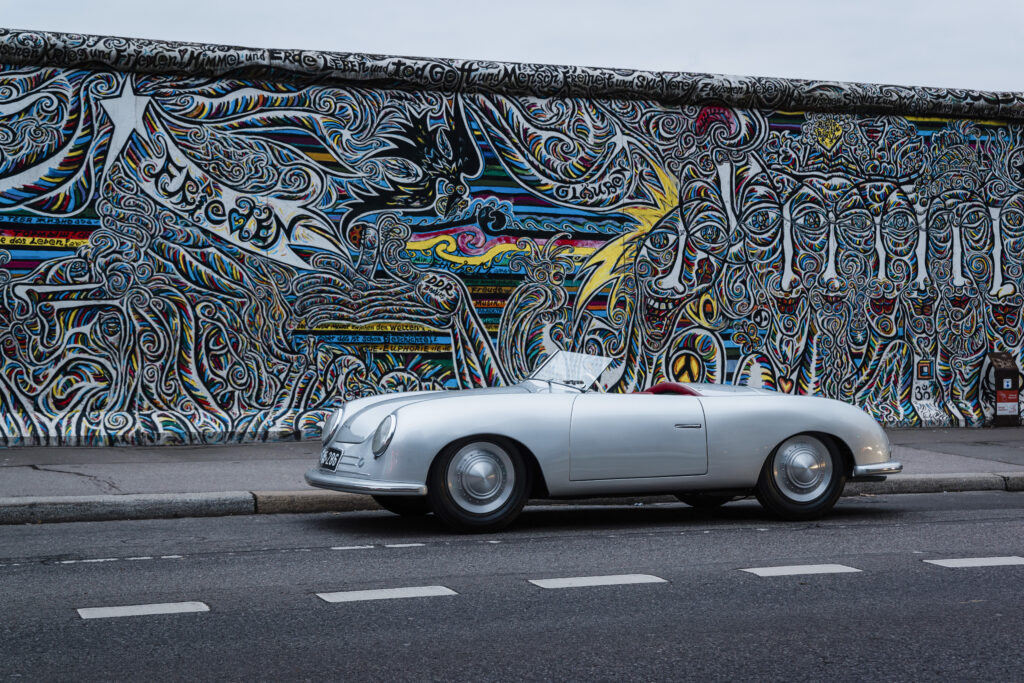
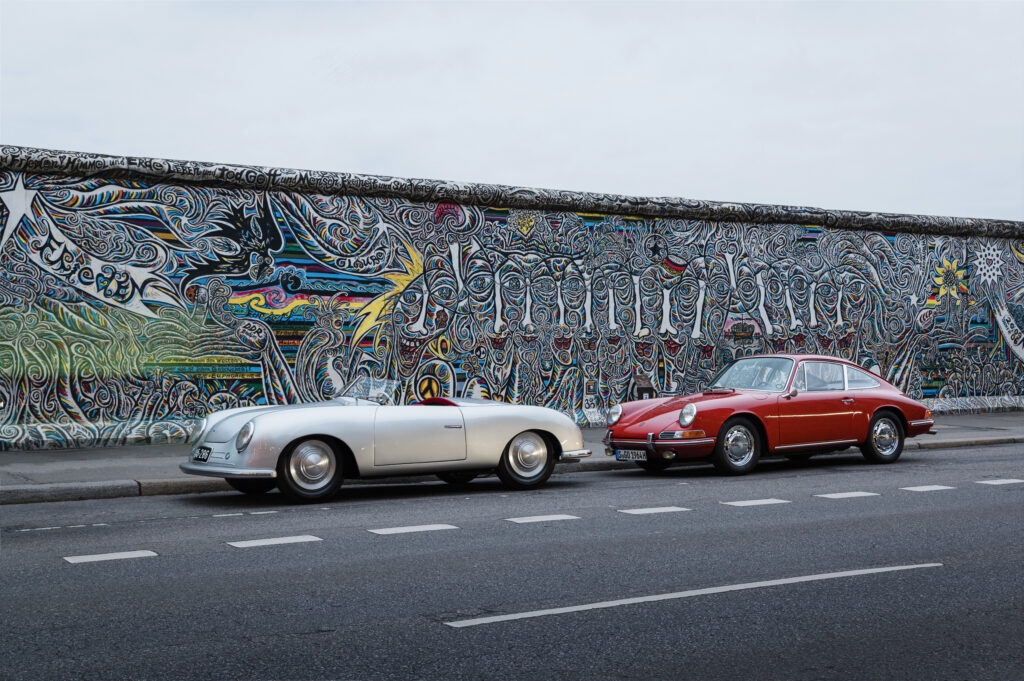
One of the most consequential projects to pass through Ferdinand Porsche’s office was the concept of a people’s car. Simple, durable, accessible. That idea would eventually materialize as the Volkswagen Beetle, a car whose rear mounted engine, air cooling and mechanical honesty would become part of automotive history. The political context of that era has rightly been examined and debated, but from an engineering perspective, the Beetle established a structural foundation that proved remarkably enduring. After the war, it was Ferry Porsche, Ferdinand’s son, who looked at that foundation and saw something else entirely. Where others saw a modest utilitarian vehicle, Ferry saw potential. Using Beetle derived components, he began to experiment.
What if the engine were refined. What if the car were lighter. What if driving itself became the central experience. In 1948, that curiosity took physical form with the Porsche 356 No. 1 Roadster. It was not conceived as a luxury object or a commercial strategy. It was a personal answer to a technical question. Light, balanced and unusually responsive, the car felt intimate, almost conversational.
That moment marked the transformation of Porsche from an engineering consultancy into a philosophy. From the beginning, Porsche was never about excess. It was about refinement. About taking what already exists and insisting it could be better. Faster, yes, but also more precise, more honest, more human. That principle would become the brand’s quiet constant. In 1963, it found its most enduring expression in the Porsche 911. Introduced at the Frankfurt Motor Show, the 911 challenged convention with its rear engine layout and unmistakable silhouette. Many believed the configuration was flawed. Porsche believed it could be perfected.
Over six decades, the 911 has evolved continuously while remaining fundamentally itself, a rare example of design continuity matched with relentless engineering progress. It became not just a sports car, but a cultural reference point. Motorsport was never a marketing accessory for Porsche. It was a laboratory. From endurance racing to Le Mans, the brand used competition to test ideas under extreme conditions. Porsche’s relationship with the 24 Hours of Le Mans is unmatched.
Since first competing in 1951, the company has accumulated nineteen overall victories and more than one hundred class wins, making it the most successful manufacturer in the history of the race. These victories were not about spectacle. They were about proof. Design, too, became a language of continuity. Porsche resisted trends, choosing instead to refine proportions, surfaces and details with discipline. Each generation spoke to the next. This approach reached a symbolic moment in 2023, when the brand celebrated its seventy fifth anniversary.
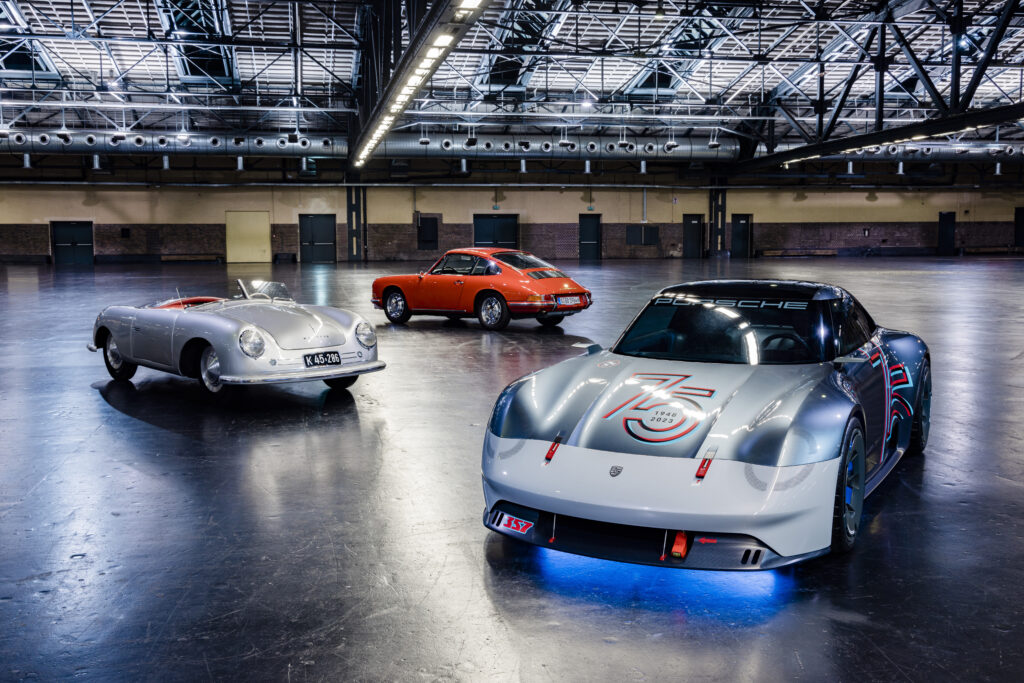
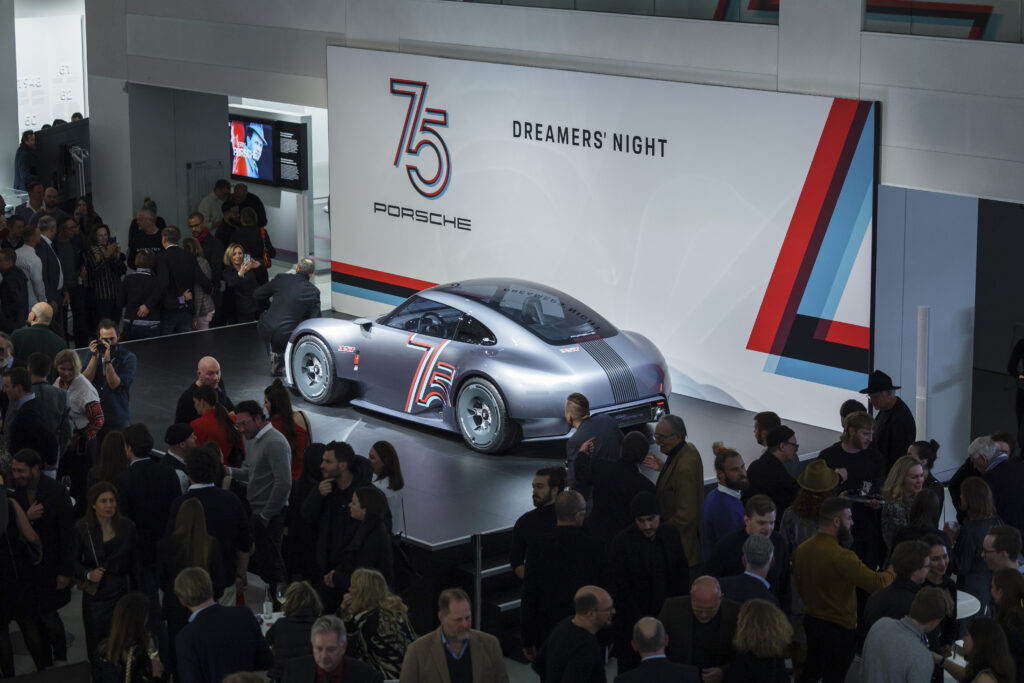
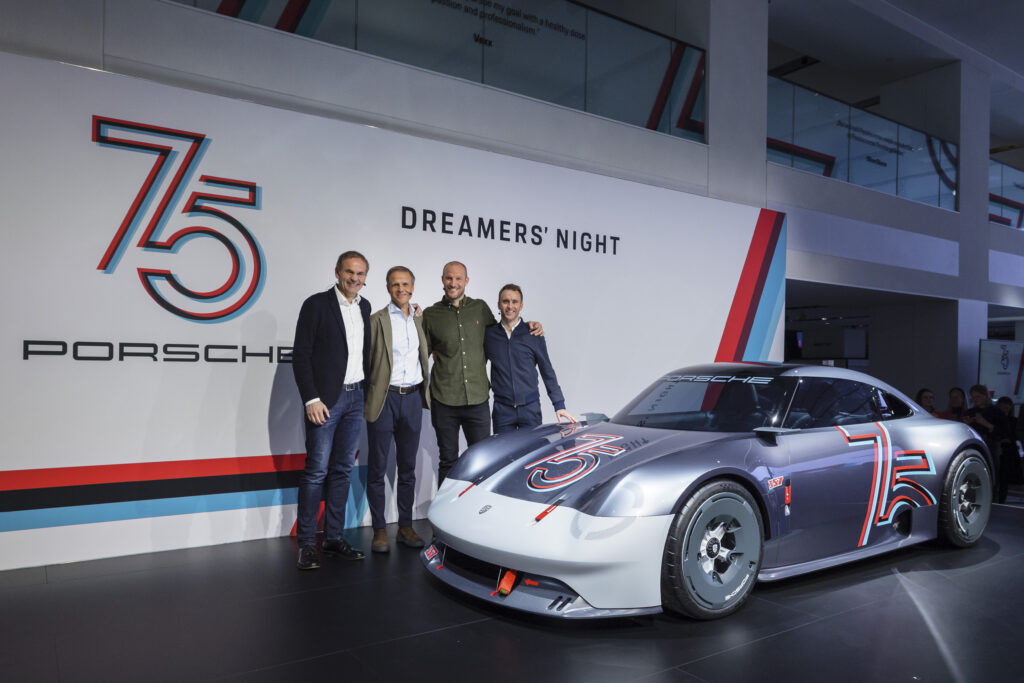
To mark the occasion, Porsche introduced the Vision 357, a concept car conceived as a contemporary homage to the original 356. Built on the platform of the 718 Cayman GT4 RS, the Vision 357 revisited the monolithic form, compact proportions and purity of the first Porsche, while projecting them forward through modern lighting, materials and aerodynamics. It was not a retro exercise, but a philosophical statement about continuity.
That anniversary year also coincided with two other milestones. Sixty years of the 911 and one hundred years of the 24 Hours of Le Mans. Together, they underscored what Porsche represents. A brand shaped not by reinvention, but by evolution. Not by volume, but by conviction. Today, Porsche stands as one of the most respected names in global industry, not because it avoided complexity, but because it confronted it openly. Its history contains innovation, contradiction, ambition and resilience.
It is a story of engineering rigor tempered by human curiosity. Of a son refining a father’s work. Of performance shaped by restraint. Earned respect, in the Porsche universe, is not claimed. It is accumulated slowly, through decades of decisions made with clarity, discipline and belief. And that, perhaps, is the most timeless element of all.