
From rigorous Italian ateliers to Brazil’s cultural imagination, Guilherme Kfouri reshapes Alexandre Birman through structure, memory and an evolved sense of luxury.
Guilherme Kfouri speaks of shoes the way some architects speak of buildings: as structures built from intention, proportion and quiet emotion. Born in São Paulo and shaped between Paris, Milan and New York, he belongs to a generation of designers for whom luxury is less about spectacle and more about the intelligence of form. His career began early, with a decision that would define everything that came after: leaving Brazil to study abroad.
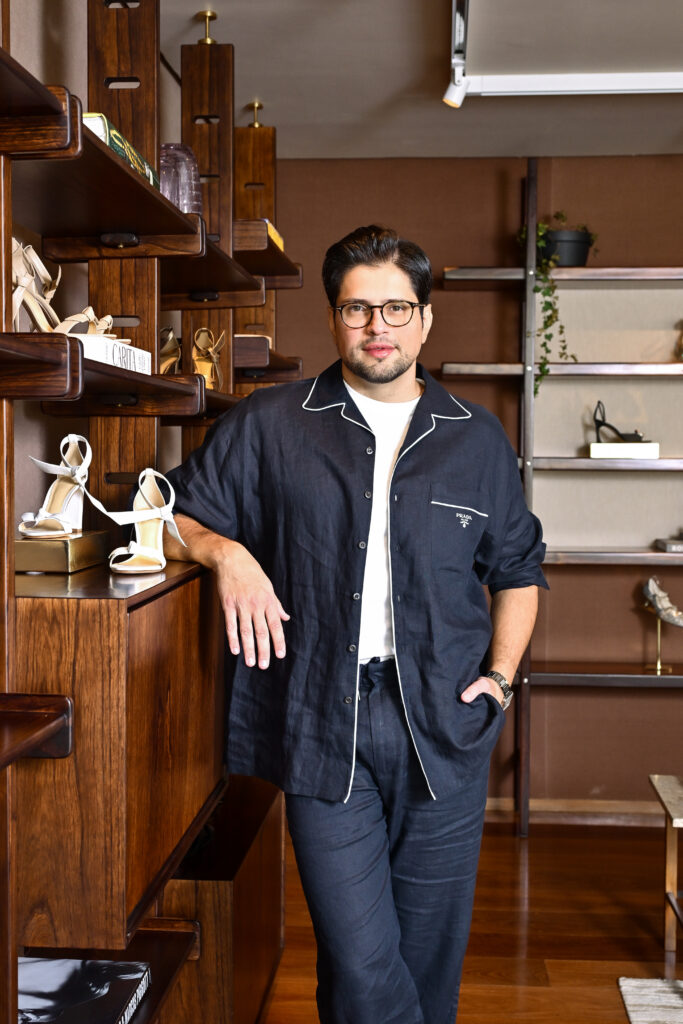

Paris gave him proportion, that unspoken elegance learned only by walking its streets; Milan gave him discipline, that design is an everyday language and not a distant abstraction. At the Istituto Marangoni, he learned vocabulary; inside artisanal workshops, he learned truth. There, surrounded by masters who treated leather as a living material, he understood that creation only exists when supported by construction.
A beautiful drawing means nothing if it cannot stand, bend, support and accompany a real body across a real city. The intensity of those years changed his hands as much as his eyes. In Italian ateliers, he discovered that every aesthetic decision produces a techinical consequence, and that no line survives if it ignores the tension of stitching, the architecture of an internal structure or the subtle choreography of weight as it transfers from heel to toe.

His time at Sergio Rossi under Francesco Russo, at Zagliani and later consulting for houses such as Alberto Moretti and Armani Privé, confronted him with a level of rigor that bordered on spiritual practice. Watching artisans adjust the curve of a heel by a millimeter or rebuild a structure no one would ever see taught him that true luxury is built in silence.
The extraordinary, he learned,resides in the almost invisible interval, in the adjustment that stabilizes an entire silhouette, in the gesture that appears effortless only because every hidden layer has been disciplined into harmony. Those lessons resurfaced years later when he returned to Brazil to join Alexandre Birman.
Coming home after so much time abroad required a shift not only in geography, but in imagination. The country he found was not the one he had left. It was richer, more layered, more visually and emotionally abundant.
Luxury reveals itself through time and precision; everything louder than that is only distraction
His challenge was not to impose an imported vocabulary, but to understand how memory, landscape and cultural rhythm could become formal language. Under his direction, the brand transformed narratives into design with unusual delicacy.
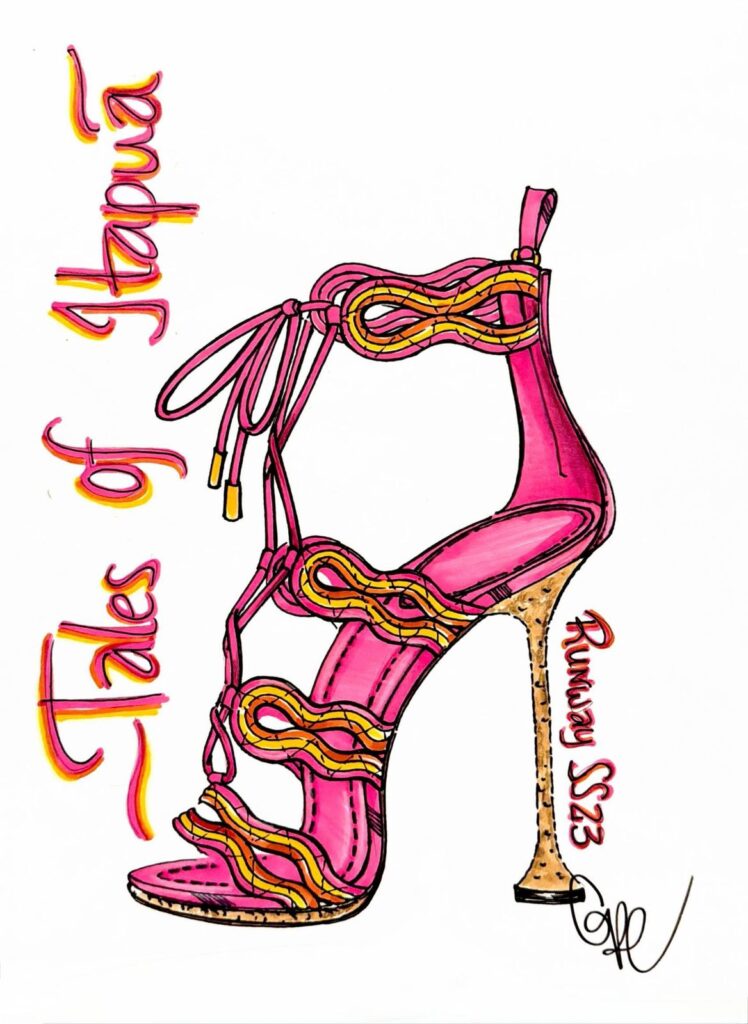
Tales of Itapuã translated Bahian stories, seaside geometry and artisanal lace into straps and weaves that carried history without literalism. Power of Amazonia shaped volume and texture from canopy light and forest movement. The capsule created with the Instituto Bardi explored Lina Bo Bardi’s universe not through reproduction, but through interpretation, turning her structural gestures into lines that rested on the foot like architectural whispers.
Yet Kfouri’s process begins before narrative. It begins with the body. He approaches biomechanics not as technical constraint, but as the blueprint for desire. For him, a shoe is a mechanism in motion, a bridge between anatomy and emotion. Before he draws, he studies how weight travels, how the arch asks for support, how the foot negotiates balance and momentum.
A shoe becomes extraordinary when technique disappears and the body feels nothing but harmony.
Only then does he allow design to appear. Beauty, in his work, is inseparable from engineering. Harmony is not decoration; it is physics disguised as grace. A woman, he says, must be able to live inside the shoe: walk, work, dance, cross cities, inhabit her life. When the proportions are right, the body relaxes, and luxury reveals itself not in ornament, but in relief.
His nomadic life sharpened his sensibility. Paris taught him to edit. Milan taught him to refine. New York taught him speed, pragmatism and ambition. Brazil taught him emotion, improvisation, sunlight and shadow. Together, these geographies formed a designer who sees accessories not as objects, but as cultural translations. The more he moved, the more he understood that design is dialogue, not imposition. A shoe becomes global not when it tries to be universal, but when it is specific enough to feel true.

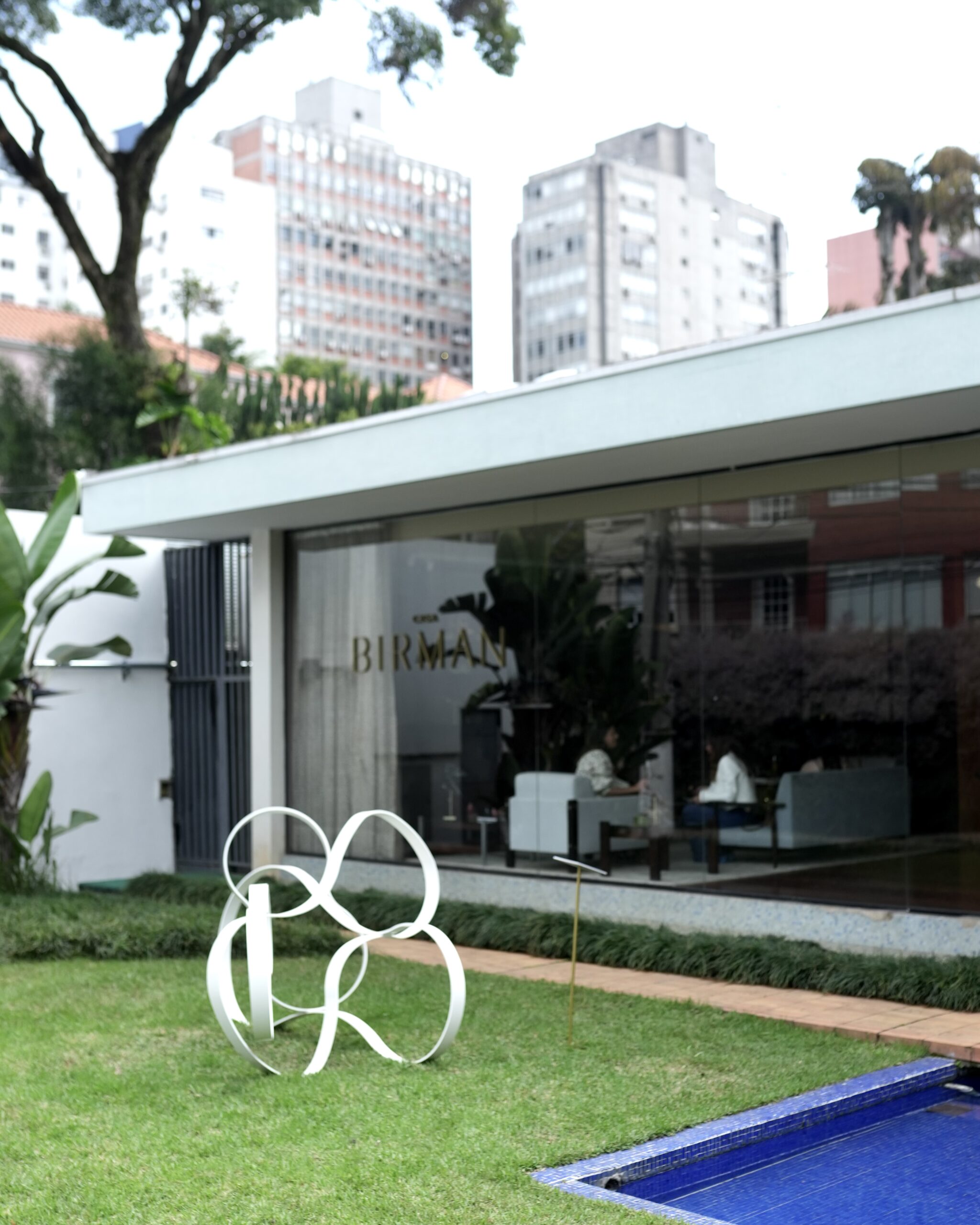
Today, leading Alexandre Birman, Kfouri stands at a defining moment in his career. His signature has matured into a balance between precision and poetry, two forces he treats as inseparable. Precision, for him, is clarity: the ability to decide, refine and refine again until only the essential remains.
Poetry is intention: the pulse of memory, atmosphere and emotional architecture that gives form its reason for existing. In his hands, a shoe becomes a quiet declaration about how the body can move through the world. It becomes movement, memory and structure at once. What he seeks now is depth rather than expansion.
A deeper union between technique and intuition, between architecture and narrative, between body and gesture. His ambition is not to chase trends, but to shape permanence. In a market obsessed with spectacle, he returns to the fundamentals: proportion, truth, touch, balance. Luxury, he insists, is not in what dazzles, but in what remains.