
The British traveler crossed continents to paint plants where they grew, creating a visual archive of nineteenth-century landscapes now held at Kew Gardens.
At the Marianne North Gallery in Kew Gardens, the walls disappear beneath hundreds of paintings displayed with barely any space between them. Forests, mountains, temples, rivers, birds among leaves and insects disguised as branches occupy every surface. The works follow a geographical order, with place names inscribed above them. Brazil, Jamaica, Japan, India, Borneo, Australia and South Africa trace the itinerary.
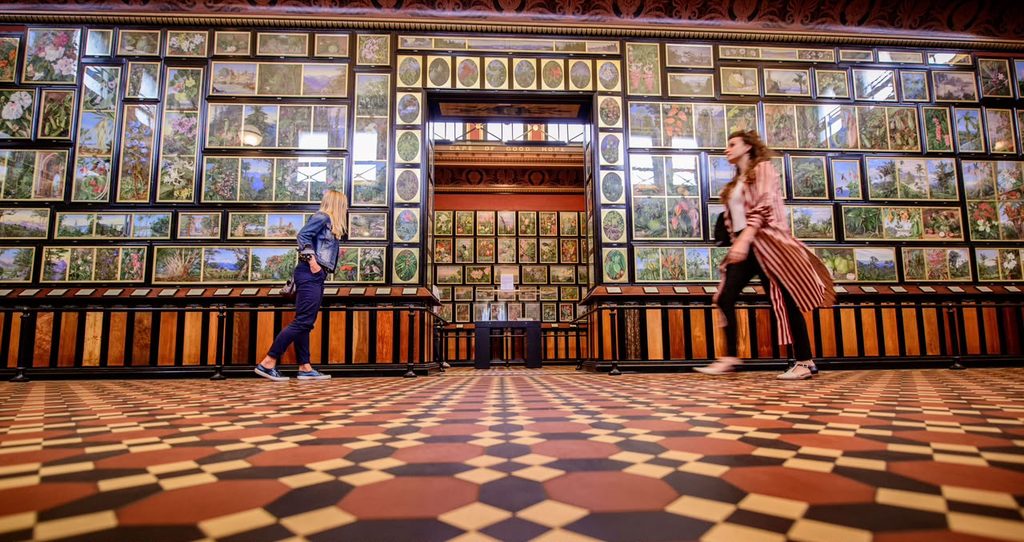
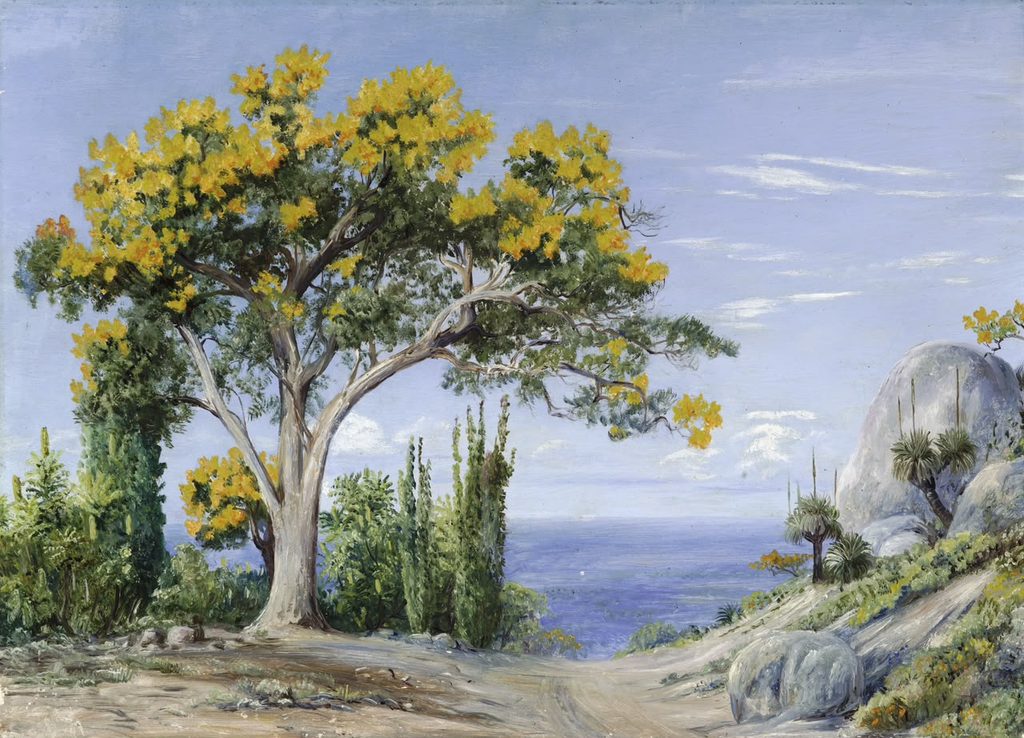
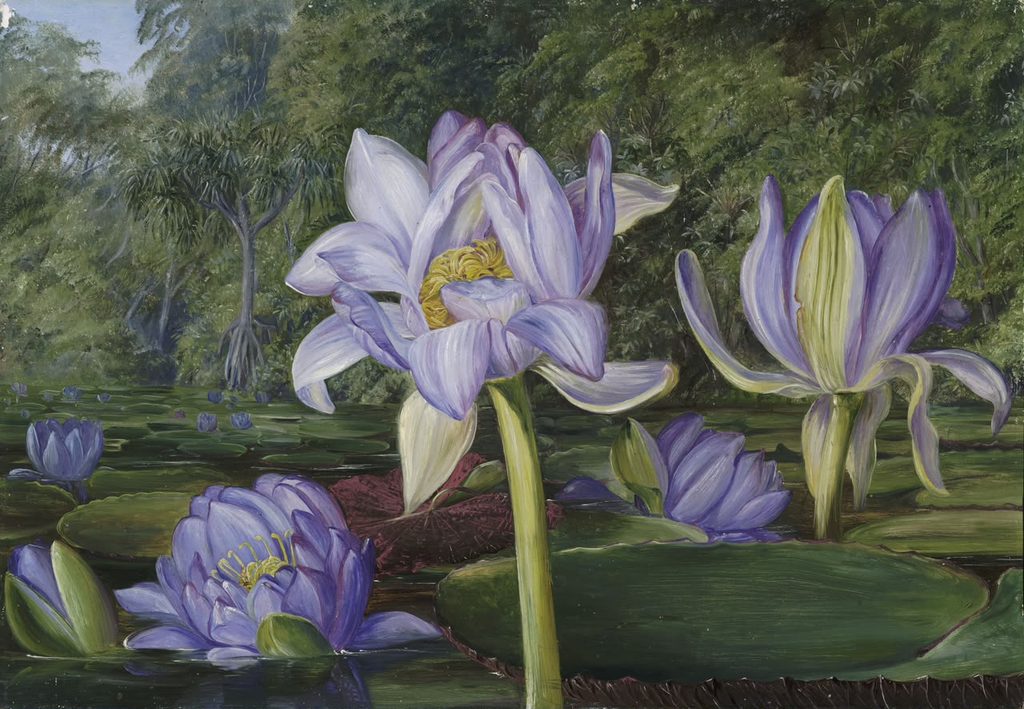
In the second half of the nineteenth century, botanical illustration often removed specimens from their surroundings. Flowers, fruits, leaves and roots appeared against pale backgrounds so their structures could be examined. Marianne North chose instead to paint species where they grew. Working outdoors in oil on paper, she brought the surrounding landscapes, animals and architecture into the frame.
A night-blooming flower appears beneath the stars and a crescent moon, a detail that reveals when it blossoms. Wisteria frames Mount Fuji. In Australia, bunya-bunya trees share the landscape with kangaroos. In Borneo, leaves, fruits and vines gather within dense vegetation. Temples emerge among trees, laborers work in plantations, birds rest on branches and insects become almost invisible against the foliage.
Marianne worked with a restricted palette of cobalt blue, lead white and hues derived from madder. She used little black, favoring blues, greens and oranges to temper the intensity of other colors. This selection reduced the amount of material she needed to carry and contributed to the distinctive luminosity of her work. Research conducted at Kew has revealed drawings and annotations beneath the paint. In many works, colors were applied while the previous layer was still wet, often in just one or two layers.
Her great journeys began after her father’s death in 1869, when Marianne was around 40 years old. By then, she had already traveled with him through parts of Europe and North Africa. In the years that followed, she would extend that map across the Americas, Asia, Africa and Oceania. Remaining unmarried gave her a degree of autonomy unusual for a woman of her time. She retained control of her inheritance, decided how to use her own money and organized each journey in her own name.
That freedom of movement also depended on her social background. Marianne belonged to a wealthy and well-connected family. Letters of introduction and British contacts secured accommodation, protection and access to territories under the rule or influence of the Empire. In 1880, Joseph Hooker, director of Kew, asked the Colonial Office to instruct colonial authorities to assist the artist.
Guides, laborers and local residents carried supplies, showed her the way, interpreted conversations and shared their knowledge. Marianne’s accounts acknowledge some of this assistance, but they also reveal the racial and class prejudices common within the British milieu to which she belonged. In one painting of a sugarcane harvest in Minas Gerais, workers appear in a Brazil where slavery had yet to be abolished.
Marianne’s paintings capture landscapes undergoing transformation in the second half of the nineteenth century. When the collection arrived at Kew, Hooker drew attention to the disappearance of natural scenes in the face of colonial expansion. Some remain recognizable today. Others have been profoundly altered over time.
Read more: Julie Sergent Ferreri in Contrast
Certain works preserved botanical information that would acquire new significance decades later. A carnivorous plant found in the limestone mountains of Borneo, then unknown to European science, was named Nepenthes northiana. Also in Borneo, a painting completed in 1876 recorded a shrub bearing blue fruits. The first known herbarium specimen would not be collected until 1973, and in 2021 researchers formally identified the species, naming it Chassalia northiana.
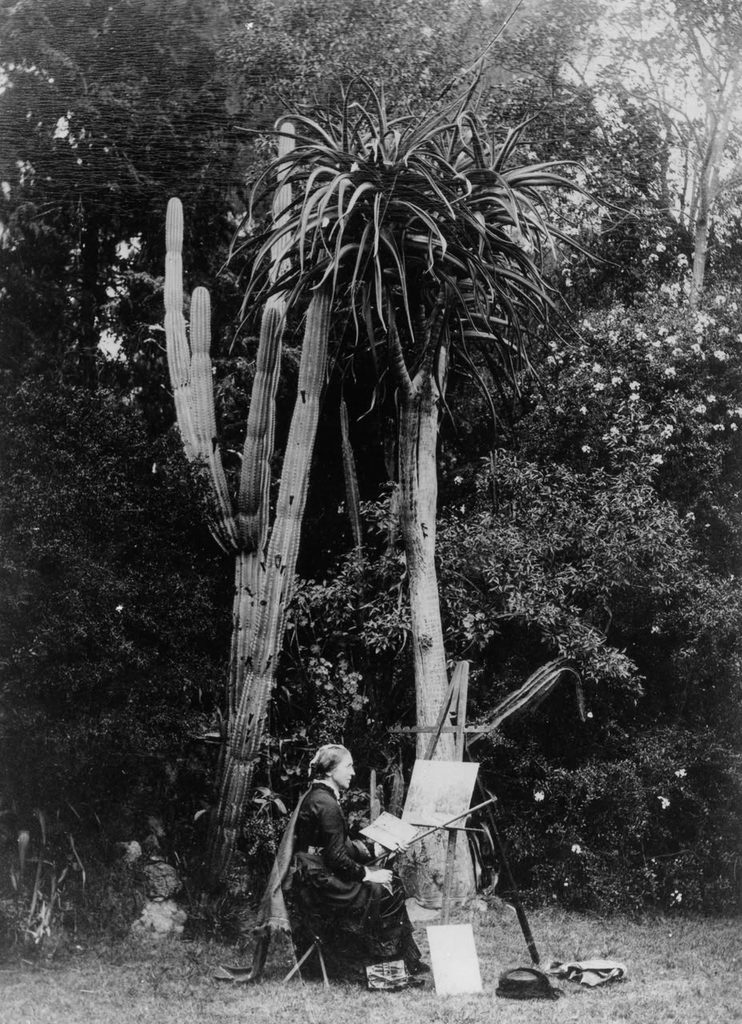
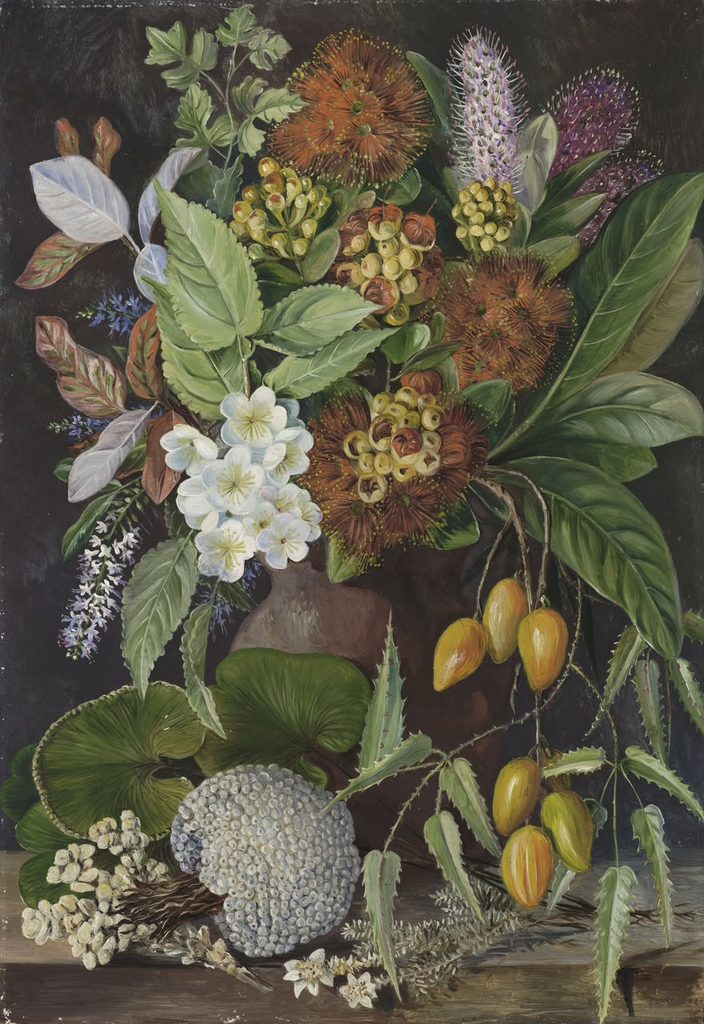
Marianne had no formal training in botany. She learned through observation, reading and time spent with naturalists and botanists. Her paintings could record flowering periods, neighboring species, animals drawn to fruits and blossoms, and the conditions of the terrain. In 1881, after seeing her paintings of Australia, Charles Darwin wrote that his own travel memories seemed like a “barren waste” beside Marianne’s visual memory.
In 1879, she offered her collection to Kew Gardens and proposed financing a gallery to house it. She chose the site and participated directly in its construction, as well as in the framing and arrangement of the paintings. Designed by her friend James Fergusson, the building opened in 1882 and was expanded in 1885 to accommodate works from her final journeys. Samples of wood collected by Marianne were installed beneath the paintings.
She wanted tea and coffee to be served to visitors, a proposal rejected by Kew’s directors. Tea and coffee plants were instead painted on the door panels. More than 800 works remain together in the gallery, alongside the frames, inscriptions and display choices made during her lifetime.
At a time when color photography was not yet a practical medium, Marianne recorded places that most of her audience would never see in person. Her plants do not hover against neutral backgrounds. They remain surrounded by mountains, forests, animals, buildings and human figures. On the walls of Kew, each plant remains inseparable from the place where Marianne found it.